 Lately sometimes I feel my brain is quickly deteriorating as I get older. But what about a 5,000-year-old teenage girl’s brain? An archaeological expedition exploring a cave in south-eastern Armenia claims to have found the remains of the world’s oldest human brain. Alcohol kills braincells? Quite the opposite, as the team says that at the same site it has found evidence of what may be history’s oldest commercial winemaking operation. Take that, France!
Due to our obsession with Mummy CSI we know quite a bit about old brains, but Dr. Boris Gasparian – one of the excavation’s leaders – is kean to point out to EurasiaNet that “The mummies of Pharaonic Egypt did contain brains, but this one is older than the Egyptian ones by about 1,000 to 1,200 years.” If the text results announced by Dr. Gasparian are correct, this brain is even older than the 2,000-year-old human brain discovered by United Kingdom archaeologists in 2008.
The team in Armenia had been excavating the three-chamber cave where the brain was found since 2007. The Areni–1 site, overlooking the Arpa River, just across the border from Iran, is believed to date mostly to the Late Chalcolithic Period (the ‘Copper Age’) or the Early Bronze Age (around 6,000 to 5,000 years ago).
The Oldest British Brain
Britain’s oldest surviving brain was discovered at a York University site in 2008. The ‘Iron Age brain’ which is at least 2,000 years old was at that time believed to be one of the oldest found anywhere in the world. It is believed the skull may have been a ritual offering.
Ancient Grey Mass
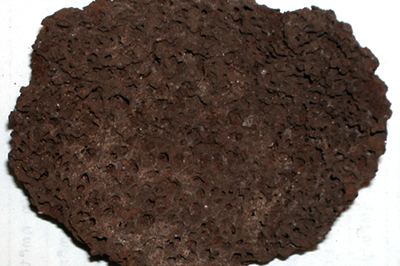
The skull with the brain was found in a chamber that contained three buried ceramic vessels containing the skulls of three women, about 11 to 16 years old. The cave’s damp climate helped preserve red and white blood cells in the brain remains. “It is a unique first-hand source of information about the genetic code of the people who inhabited this place, and we’re now studying it,” Gasparian said in reference to the nine-centimeter-long, seven-centimeter-high brain fragment. It is still being determined from what part of the brain the fragment comes.
Analysis revealed fractures in the skulls and traces of a brain haemorrhage, perhaps caused by a blow to the head, Gasparian said. Next to one of the three skulls, the team also found four adult femoral shafts, rather evenly roasted from all sided. “This may have been a case of ceremonial cannibalism, but it still needs to be proved,” said Gasparian.
The world’s oldest commercial winery
Near the spot where the three skulls were buried, the excavation team found vessels, pots, grape seeds and grape vine shoots, which, according to Gasparian and fellow excavation-leader Pinhasi, could classify the site as one of the world’s oldest wineries because the number and volume of the vessels found suggests that wine was produced here in commercial qualities and from domesticated grapes. “If the analysis confirms the place has been a winery, for the first time ever we will be able to say wine has been produced as early as about 6,000 years ago,” Gasparian told Gayane Abrahamyan, reporter for ArmeniaNow.com.
Winemaking with wild grapes is believed to have gotten its start in Georgia, Armenia’s neighbor to the north, and in Iran, not far from the Areni-1 site, between 6,000 BC and 5,000 BC.
Researchers are now waiting for the results of a chemical analysis to confirm whether the vessels contained wine or vinegar or some other substance. “If the analyses prove our hypothesis, Areni can be called the Armenian equivalent of French Provence and Champagne” in terms of the volume of wine produced, Gasparian added.
Other discoveries at Areni-1 are metal knives, seeds from more than 30 types of fruit, remains of dozens of cereal species, rope, cloth, straw, grass, reeds and dried grapes and prunes. Additional finds from Areni-1 and many other caves near the Arpa River are still to be expected, the excavation leaders say.