2010’s well underway now, and with it the new decade. At Heritage Key we’ve begun the teenies by asking a cross-section of heritage experts to get their crystal balls out, in a bid to try and predict what they think (or at least hope) will be the big discoveries, themes, advances and breakthroughs in their individual fields – and in archaeology and heritage studies at large – over the next ten years.
We spoke to all from a mummy expert to a pyramid theorist, a museum education team leader, an expert in forensic archaeology, an expert in experimental archaeology, an authority on rock art and various other specialists of many different stripes. The responses varied from breakthroughs in DNA testing settling the identities of Egyptian mummies to advances in radiocarbon dating putting the Three Ages System to bed and new applications of remote sensing equipment and satellite imagery yielding new discoveries around the world. One thing that everyone seemed to agree upon: that there’s going to be plenty happening in archaeology between now and 2020. So watch this space.
What do you think are going to be the defining finds, theories or talking-points this decade? Perhaps the tomb of Cleopatra might be uncovered (Kathleen Martinez thinks she’s close), or the tombs of other famous Egyptian figures such as Nefertiti or Amenhotep I? Or maybe disputed artefacts such as the Bust of Nefertiti, the Elgin Marbles or the Lewis Chessmen will be repatriated? If you’ve got an insider tip or just a plain old hunch, leave us a comment at the bottom and get it on the record.
1: “Science will be the driving force in breakthroughs in archaeology”
Over the next 10 years, science will be the driving force in breakthroughs in archaeology, but we must not forget that any new discovery that comes out of the ground needs to be supported by really skilled excavators, and their skills need to be valued as much as the academics and the scientists. Many of those who do the actual digging are terribly badly paid, with fewer and fewer opportunities for gaining experience of excavation (without paying huge amounts of money to go on training digs). Many people make a living from the work that these excavators do – academics, museum people, authors, journalists, publishers, scientists, and so on. As for new discoveries, that is the wonderful thing about archaeology. If we knew what there was to discover, it would be so boring and predictable. The fact that there is so much out there that can surprise and astonish us makes archaeology so fascinating to the public. We must therefore not let archaeological sites be destroyed in the name of so-called progress!
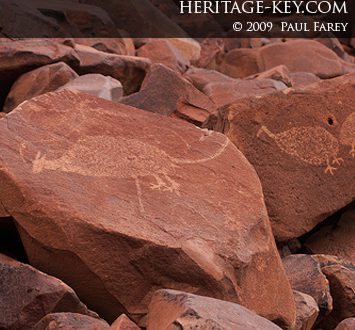
2: “I hope that there will be a national database for rock art”
These are the things that I think might, or ought, to happen in rock-art. There has to be an emphasis on excavating selected sites that may answer some of the research questions that we have. As rock-art has become very popular it will go on interesting undergraduates and graduates, but we shall have to watch carefully that it does not become a focus of inflated language when people realise that there might not be anything new to say, yet still strive to impress. Recording systems will continue to improve; I hope that there will be a national database extending from the one on Northumberland and Durham. Almost nothing has been done to protect and display our rock-art, no matter how recent reports have stressed that this should be done. Any money should be used wisely and in consultation with people who do the field work.
3: “Success is just around the corner for DNA testing of Egyptian mummies”
I am hopeful that the big breakthrough in the next decade will be in DNA of Egyptian mummies (read more about problems with DNA testing in our interview with “Mr Mummy”). So far, no long sequence of DNA has been obtained from Egyptian mummies. This is curious as much older mummies have yielded results, but they were preserved differently – frozen, etc. I believe success is just around the corner for Egyptian mummies – 2-3 years. Then we will settle questions of unidentified royal mummies. Very exciting!
4: “Embracing new forms of communication will be vital to museums”
Ten years ago only birds tweeted, then Stephen Fry started and now even museum staff are doing it. Embracing new forms of communication will be vital if we are to keep collections alive. I think we’re entering a new phase of collaboration, with user-generated content increasingly shaping interpretation. The fact that repatriation and disposal are so contentious means real objects and specimens still matter, but it’s symbolism and stories that fire people up. With sustainability as our watchword, collections will have to pay their way. The best museums of the future will share their stuff or dispose of it.
5: “I hope to see exciting discoveries about the prehistoric built environment”
I hope in ten years we will see more illustrations of buildings, and less of hairy people ritually waving contemporary artefacts at the sky. Recent decades have seen academic archaeology, heavily influenced by structuralism, misapply ideas about culture and ethnography to features associated with the foundations of prehistoric structures. I trust publication of proper structural analyses of a range of longhouses, roundhouses, and especially buildings like Woodhenge and Stonehenge, will demonstrate the value of understanding this evidence through a more appropriate methodology. Thus, I hope to see the beginnings of a re-examination of old excavation data, leading to exciting discoveries about the prehistoric built environment, and a very different visual culture of the past.
6: “Increasing quantity and quality of radiocarbon dates will allow the past to be written in completely new ways”
Touching people’s lives will be the increasing quantity and quality of radiocarbon dates available for prehistoric sites in Europe, especially in providing a resolution that over the next decade or so will allow the past to be written in completely new ways. No longer will be it necessary to rely on the long-redundant mid-nineteenth century Three Age System (Stone, Bronze and Iron Ages), or even its later developed form (Paleolithic, Mesolithic, Neolithic, Bronze Age, Iron Age). Instead we can talk of centuries and perhaps even decades. Events, activities, and sequences will be given human scale. It will finally become possible to say which sites and monuments would have been known to particular individuals and how people’s lives related to the construction, lifespan, and abandonment of structures found through excavations and surveys.
7: “The inexorable destruction of archaeological sites will reach crisis point”
In the next ten years, the inexorable destruction of archaeological sites will reach crisis point. The challenge of preserving even very important sites could overwhelm us. Fortunately, the development of highly sophisticated subsurface detection systems may obviate the need for much excavation and destruction.
8: “Expect to see increased use of remote sensing and satellite imagery in archaeology”
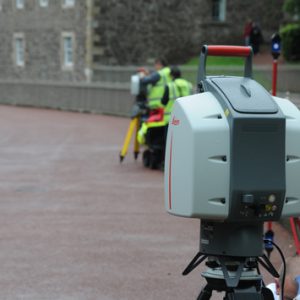
Expect to see increased use of remote sensing and satellite imagery to detect sub surface anomalies and the imaging on websites such as Google Earth of excavations so the mapping the public sees goes 3D and below ground.
Also, the use of digital video and photography to produce 3D images which wrap around surfaces creating 3D images, and the use of laser scanning for image capture (read about a project to laser scan 500 UNESCO World Heritage Sites worldwide over the next five years here).
There’ll be a refinement of excavation techniques and recording standards as influences from legal and forensic work in archaeology are applied to routine archaeological excavation. And also the use of stable isotope analysis to analyse human, animal and artefact movement in the ancient world.
9: “The most important discoveries will be linked to the pyramids of the 4th Dynasty”
21st century technologies are promising to revolutionise archaeology. Egyptologists are facing great challenges in adapting themselves to the new tools available. The monuments of Egypt are the heritage of everyone around the world and all these important artefacts on display in the most famous museums abroad are the ambassadors of this civilization. Luckily, and thanks to these ambassadors, the whole world is wishing to go to Egypt and visit the monuments and treasures of ancient Egypt. The most important discoveries to happen in the near future will be linked to the pyramids of the 4th Dynasty. (Read more about Houdin’s pyramid predictions here).
10: “The Paviland remains will be given a long-term or permanent home in Wales”
I would like to see a programme of research excavation, particularly on Iron Age sites. We have a research agenda in place, but there is presently very little funding to support it. In terms of repatriation, the Paviland remains – which were a centre piece of the new early Wales exhibition in the National Museum of Wales – have recently been returned to Oxford. This early prehistoric cave site is very important in the pre-history of Wales and I would like to think that all the finds would someday be given a home here on a long-term or, even better, permanent loan. This is particularly true if, as I believe is the case, they are simply going to go back into storage at Oxford. (Read more from Dr Howell on early Welsh history here).
11: “We’ll add to the Arctic’s sometimes spare radiocarbon chronologies”
In the New World Arctic, look for freshly discovered sites – particularly ones away from the coast – of increasing antiquity as we add to the Arctic’s sometimes spare radiocarbon chronologies. Look also for interpretive revisions to the time depth, overlap, interconnections, and geographic distribution of certain prehistoric cultures. For example, we’re learning about Northwest Alaska’s Ipiutak culture as being more widespread than once thought, and new, earlier Interior Paleo-Indian sites keep cropping up. Recoveries of archeological remains will become more detailed and fruitful as younger researchers refine their questions and techniques, thus generating greater quantities of things to process as well as novel laboratory analyses. (Read more from Dr Reinhardt on Eskimo archaeology here).
12: “Archaeological parks have to become all year round venues”
Archaeological parks will move forward our knowledge of what it was really like to live in prehistoric Europe. I feel the future of archaeological parks has to be to make them all year round venues that are furnished as people would live in them, rather than tidy outdoor museum exhibits to visit on a summers day. People could live in them for a period of two weeks at a time at different times of the year. Small groups of students, local craftspeople or preferably families could be invited to partake in this experiment. If we don’t do something to get the general public to visit such centres more than once they will soon become a thing of the past, as they cannot sustain themselves without local authority funding.