site

Parthenon of Athens

Athens
Greece
Key Dates

The first Parthenon on the site dated back to 570 BC. The existing Parthenon was built between 447 and 438 BC to replace Parthenon II. In the 5th century it was transformed into a church, before becoming a mosque under Turkish rule in the 1460s. The building was attacked and almost destroyed in 1687 during Morozini’s siege of the Acropolis. Lord Elgin caused more damage when he looted it in the 19th century, subsequently selling much of its contents to the British Museum. The Parthenon underwent restoration from 1896-1900 and from 1922-1933. A modern program of conservation of the entire Acropolis site has been underway since 1975.

Key People

The Parthenon is dedicated to Athena Parthenos, the patron of Athens. Architects Iktinos and Kallikrates designed it, while sculptor Pheidias supervised the building program. He was responsible for the temple’s sculptural decoration and the chryselephantine statue of Athena.

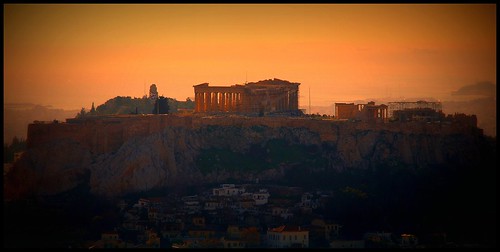
The Parthenon dominates the Athens skyline and is the most celebrated building on the Acropolis site. Myth, religion and war are all related to this site, which is considered one of the most important symbols of Ancient Greece. One of the most recognisable buildings in the world, the Parthenon, along with the entire Acropolis preccinct, became a Unesco World Heritage Site in 1987.

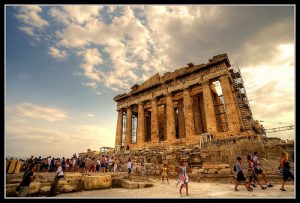
The Parthenon housed the city’s treasures, and also showcased a gold and ivory statue of Athena Parthenos. It is reknowned as an example of Classical Greek architecture. The building is a double peripteral Doric temple made entirely of marble. It is famous for its distinctive columns, with eight columns on each of its shorter sides, and 17 columns on two longer sides. While many of its treasures – including the Elgin Marbles – have been removed, the Parthenon Freize, which depicts a procession of Athenias, animals and gods, has survived.

Related Structures

The Parthenon forms part of the Acropolis.

Admission Fee
Admission Fee

Full: €12, Reduced: €6. Free admission for people aged under 19, university students from the EU, journalists, members of the International Council of Museums (ICOMS) and members of the International Council on Monuments (ICOMOS).

Free admission days: March 6, June 5, April 18, May 18, the last weekend of September, Sundays November 1-March 31, September 27, the first Sunday of every month except July, August and September.

Related Websites