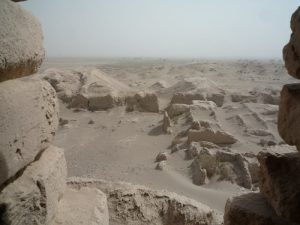
Nippur is an extremely important ruined ancient Mesopotamian city, situated in modern Iraq. While never an especially powerful political centre, it was a hugely influential religious centre as the base of the cult of Enlil, the supreme god of the Sumerian pantheon, whom the Mespotamians believed created mankind. It is also one of the most ancient cities in human history, at around 7,000 years old.
During its peak, around 2500 BC, Nippur boasted multiple large temples, government buildings and businesses. Its inhabitants were very literate for the time – over 40,000 inscribed clay Sumerian and Akkadian tablets have been found there, bearing all from epic tales such as the Creation Story to legal documents, medical records and school texts. Powerful trading connections have been revealed in the range of objects originating from such other civilizations as Babylonia, Egypt, Persia, the Indus Valley, and Greece.
Because Nippur was considered such a holy place, it escaped the ravages of war that befell such other cities as Ur, Nineveh and Babylon. It’s this that makes it such a well-preserved, important and prolific archaeological site, where American teams have been digging for over 100 years. The Oriental Institute from the University of Chicago has been working at and on Nippur since 1948, although fieldwork has been halted since 1990 and the Gulf War. Some damage is known to have been caused to the site during hostilities, but it has escaped looting.
Currently Nippur is fenced-off, awaiting safe conditions for the resumption of studies there.