 They weren’t asking for the costs of duck houses, moat-cleaning, helicopter landing pad-maintenance or even dry rot-treatment, but Roman officials in Britain made their own inflated expenses claims on the taxpayers’ pound, 2,000 years before The Telegraph newspaper sparked the scandal currently gripping the United Kingdom over MPs’ perceived fleecing of the public purse.
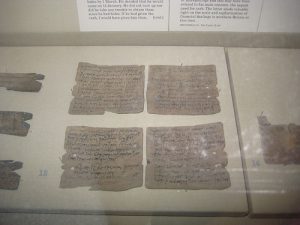
A handful of the 400 tablets found in 1973 at Vindolanda – a Roman encampment on Hadrian’s Wall – detail the hundreds of items chiefs at the settlement expected to be reimbursed for. They include exciting things like ears of grain, hobnails for boots, bread, cereals, hides and pigs.
One unreliable source reports that the Roman officials claimed they were acting ‘within the rules,’ but they were still apparently criticised for violating them ‘in spirit’.
Back here in the present day, the tablets – among the most important finds of military and private correspondence ever made in the Roman Empire, and among the earliest examples of written language discovered in Britain – are to be returned home soon by their current holders the British Museum in London, under a scheme funded by regional development agency One NorthEast.
They’ll feature in a range of themed exhibitions at Vindolanda. Exhibitions we can assume one or two former right honourable members of the UK Parliament will probably be giving a miss.