
A unique queens crown with ancient symbols combined with a new method of studying status in Egyptian reliefs forms the basis for a re-interpretation of historical developments in Egypt in the period following the death of Alexander the Great. In the thesis ‘The Crown of Arsino II’, Maria Nilsson shows that Cleopatra VII was not the only Ptolemaic female pharaoh Queen Arsino II came first, 200 years earlier. Nilsson argues that Arsino (316-270 BC) should be included in the official pharaonic king list as Ptolemy II’s co-regent; her royal authority should be considered equivalent to Hatshepsut, Tawosret and Amenirdis II,…
-
-
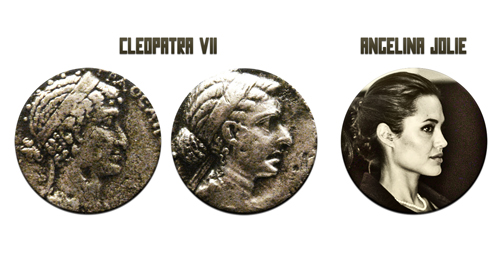
Angelina Jolie will play Cleopatra, the last queen of Egypt, in a film adapted from Stacy Schiff’s upcoming book ‘Cleopatra: A Life’. It’s hardly likely to subdue those arguing Cleopatra was little more than ‘Egypt’s sex kitten’ (opposed by myself, Nele and Rosemary Joyce in her blog and book ‘Ancient Bodies’, I must say), but it’s exciting news nonetheless. The book won’t be published until autumn 2010, but producer Scott Rudin has already purchased film rights, saying the movie ‘is being developed for and with Jolie’. Author Schiff has even hinted at Brad Pitt playing Roman general Mark Antony, reminding…
-
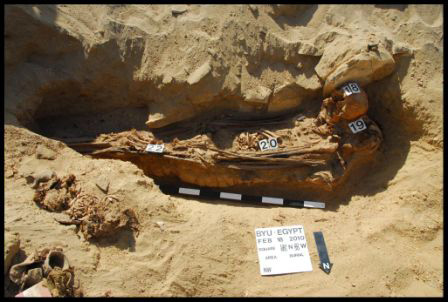
Nearly 4,600 years ago a third dynasty pharaoh named Snefru launched one of the greatest construction projects in human history. He decided, for reasons that are unknown to us, to build four pyramids scattered at different places across Egypt. He constructed two of them at Dashur (the Red and Bent pyramids), one at Meidum and another at a place called Seila. Together they used up more material than Khufus pyramid at Giza. Casing stones were used to give them a smooth appearance in other words make them into true pyramids.” This was the first time in Egyptian history that this…
-
Archaeologists excavating at Taposiris Magna, 45 km west of Alexandria, have discovered a huge headless granite statue of an as yet unidentified Ptolemaic king, and the original gate to the temple one of fourteen temples said to contain a piece of the god Osiriss body. The monumental sculpture, which is a traditional image of an ancient Egyptian pharaoh wearing collar and kilt, could represent Ptolemy IV, the pharaoh who constructed the Taposiris Magna temple. In a statement issued by the SCA, Dr Zahi Hawass says that the statue is very well preserved and might be one of the most beautiful…
-
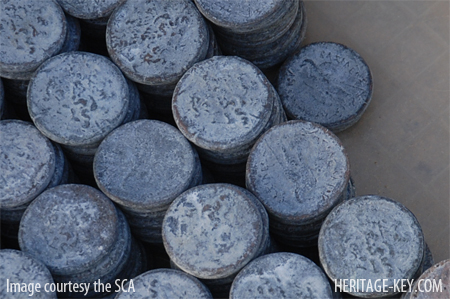
Egyptian Minister of Culture Farouk Hosni announced today the discovery of 383 coins from the Ptolemaic period near the Fayum Oasis. Prehistoric jewellery made from ostrich eggs, and a skeleton of a 42-million-year-old whale were unearthed as well. According to the statement released by the SCA (Supreme Council of Antiquities) the coinage, very well preserved and dating to the reign of King Ptolemy III (246 to 222BC), was discovered during routine excavations north of Lake Quarun. Dr. Zahi Hawass, Secretary General of the SCA, said that the 383 coins are fashioned out of bronze and have a weight of 32…
-
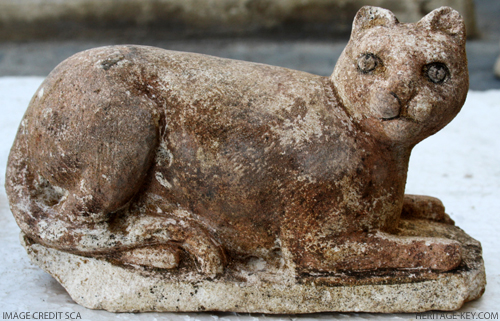
The remains of a temple of Queen Berenike – wife of King Ptolemy III – have been discovered by archaeologists in Alexandria, Egypt. Dr. Zahi Hawass said the remains discovered are 60 meters by 15 meters, and extend under Ismail Fahmy street. About 600 Ptolemaic statues – amongst which are beautiful depictions of the cat goddess Bastet – were also unearthed. Dr. Mohamed Abdel Maqsoud, Head of Antiquities of Lower Egypt, said that the mission excavating at Kom el Dikka on property of the Alexandria Security Forces included 18 skilled excavators and restorers. The large collection of Bastet statues indicates…
-
Unrolling a papyrus (without destroying it) is an expensive and complicated process. How do you do it without causing the whole thing to crumble into unintelligable flakes? Well, last year the Royal Ontario Museum unrolled a Book of the Dead that had long been in their collection, which dated back to ca. 320 BC, the early Ptolemaic period. And they also made a cool video about how it was done. A group at the ROM called, Friends of Egypt, financed the project. A language expert and specialized conservators were brought in. The book was mounted, and, at the beginning of…
-
One of Torontos most unique cultural getaways is a place dedicated to one small, but important, facet of human culture shoes. The Bata Shoe Museum, as its name suggests, is a museum dedicated to the history of shoes. It shows shoes ranging from 4,500 years ago to the modern day. Youcan find shoes worn by Anasazi, the ancient Egyptians and, yes, even Pamela Anderson all in the same building. Shoes in the ancient world are rare archaeological finds.An archaeologist can excavate a decent sized city and not find a single pair. As such the bulk of the museums collection postdates…