
Description Some of the most asked questions about King Tutankhamun have centred around his death, and whether he was murdered. Dr Zahi Hawass enlightens us in this video on how the latest technology has been used to find the answer this question. Using radiology and CT scans to examine the remains of King Tut, science has helped to identify an ancient fracture and a hole in the back of the Boy King’s head. This video is the first in a series of videos about King Tutankhamun, so be sure to keep checking back for the next video! You can read the accompanying…
-
-
Sometimes getting lost in the museum is the most interesting way to find something. Notwithstanding the Louvre in Paris being an expansive, vast area, wandering the rooms in search of a specific place you may not find (read more about the long walk here) is a good way to discover something–even if that something wasn’t what you had planned to find. Below is short slideshow of some of the objects we ran across in our short visit to the Louvre. It is a fairly random collection of artefacts from Assyria, Greece, Crete and Egypt. Mainly these photos are the images…
-
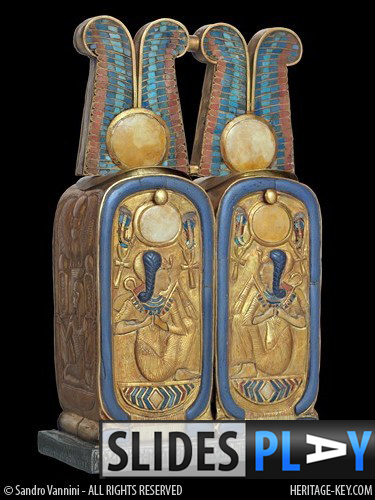
The Cartouche Cosmetic Box is one of numerous artefacts found inside the Tomb of King Tutankhamun (KV62) by famous Egyptologist Howard Carter. The discovery was made in the sarcophagus itself according to Carter, although it’s possible that the artefact was actually found in between the two outer shrines, as other cosmetic boxes were. At a height of just 16cm and width of 8.8cm, with a depth of 4.3cm, the Cartouche Cosmetic Box bears several symbols intricately carved on it. This beautiful artefact is just one of many of the Treasures of the Cairo Museum, the very museum which Dr Zahi…
-
While most people are still able to (albeit it probably a bit incorrectly) answer what an archaeologist does, anthropologists are a species less known to the general public and media. Derived from the Greek ‘anthropos’ (human), anthropology means, ‘the social science that studies the origins and social relationships of human beings’ according to the Princeton WordNet, and is most often used to refer to ‘cultural anthropology’. But anthropology student Dai Cooper is doing her bit to make the discipline just that bit more famous… on YouTube. In just a few weeks, the ‘Anthropology Song: A little bit Anthropologist’ has become…
-
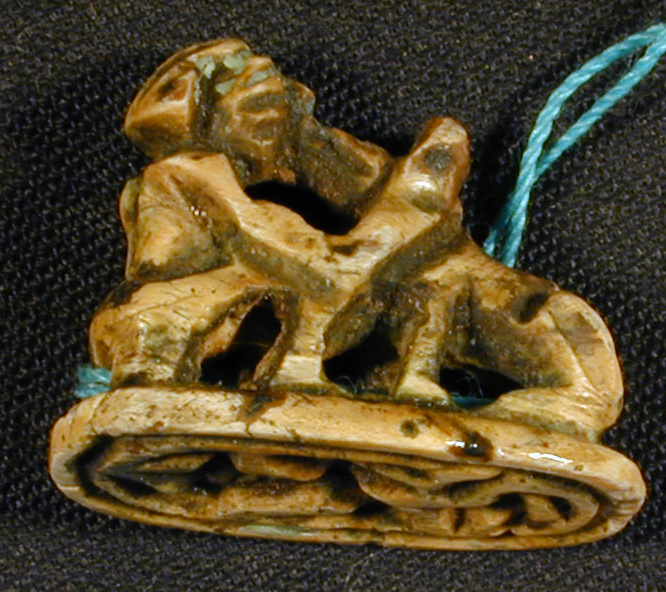
Beverley Miles, a doctoral candidate at MacQuarie University in Australia, has been researching the relationship that dogs and humans had during the time that the pyramids were built. She presented her results at an Egyptology symposium in Toronto a week ago – and they are not for those of a delicate disposition! Shes found some pretty convincing evidence in the form of three pieces of art that dogs and humans shared a very close relationship. How close? Well, one artefact, pictured here, depicts a human male making mouth to muzzle contact with a dog. These objects are highly unusual, said…
-

Parts of an ancient underground drain that takes Bath’s famous hot spring water from the Roman Baths to the River Avon are to be explored for the first time in a project to survey parts of the Great Roman Drain, a scheduled ancient monument and fundamental part of the Roman Baths complex. Parts of the drain have not been explored for hundreds of years. Built by the Romans to prevent central Bath from flooding, the Great Drain still performs its original purpose, discharging water from the natural hot springs to – Bluestonehenge’s – River Avon. It definitely needs to be…
-
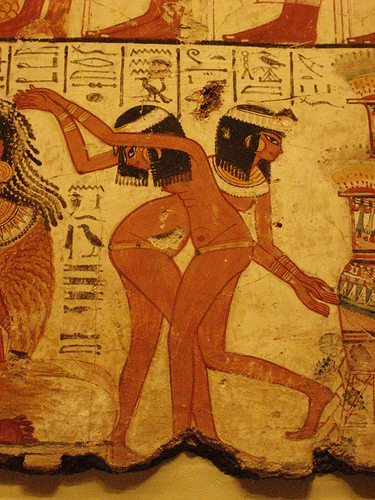
One of the most unusual presentations on Egyptology that Ive seen in awhile took place at the Egypt symposium in Toronto recently. Professor Emeritus Vincent Tobin, of St. Marys University, has been translating and analyzing Late Egyptian love poems, and finds that they reveal a rather risqu side to Egyptian life. The Egyptians were well aware of the more salacious aspects of love, said Tobin. For the Egyptians sexuality is part of human nature. He read a number of examples to the audience, which offer a unique insight into the sex lives of the ancient Egyptians: I shall lie down…
-
Following on from the amazing high resolution satellite images of the Pyramids of Giza, it’s worth noting that the Pyramid is a structure that is seen across the world. The pyramid form was a popular one in ancient times – when you mention the Pyramids, people will instantly think of the Ancient Egyptians, and the Great Pyramid of Giza. But many civilisations adopted the pyramidal form, from the Greeks and Romans to the Chinese and Mesopotamians! The primary reason for this would be the structural form of a pyramid – the majority of the construction material that would be used…
-

‘What killed the forests of Easter Island?’ is a question that has bamboozled experts for years. Outcomes have ranged from natural disasters, to disastrous ecology – but an invasion of rats? It’s the latest posit doing the scholarly rounds, thanks to University of Hawaii professors Terry Hunt and Carl Lipo. But before you’re conjuring hoards of rodent Jack Sparrows patrolling the Pacific, the pair do have hard evidence backing their claim. It’s widely agreed that Europeans are largely to blame for the demise of the Easter Islanders, famous for their eerie megalithic statues, following its European discovery in the mid-18th…
-

I had a great break last weekend and made a one-day shot London/Paris/London via the Eurostar (which is best way to travel this itinerary) to join some family for a special celebration. After lunch we also had (not enough) time to make a quick visit to the Louvre Museum. Given the recent incident where the Louvre was busted by Zahi Hawass for taking “hot” artefacts from Egypt, we decided to go have a look at the Egyptian Collection. The Louvre is even bigger than I had remembered it. Getting to the Egyptian area was not very easy. So the first…