• world

    Missing In Action: 5 Armies That Vanished From History

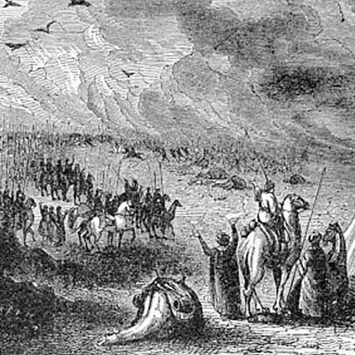
    Thanks to GPS, satellite imaging and digital communication systems, it’s uncommon for so much as a solitary soldier to go missing on the battlefields of the 21st century. But in ancient times – when civilizations often knew precious little of the world outside their sometimes narrow boundaries – it was apparently possible for entire armies to march against a foreign foe and fall off the face of the earth altogether, without conclusive explanation. Myth has undoubtedly embellished – and in some cases overtaken – the truth behind the famous tales of vanished forces such as the Legio IX Hispana, which…
  • vickyd

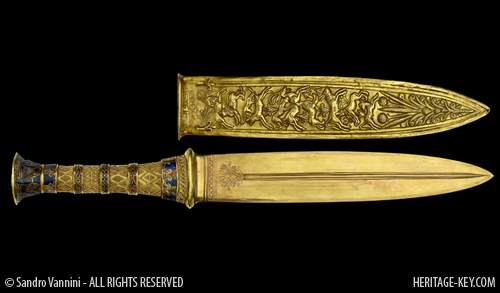
    Face-off: King Tut’s Dagger ‘v’ Forteviot Dagger

    Two powerful Bronze Age figures laid to rest with special reverence; two large ritual complexes in places of kingly significance; each in a bend of a river valley; two burials with remarkably well-preserved contents; and two impressive daggers. The quartz-handled dagger of King Tutankhamun is part of probably the most famous treasure hoard excavated from the dry, dusty desert of Egypt by Howard Carter and Lord Carnarvon 87 years ago; the dagger excavated by teams from Glasgow and Aberdeen Universities in Forteviot in August 2009 is still being conserved after being freshly lifted from a cist burial in the rich…

  • sean-williams

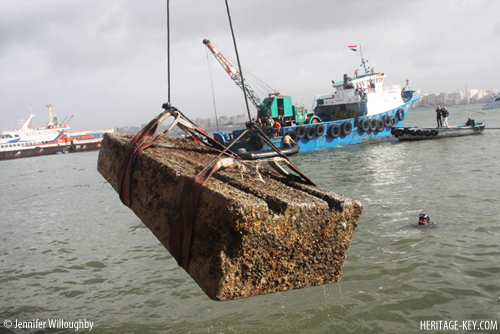
    Egypt Lifts Cleopatra Temple Pillar From Sunken Palace at Alexandria

    A huge granite block, believed to be part of a temple belonging to Egyptian queen Cleopatra, has been lifted from the sea at Alexandria. The nine-tonne stone, quarried in Aswan some 700 miles south of the city, is expected to be transported to a new museum celebrating the sunken city. The block is thought to have been the pillar of a temple to Isis at Cleopatra’s palace. Alexandria became a centre of commerce and education during antiquity, but was razed by a 4th century AD earthquake. The stone is one of a series of underwater discoveries made by the Greek…

  • michael-kan

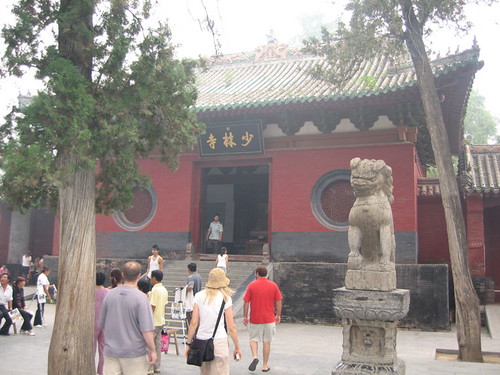
    Shaolin Temple to Float on Chinese Stock Market

    Stock holders might soon be able to invest in Shaolin monks if reports of a new business venture in China are true. According to media outlets, the country’s famed Shaolin Temple, renowned for its kungfu, will be listed on China’s or Hong Kong’s stock market in 2011. The government entity that manages the 1,500 year-old temple was reported to have agreed on a joint venture with China Travel Service, a state-run tourism agency. The joint venture is meant to promote tourism of the temple and the surrounding area. By listing the shares on the stock market, the venture could raise…

  • sean-williams

    Discovering Tut – Carter & Carnarvon: The duo that Unlocked the Tomb of Tutankhamun

    “The whole discovery of Tutankhamun needed both ingredients to make it work. It wasn’t all Howard Carter, certainly not only Carnarvon. But it needed the two of them.” George Herbert, 8th Earl of Carnarvon, ebbs deeper into the bond which drove two of archaeology’s greatest characters to the biggest discovery of all time. But how did the two men, so different in background and expertise, even forge such a strong relationship? Lord Carnarvon – or to give him his full tongue-twisting title, George Edward Stanhope Molyneux Herbert, 5th Earl of Carnarvon – was an aristocratic explorer and adventurer of the…

  • images

    Satellite Image: Stonehenge, England’s famous Stone Circle

    One of the most intriguing and mysterious ancient sites in Britain is Stonehenge, which continues to this day to captivate and fascinate the public. Standing in solitude in the hills of Wiltshire and pre-dating the pyramids of Egypt, the ‘henge‘ itself was constructed first. A henge is formed in the shape of a circular ditch and bank with a single entrance in the north-east section, but millennia of erosion and weathering means that tourists today may not notice it. However, thanks to GeoEye who have kindly provided Heritage Key with a high resolution map of the Stonehenge area, we can…

  • owenjarus

    Eat Your Breakfast! Archaeologist Finds a Cave Full of Stone Age Cereal

    Newsis breaking of a new discovery made by a Canadian archaeologist based in Calgary. Professor Julio Mercader, of the University of Calgary, has found evidence in a Mozambique cave thatHomo Sapienswere eating wild grains as early as100,000 years ago. The discoveryisreported today in the journal Science. It’s being touted as theearliest direct evidence of humans using pre-domesticated cereals anywhere in the world, ina university press release. Scientists have longbelieved that grains played little role in the Stone Age diet. Thisbelief isfueledbythe fact that its difficult to process grain using the tools of the time. The cave thatMercader excavated had a…

  • lyn

    Hello Toi Moko: Sweden Returns Tattooed Maori Heads to New Zealand

    Preserved Mori heads donated to a museum by a collector with a keen interest in natural history. A hand and a few odd bones gifted to a Swedish museum by a sea faring captain. According to details released this week to coincide with the repatriation of Mori ancestral remains to New Zealand, having a preserved head in the corner of your office at work was just the done thing during the 19th century. The recent return by two Swedish museums of Maori remains is part of a large-scale repatriation programme under way at New Zealands national museum. In all, some…

  • lyn

    Romans Join Fight Against Wind Turbine Plans

    Locals in the north of England will use their areas rich Roman heritage to fight a major electricity suppliers plans to build wind turbines near their village. RWE npower Renewables one of the UK’s leading renewable energy providers wants to build up to six turbines as part of its Stobhill Wind Farm development. The farm would generate enough electricity to power between 4,800 and 7,300 UK households every year. The company has already conducted preliminary investigations into the site and submitted a scoping report to Durham County Council. A full planning application is expected before the end of 2009. But…

  • egypt

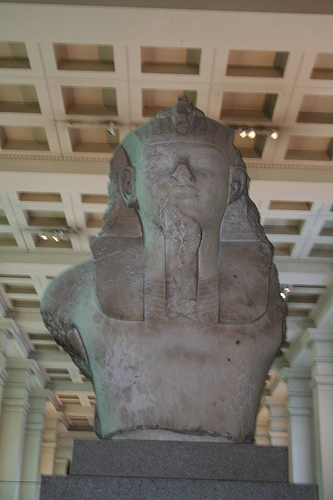
    Amenhotep III

    Attribution: nrares 1403 BC – 1354 BC Relationship People Children Akhenaten Partners Tiye Amenhotep III was the 9th Pharaoh of the 18th  Dynasty. He ruled Egypt from 1391BC to 1354BC after his father Thutmose IV died. Amenhotep III was the son of Thutmose by Mutemwia, a minor wife of Amenhotep’s father. His reign marks the highest point of  ancient Egyptian civilisation, both in terms of cultural achievement and in political power. Amenhotep became king at the age of 12 with his mother Mutemwia acting as his regent. Early in his reign he took a wife, Queen Tiy,  who featured prominently…