Last week we told the first part of the story of Lord Carnarvon, one of Britain’s greatest explorers: his love of cars, planes, travel, and – most importantly – his obsessive passion for finding Tutankhamun‘s treasures. But what became of the cavalier adventurer, and why is there not a single one of his finds in Britain? By the time Carter and Carnarvon had broken into the tomb of Tutankhaum, Carnarvon was already a frail man. His leg badly disfigured in a car accident in Germany, the aristocrat had only originally come to Egypt on his doctor’s advice, to escape the…
-
-
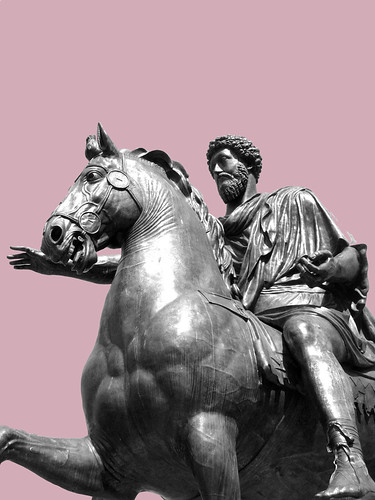
Very few large equestrian statues from antiquity have survived until modern times. Two that have reached us are the bronze statue of the Roman emperor Marcus Aurelius, on display in the Capitoline Museums in Rome, and the Greek marble statue in fragments known as the Rampin Rider. Found by Georges Rampin in the late 19th century in Athens, it is a masterpiece of Archaic art and pre-dates the much more intact bronze of Marcus Aurelius by about 700 years. Each statue tells us a huge amount about the time and place they come from the Rampin Rider from Athens in…
-
Two British film-makers have discovered what they believe to be the source of the 1,900-year old aqueduct built by the emperor Trajan in the early second century AD. The underground chambers were found and filmed after some years of research into Roman hydraulics by the documentary-makers Ted O’Neill and his father Michael O’Neill. According to Ted, it took some perseverance to find the location, which was hidden beneath a disused church some 30-40km north-west of Rome. Despite difficulties and delays in getting access to the site, the O’Neills were finally able to enter the underground chambers of the church in…
-
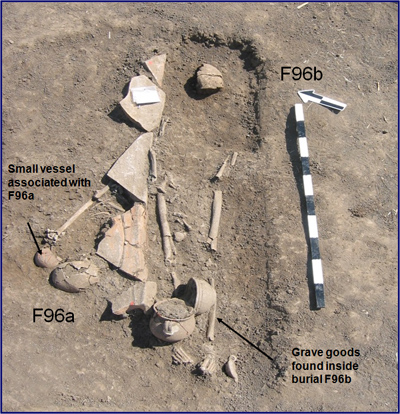
A team of researchers annouced a surprising discovery during a scholarly presentation in Toronto last Friday. The research team, based at McMaster University in Hamilton, Canada, has been helping to excavate an ancient Roman cemetery at the site of Vagnari in southern Italy. Led by Professor Tracy Prowse, theyve been analyzing the skeletons found there by performing DNA and oxygen isotope tests. The surprise is that the DNA tests show that one of the skeletons, a man, has an East Asian ancestry on his mothers side. This appears to be the first time that a skeleton with an East Asian…
-
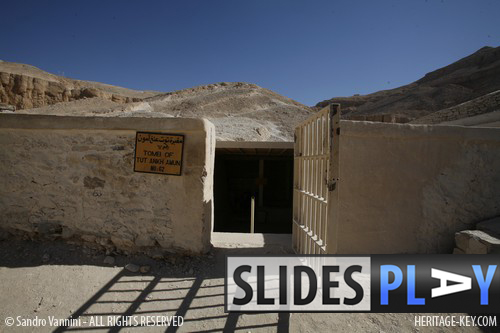
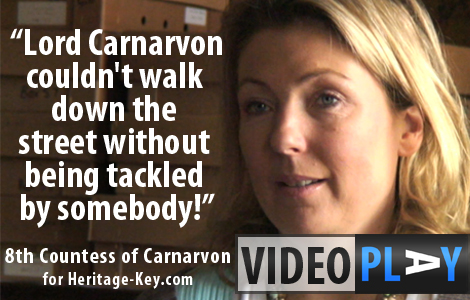
When the entrance to the Tomb of King Tutankhamun (KV62) was discovered by the great explorer Howard Carter and his financier Lord Carnarvon, they could never have dreamed of the treasures which awaited them inside. These two men worked together to track down King Tut’s burial place, as explained in a Heritage Key video with Lord Carnarvon’s modern day ancestors the Earl and Countess of Carnarvon (Watch the Video). Egyptology photographer Sandro Vannini has spent much of the past decade photographing the fascinating artefacts discovered inside KV62, as well as capturing the tomb itself on film. But an angle that…
-
Ancient World in London will inspire locals and virtual visitors around the world to make their own discoveries of the old Londinium. This exciting new project will run for 12 weeks, and feature rich content, live events, competitions and quests – both in London itself and in Heritage Key’s virtual experiences. Each week participators will be offered chances to earn points and win tickets to the grand finale event where special travel prizes will be given away. 12 weeks of fun, exploring, competitions and events start On February 12 Tuesday and ends with the Grand Finale on April 24th It’s…
-
Photographers – get your cameras at the ready and prepare to win points in week one of our photography competition ‘Ancient World Spotted Photo Contest’. There is so much to learn about and see in London, both inside museums and at sites scattered across the city. Through these photo contests we are inviting Londoners and tourists from around the world – as well as the online community – to join in the action. Places that may look like nothing but ruins could actually be our links back to moments in time that have shaped our world and lives today. You…
-
Attribution: Vegan Family Moray Scotland Key Dates A Celtic settlement existed at Birnie from around 1000 BC to 200 AD. The Romans are known to have visitied the site from after 70 AD until as late as around 200 AD. Two large coin hordes were discovered at the site by archaeologists in 1998 and 2001 respectively. The dig remained ongoing in 2009, with at least one more year of fieldwork planned. Key People The excavation of Birnie is led by Dr Fraser Hunter of the National Museum of Scotland. Birnie is an archaeological site in the north-east of Scotland, near in…
-
Roman Britain A New History by Guy de la Bédoyère In this lively, authoritative account of a crucial period in Britains history, Guy de la Bédoyère puts the Roman conquest and occupation within the larger context of Romano-British society and how it functioned.With nearly 300 illustrations and dramatic aerial views of Roman sites, and brimming with the very latest research and discoveries, Roman Britain will delight and inform all those with an interest in this seminal epoch of British history. Thames & Hudson (22 Feb 2010) 288 pages
-
The rich and famous people of ancient Egypt lived a decadent lifestyle with fine wine, sex, high fashion, and plenty of partying. How do they compare with their equivalents today – the modern western celebrity set? The main differences might be regarding who were the richest people then, and who are the richest people now. In ancient Egypt the pharaoh was at the top of the pyramid and his family, noble people who owned land, and the priests came after. Scribes, architects and doctors were well off, and skilled craftsmen also had many privileges. Peasants and unskilled workers were low…