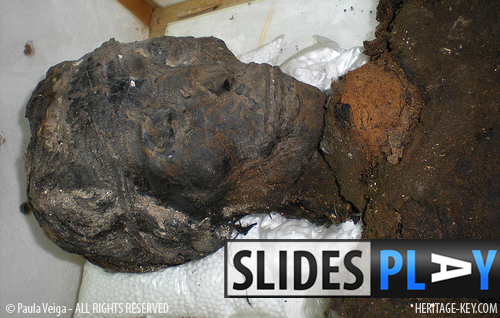
A couple of weeks ago I was lucky enough to take part in the scanning of a female mummy from ancient Egypt, and to take photos to document the experience. This young girl was only around 25 at the age of death, and survived in relative peace for thousands of years. In the last century, however, she’s been used as a bargaining tool by the Germans, survived attacks by torpedos and fires, and even suffered physical traumas. I discovered that the scientific analysis of a young mummy can show us a lot about the life in ancient Egypt, but tell…
-
-
Some of you, like us, may be visiting Stonehenge for this Saturday’s Spring Equinox celebrations (see event listing here). Yet I suspect a fair few more of you will be sinking pints of Guinness in homage to Saint Patrick tonight, staggering home wearing a green top hat which looked oh-so-cool a few hours ago. But if you’re going to be on the Emerald Isle this weekend, why not combine the two, by visiting Loughcrew, Ireland’s best-known megalithic cairn. At the Spring and Autumn equinoxes, Loughcrew’s cairn T is bathed in light, and the sun symbols on its back chamber can…
-
Reminding us that archaeologists for all their undoubted intelligence, ingenuity, industry and general egg headedness dont always have the answers, experts from the Canterbury Archaeological Trust (CAT) have this week been forced to put up their hands and admit they remain unsure as to the purpose of a Saxon artefact discovered two years ago. The tiny circular silver, bronze and wooden disk was found in a Saxon burial ground at The Meads in Sittingbourne, Kent, in 2008. It was part of a cache of some 2,500 Saxon artefacts. CAT researchers have peered at the small object through a microscope and…
-
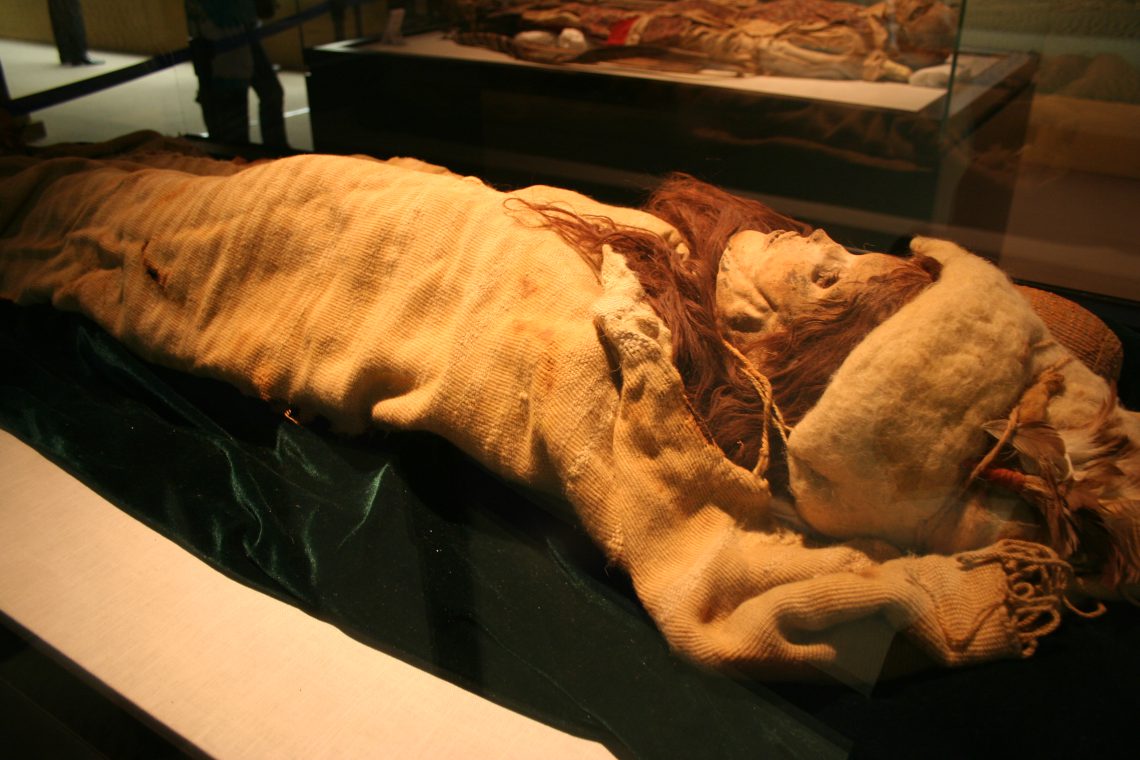
A group of ancient Chinese mummies found in China have long fascinated experts and the public, largely because the bodies look more distinctly European (or even Celtic) than Asian. Now a new scientific report published last month says the oldest of these mummies dating back almost 4,000 years likely originated outside of China, from a mixture of places such as Europe and Siberia. What’s more, these ancient people had an “obsession with procreation”, burying their dead alongside symbolic vulvas and giant phalluses. For decades now, the ancient corpses have been found in Chinas Tarim Basin, a desert region near the…
-
So you’ve bagged a seat in your nearest Irish boozer, scrummed your way to the bar and ordered a pint of the black stuff, and your furry shamrock hat is firmly ensconced on the head: congratulations, you are officially ready to start celebrating St Patrick’s Day. But who is St Patrick? We trace the history of the brewer’s favourite saint back to ancient Roman Britain. Irish or not, Catholic or not, and whether you actually like Guinness or not these are small considerations now that the 17th of March is an international day of merry-making and general festivity. It’s an…
-
Re-invented by the Victorians, under the name of Boadicea, Boudicca (starring in this Ancient World in London video) was presented as an idol of nationalism, of British warrior tradition and, somewhat incongruently, as a figurehead of imperialism, even though this was the thing she had fought against. Her statue sits directly opposite Big Ben and the Houses of Parliament, overlooking the River Thames at the very heart of London. There she stands in her chariot looking over the city like some kind of fierce guardian angel for the British. But what is she doing there? Should we really be touting…
-
The Age of Conquest, an exhibition just opened in the Capitoline Museums, explores the question: how did Rome’s conquest of Greece (146 BC) influence Roman art? The answer is of course that the influence was huge: Roman copies of canonic Greek masterpieces ensued, there were aesthetic influences in the decoration of sanctuaries and funerary monuments, while every-day domestic objects mimicked Greek styles too. That’s not to say that Roman art was particularly inferior to its Greek counterpart in the second century BC. Roman art at that time owed much to the sophisticated and accomplished artworks of the Etruscans (such as…
-
Mayor of London Boris Johnson is to be joined by popular historian Bettany Hughes and head teachers from primary and secondary schools across the city at Londons City Hall tomorrow to launch a new drive to boost classical education in state schools. But is there any point teaching a dead language to already-bored kids? The tousle-haired Tory studied Classics at Oxford as an undergraduate, and has long talked-up how beneficial a good understanding of classical history can be when it comes to getting to grips with modern politics. In the past hes called for every child to be taught Latin,…
-
What’s 84 miles long, 1,888 years old and marked the edge of Roman rule in Britain? Hadrian’s Wall of course – and the landmark got a spectacular makeover this weekend with a line of beacons stretching its entirety. The event, named ‘Illuminating Hadrian’s Wall’, marked the 1,600th anniversary of the end of the Roman occupation in Britain, and needed no fewer than 1,100 hardy volunteers to brave the harsh winds of northern England to make it happen. We know it’s a far cry from London – about 300 miles, in fact – but it’s a once-in-a-lifetime chance (make that once-in-about-250-lifetimes)…
-
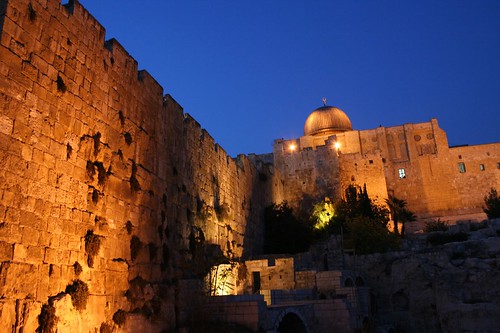
Last year, Dr Zahi Hawass spoke to Heritage Key in a video interview about the restoration work being carried out at the Moses Ben Maimon (Maimonides) synagogue in Cairo by the Egyptian Supreme Council of Antiquities (see the video at the bottom of this page). With the project nearing completion, the SCA chief has today announced that a planned celebration to mark the reopening of the restored monument has been cancelled. Dr Hawass explained that the decision comes in the aftermath of Israeli authorities prohibiting worshippers from praying in the Al-Aqsa mosque in the West Bank. The West Bank has…