• bija-knowles

    Lead Coffin Discovered in Gabii Contains Roman VIP

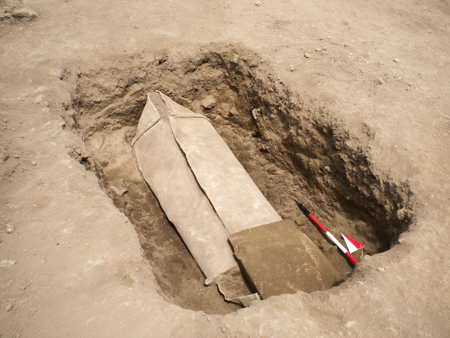
    Very unusual and very intriguing is how Nicola Terrenato from the University of Michigan describes a Roman-era lead coffin that has been uncovered in the ancient city of Gabii, 11 miles east of Rome. The professor of classical studies is the leader of an archaeological project to excavate the site. He added: It’s definitely the most unusual finding of the campaign so far. Who’s in the Lead Coffin? The lead sarcophagus, weighing about 450 kg, was found during last summer’s dig and is thought to date from the second to the fourth centuries AD. Researchers can’t be more exact about…
  • bija-knowles

    Heavy Rain in Rome Causes Major Damage to Domus Aurea and Trajan’s Baths

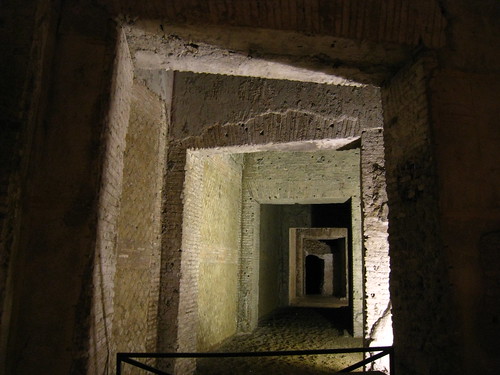
    Sad news today for Italy: part of the complex archaeological structure surrounding Nero’s ‘Golden House’ in Rome his extravagant palace between 64-68 AD has collapsed following heavy rain. The Domus Aurea, as it is known, is one of the treasures of the ancient Roman world. Although it has been mainly closed to the public in recent years due to efforts to fend off encroaching damp and decay, it is a unique archaeological site and an important part of Italy’s heritage. The site is structurally complex and includes important buildings from the reigns of Nero and Trajan. When Nero committed suicide…

  • michael-kan

    Beijing Modernisation is Like Building Hotels in the Forbidden City

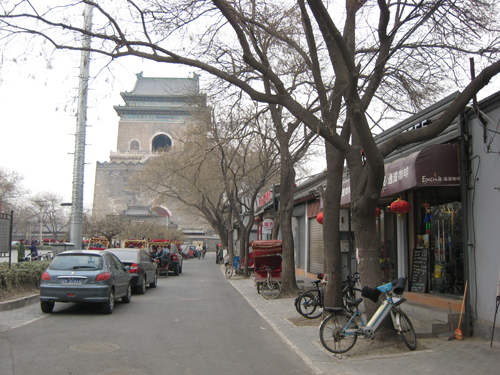
    As parts of old Beijing modernize and turn into new high-rises and shopping centers, preservationists are hoping to draw the line with one of the capitals historical districts. Last night, the Beijing Cultural Heritage Protection Center spoke with journalists about stopping the redevelopment of the citys ancient Drum and Bell towers. Now the group is seeking to rally public support and pressure backers of the project to give up the plan. I think allowing it to happen in such an important neighborhood would be a great waste, said He Shuzhong, chairman and founder of the group. That would be akin…

  • Ann

    Where Will the Pyramid of Userkare be Discovered?

    One of the pharaohs recorded on the Royal List of Abydos whose tomb is still unaccounted for is the mysterious Userkare. In our Heritage Key video The Hunt for the Lost Pharaoh:Userkare Dr Vasko Dobrev speculates on the possible location for the tomb of Userkare, a 6th Dynasty pharaoh who ruled shortly after Pharaoh Teti was assassinated by a priest. In this video, Dr Dobrev – Egyptologist and Archaeologist – shares that he believes Userkare to be buried at the Southern end of the Saqqara necropolis, where other 6th Dynasty kings can be found as well. The plateau that Dr…

  • helen-atkinson

    Jobs for Egyptomaniacs – Movie Stars Needed for New York King Tut Exhibit

    It could be the job of your dreams – working among the treasures of the Boy King, and helping the great unwashed explore the mysteries of Ancient Egypt. Tutankhamun and the Golden Age of the Pharaohs is seeking positive and team-oriented individuals for its Audio Tour and Movie team. The exhibition – which promises to be a blockbuster along the lines of King Tut’s last visit to the city, more than 30 years ago – is wrapping up its American tour in New York’s new cultural institution, Discovery Times Square Exposition, for nine months beginning April 23, 2010. The job…

  • owenjarus

    Mycenaean Tombs Discovered Near Mycenae Could be From Ancient Egalitarian Society

    A team of archaeologists has unearthed five chamber tombs in the Nemea Valley, just a few hours walk from the ancient city of Mycenae. The tombs date from ca. 1350 1200 BC, roughly the same time that Mycenae was thriving. The people buried in the tombs were likely not from the city itself, but rather from Tsoungiza, an agricultural settlement that lies next to it. The cemetery has been named Ayia Sotira. But despite a wealth of human remains, there have been no discoveries of elite burials. Are the archaeologists yet to discover the prize tombs, or could this be…

  • Ann

    Ancient Door of Hatshepsut Vizier User Discovered at Karnak

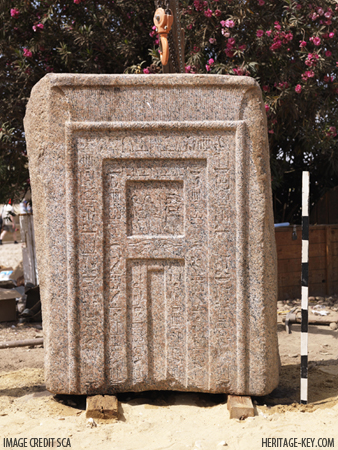
    An Egyptian excavation team has made a new discovery at Karnak during routine excavation works. A large red granite false door belonging to the tomb of Queen Hatshepsuts vizier User and his wife Toy has been unearthed in front of the Karnak Temple. Dr. Zahi Hawass, Secretary General of the Supreme Council of Antiquities, explained that the door is 175 cm tall, 100 cm wide and 50 cm thick. It is engraved with religious texts, as well as different titles of the vizier User, who took office at the time of the fifth year of Queen Hatshepsuts reign, circa 1474…

  • images

    Sandro Vannini’s Photography: King Tut’s Ritual Figure of Sekhmet

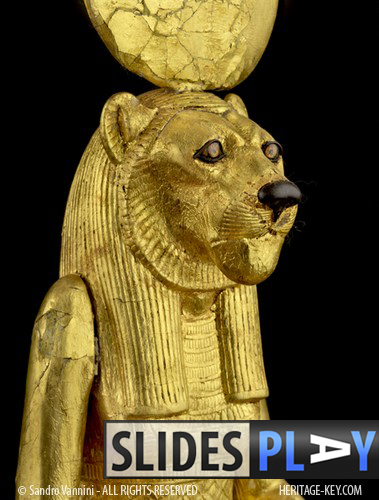
    Housed inside Cairo’s Egyptian Museum are many of the artefacts from King Tutankhamun’s tomb (KV62) including the Ritual Figure of Sekhmet, which was discovered in 1922 by the great explorer Howard Carter and his financier Lord Carnarvon. The two men who had a trusting and close bond, as well as a love for Egyptology as explained by his modern day ancestors in a Heritage Key interview (Watch the video about Carter and Carnarvon). Included in the discovery were 34 ritual figures, believed to be of significant importance in the burial ceremony. Egyptology photographer Sandro Vannini has been capturing many of…

  • owenjarus

    Isis and Osiris: The opera!

    In three weeks the King Tut exhibit Tutankhamun: The Golden King and the Great Pharaohs will be leaving Toronto, heading off to the mountains of Denver. The exhibition has been a huge success, and has prompted a new wave of Egyptomania unseen since King Tut’s 1979 visit to the city. It wouldnt be appropriate for the king to leave without a send-off, and the Art Gallery of Ontario has an interesting one. This Wednesday the gallery will play host to the premiere of Osiris and Isis the Opera. Composed by Colin Mack and directed by Guillermo Silva-Marin, this show will…

  • publication

    The Ancient World with Bettany Hughes

    Ancient World Season with Bettany Hughes by Bettany Hughes Historian Bettany Hughes gives her personal take on the diverse cultures of the ancient world in this 2010 documentary series on More 4. The series begins with an examination of Alexandria, the city founded by Alexander the Great in 332 BC to become the world’s first global centre of culture. The programme explores Alexandria’s role as a powerhouse of science and learning, and focuses on the female mathematician, astronomer and philosopher Hypatia, the subject of the feature film Agora, starring Rachel Weisz. The series also offers a chance to catch Hughes’s…