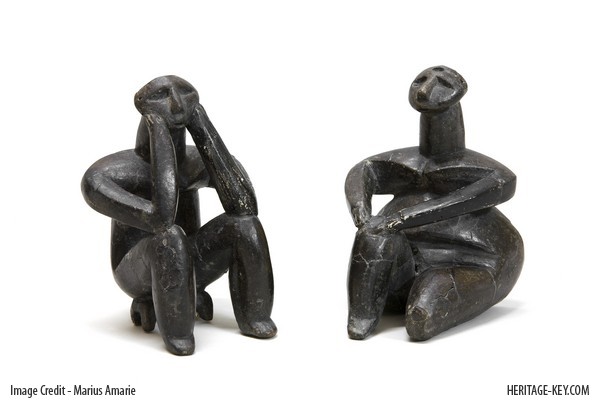
The discovery of the 7,000-year-old Varna Necropolis in 1972 send a shock through the archaeological world.Dated to the fifth millennium BC, the 264 graves and funerary gifts show that when the ancient Egyptians just started to settle the Nile Delta and long before the invention of the wheel, in modern day Bulgaria, ‘Old Europeans’ were already crafting high-quality gold and bronze objects.Neolithic farmers living in the fertile valleys of the Danube riverhad advanced ideas about the afterlife, widespread trade connections and the oldest known burial evidence of an elite male, yet most people – and even archaeologists -have never heard…
-
-
‘Evangelist explorers’ called Noah’s Ark Ministries International, (a name half-Orwell, half Playdays), search for the legendary vessel. Said explorers then ‘discover’ the ark up a Turkish mountain. Naturally not everyone welcomes the news without a hint of skepticism, and the blogosphere’s been buzzing with hoax stories, images, background info and videos – one of which you can see right here. So here’s a snippet of what the web’s been saying about this ‘breakthrough’ – Hot From NIMA The NIMA site itself gives little more than a few newspaper cut-outs (nearly all in Chinese) and an expedition timeline. Quote:March 2010 –…
-
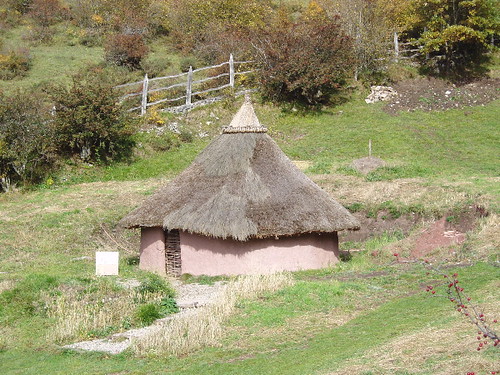
A replica Iron Age roundhouse is to be built in Chester, England, to teach local people about how people lived over two thousand years ago. Cities all over the country hold fascinating Iron Age secrets – watch our Ancient World in London video below to learn about pre-Roman London. The project, to be completed in August this year, will be housed in the grounds of Burwardsley Outdoor Education Centre, near Beeston Castle and Maiden Castle. The sheme, commissioned by Habitats and Hillforts, is part of a three-year landscape partnership between Cheshire West and Cheshire Council (CWaC), Chester Renaissance and the…
-
A Chinese-Turkish group of explorers have announced their discovery of Noah’s Ark, 4,000 metres up a mountain in eastern Turkey. The team, named Noah’s Ark Ministries International (NAMI), claim to have taken photographic and physical evidence of the remains on Mount Ararat, near the Turkish-Armenian border. The ‘evangelical explorers’ even say they have carbon-dated the ‘ark’ to around 4,800 years, bringing it in line with most historians’ views on the Biblical flood story. The group, comprising 15 adventurers from Hong Kong and Turkey, have also shown reporters wooden fragments, rope and nails they claim to have brought from the wreckage.…
-
More and more of us are travelling each year, but are we getting the most for our money? I’d say probably not, but the future’s looking brighter. As the latest Ancient World in London bloggers’ challenge suggests, travel continues to buck the economic meltdown. And it’s not surprising: at a time when it takes longer to get across London by car than to fly to the far end of Europe, and for less cash, why not globetrot? Much more of us are looking to infuse some culture into our foreign sojourns. But old-school P2P websites and shoddily slapped-together online guides…
-
Two Roman altar stones have been found in the Scottish town of Musselburgh, six miles east of Edinburgh. They are thought to date back almost 2,000 years and were uncovered during renovation work at a cricket pavilion. The archaeological excavation took place before building work could start on Musselburgh Cricket Club‘s new pavilion. That could face a delay now that the Roman altar stones and, according to the cricket club, an Iron Age house were found on the first day of the dig. One of the altar stones has been identified as dating from the second century AD and is…
-
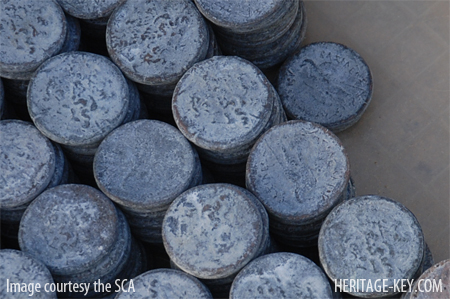
Egyptian Minister of Culture Farouk Hosni announced today the discovery of 383 coins from the Ptolemaic period near the Fayum Oasis. Prehistoric jewellery made from ostrich eggs, and a skeleton of a 42-million-year-old whale were unearthed as well. According to the statement released by the SCA (Supreme Council of Antiquities) the coinage, very well preserved and dating to the reign of King Ptolemy III (246 to 222BC), was discovered during routine excavations north of Lake Quarun. Dr. Zahi Hawass, Secretary General of the SCA, said that the 383 coins are fashioned out of bronze and have a weight of 32…
-
Anti-poverty campaigner Bob Geldof has done his bit to help preserve the heritage of Kent by allowing local archaeologists to carry out a geophysical survey on his land. The Faversham Society Archaeological Research Group is undertaking the survey and a series of mini digs this year in search of Iron Age and medieval remains thought to have been lost in the 1950s and 1960s when Dark Hill, a road near Geldofs Davington Priory home, was widened. Dig leader Dr Pat Reid told the Kent News the project had already turned up late Iron Age flint-tempered pottery. There is also evidence…
-
I went to see How to Tame Your Dragon at the weekend – a beautiful and delightful film by Dreamworks Animation about Hiccup, a distinctly un-Viking-like young boy from a village of blood-thirsty Vikings. Hiccup discovers that creatures who are different from them are not necessarily the enemy a discovery that his marauding fellow Vikings are unlikely to believe easily. Differentiating foreign from invading is a difficult concept that mankind has long struggled to grasp. But do we really still live in an era where a social message like this is necessary – are we still as socially and politically…
-
Plans to close the University of Glasgows Centre for Battlefield Archaeology as part of funding cuts have been met with strong criticism from prestigious quarters since coming to light earlier this month. The centre, part of Guard and the Department of Archaeology, is an arm of the university which offers archaeological services to external organisations. Its biggest claim to fame is its work supporting Channel 4s Time Team programme. The Director of the Centre for Battlefield Archaeology, Dr Tony Pollard, has appeared on some of the Time Team programmes, including excavation of a WWII bunker in Ypres, Belgium, and even…