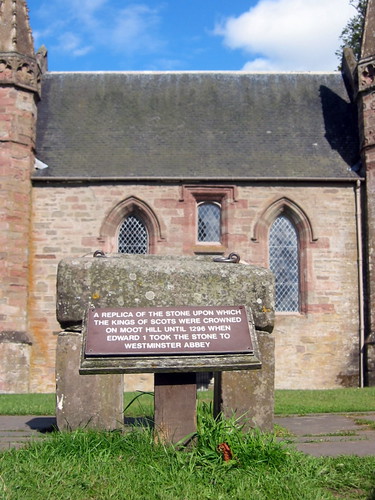
Police in Perthshire, Scotland are investigating the theft and prompt abandonment of a replica of the Stone of Destiny the battered, iconic, controversial and well-traveled symbol of Scottish royalty from outside Moot Hill Chapel at Scone Palace in Perthshire, by a seemingly ill-informed criminal gang. The real stone which itself has twice been stolen in the past, once from its original spot at Scone by King Edward I of England in 1296 and once from Westminster by a group of Scottish students in 1950 (they later gave it back) resides at Edinburgh Castle. It is said to be the seat…
-
-
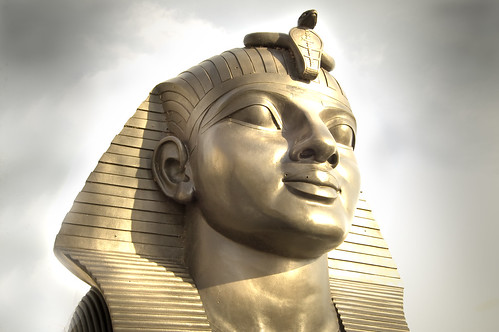
Exciting new web event and content series the Ancient World in London comes to an end very soon. Started at February 2010, the project is sponsored exclusively by Addison Lee, London’s largest minicab service. During the three months we hope we have inspired people to set out for adventures and make their own great historical discoveries either live in London or online. Ancient World in London featured a variety of events, and a fabulous series of videos. It all started when we searched for the face of Heritage Key and were overwhelmed by the responses we received from keen explorers.…
-
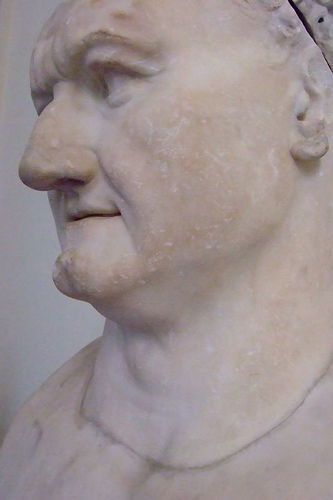
Attribution: 17 Nov 9 – 79 Emperor Key Dates Born in November 9 AD, Vespasian ruled from 69-79 AD. Relationship People Children Emperor Titus , Domitian Associated Gnaeus Julius Agricola Titus Flavius Vespasianus was born on 17 November 9 AD. He became emperor of the Roman empire at 69 AD until his death in 79 AD. Born in the Sabine countryside around Rome in Falacrina near Reate, Vespasian went into the army and served in Thrace in 36 AD. He quickly rose through the ranks and became praetor in 40 AD. His marriage to Domiciliary the Elder produced the sons…
-
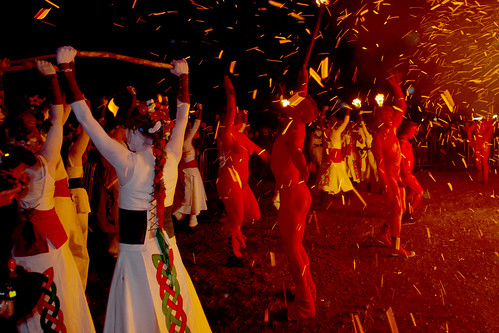
Tomorrow, a happy collection of hippies, druids and general revellers will climb up Calton Hill in Edinburgh to celebrate the ancient festival of Beltane. In my experience, the festival is a positive, celebratory, and quite spectacular event with near-naked hippies sporting all-over body paint and leaves and dancing around fires, drinking warm cans of cider. There are drums hundreds of them, practically making the whole hilltop vibrate and hypnotic chanting. Revellers express their joy and drunkenness much in the same way as they do at Hogmanay by dancing around on the spot outdoors, and kissing passing strangers. Its a good…
-
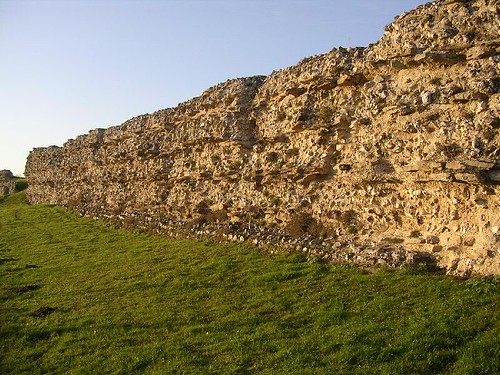
Boudicca’srampaging Celts tore through Calleva Atrebatum, now Silchester, killing thousands of Romans and leaving the town a smouldering wasteland. That’s what 13 years of excavations at the Berkshire town suggest, say a leading expert. Professor Michael Fulford of the University of Reading claims Silchester bears all the scars of the AD60 rebellion, in which up to 80,000 people were massacred by Boudicca and her Britons. An Iron Age settlement was found at Silchester just last year – and though it is often overlooked in the pantheon of Roman British towns Prof. Fulford insists it was at least as important than…
-
It’s May Day this Saturday. And while to most of us all it means is an extra day off work, to some it’s one of the year’s biggest dates. A menagerie of anarchists, anticapitalists and fairweather philosophers will descend on London intent on burning down burger bars and breaking the system. But among the madness and the rolling news stories, most of them won’t realise they’ve hijacked an ancient festival going back thousands of years – and they’ve all got it hopelessly wrong. May Day today is the sibling of International Workers’ Day, an anti-establishment bash dating back to the…
-
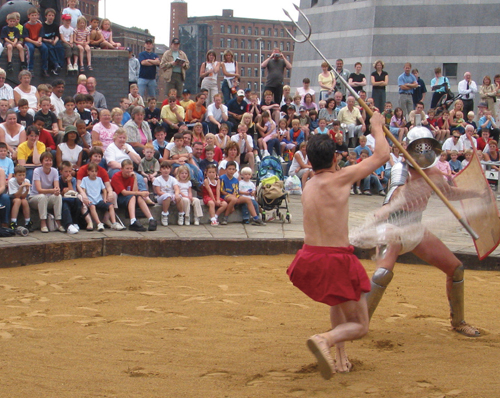
The Royal Armouries in Leeds is holding a series of Roman events this bank holiday weekend and, with the emphasis on arms, there is plenty of action for children and adults. The activities to get involved with include workshops on gladiatorial sword fighting, a chance to meet two Roman legionaries (Stilicho and Quintus) as well as arts and crafts sessions on how to make Roman swords and helmets. The aim of the events is to teach children of all ages about life (and particular the army) in Roman times as well as to showcase some of the Royal Armouries’ huge…
-
A collection of Roman sculptures that was due to be sold at Bonhams auction house in London yesterday has been withdrawn amid concerns that the statues may have originally been illegally excavated. The concerns were raised by Cambridge researcher and archaeologist, Christos Tsirogiannis and Dr David Gill, reader in ancient history at Swansea University. Bonhams’s lot 137 a first or second century AD Roman marble figure of a youth was sold at Sotheby’s in 1986, as stated by Bonhams in the object’s collecting history. In his Looting Matters blog, Dr Gill compares a polaroid photo taken of one of the…
-
The story of Bronze Age Santorini (Thera) is one that has become a legend. Located between Crete and mainland Greece, this island supported a thriving civilization that reached its peak between 2000 1600 BC. Its main city, Akrotiri, had its own naval fleet and had trade connections throughout the Aegean and Near East. Its people produced beautiful frescoes thatdepicted everything from boxing matches toshipsand even antelopes. This civilization came to an abrupt end at some point in the late 17th century BC, when Akrotiri was devastated by earthquakes, causing the people to flee. Shortly thereafter a massive volcanic eruption occurred,…
-
Legendary history writer John Julius Norwich knows Venice better than most, if not all. Having recently edited The Great Cities in History (Thames & Hudson; see more info here), an epic ramble through the pioneering places in human history, he has also penned A History of Venice: The Rise to Empire and Venice: A Traveller’s Companion – and was, until recently, on the board of the Venice in Peril Fund. No surprises, then, that Venice occupies its own page in Great Cities, at the pinnacle of renaissance culture. Yet Lord Norwich, speaking to Heritage Key in this exclusive video, confides…