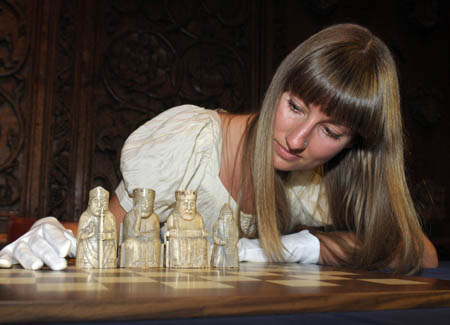
A reunion 180 years in waiting will occur this Friday in Edinburgh, as Lewis Chessmen pieces from north and south of the border are displayed side-by-side for the very first time at the National Museum of Scotland (NMS). The exhibition (one of our top ten to look forward to worldwide this year) marks the arrival of a 20-piece sample of the ornate, ivory-carved 12th/13th century artefacts in Edinburgh on loan from the British Museum, and the beginning of a tour of the country that between now and September 2011 will visit Aberdeen, Shetland and finally Stornoway on the Isle of…
-
-
In philosophy there is a long-running discussion on whether or not the dead can be wronged. Our human or primate intuition seems to be that the dead can indeed be harmed. The philosopher Aristotle pointed out we’d better wait to call a person fortunate until some decades after his death: For it seems to some extent good and evil really exist for a dead man, just as they may exist for a man who lives without being conscious of them, for example, honours and disgraces, and generally the successes and failures of his children and descendents. Nowadays, it seems the…
-
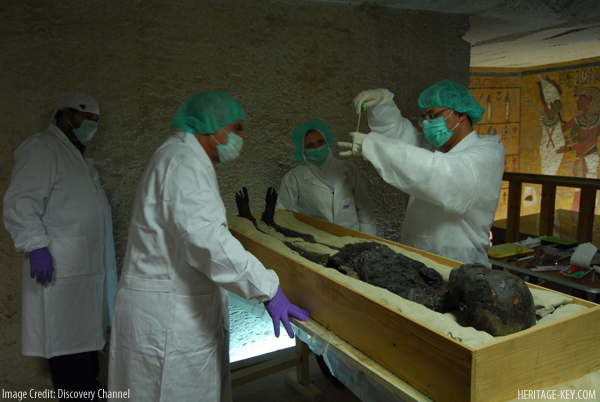
A new series exploring the life of Tutankhamun begins this week on UK TV channel Five. The four-part documentary Tutankhamun: The Mystery Revealed begins this Wednesday 19th May. Fronted by Dr Zahi Hawass, the series sees a team of researchers apply new forensic techniques to the study of Tutankhamuns remains. For the first time ever, archaeologists employed DNA testing on the pharaohs mummy and on his family. Tutankhamun:The Mystery Revealed Originally shown on the Discovery Channel under the title King Tut Unwrapped, the series capitalises on a whole string of unanswered questions that continue to cloud our understanding of this…
-
Archaeologists in Mexico have uncovered a tomb inside a pyramid belonging to a king or high priest who died as many as 2,700 years ago. Three other bodies a woman also of high social status, a baby and young male adult were also found in the tomb inside the pyramid in the Chiapa de Corzo archaeological site in Chiapas district in southern Mexico. It is the earliest evidence of a Mesoamerican pyramid used as a tomb, rather than as a temple. The remains of the man, thought to be aged about 50 years and decorated in precious stones, were found…
-
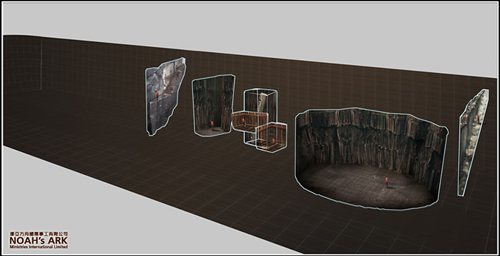
The recent ‘discovery’ of Noah’s Ark on Mount Ararat, Turkey has taken the archaeological world by storm, and it’s no surprise that some are less inclined to believe the audacious claims of Noah’s Ark Ministries International (NIMA). At the same time the team released a computer-generated image of the site, right, American Biblical historian Randall Price has already refuted the team’s claims, stating he went to the ark’s purported location and saw nothing. Price has since been met with Orwellian media backlash on NIMA’s website, but another leading expert has added his concerns to the debate. Dutch Biblical expert M.J.…
-
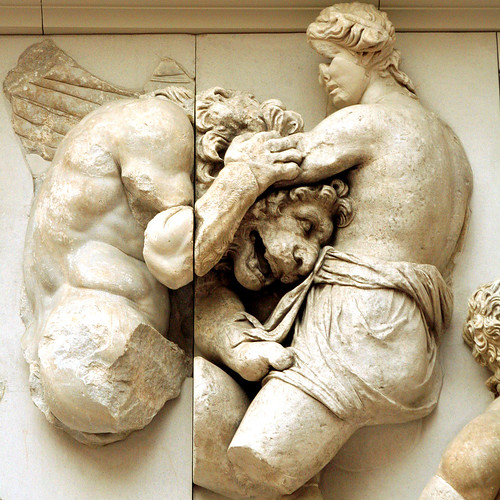
Both of these monumental pieces of sculpture are beautiful, both portray good overcoming evil and the greatness of civilised man over barbarians. The Parthenon itself is awe-inspiring. If you haven’t managed to see it yet (a perfect opportunity for a holiday in Athens!), when you get up to the Acropolis and walk around, look at the Parthenon frieze, the pediments, the metopes, and then you should get ready to pick your jaw up off the floor! It is honestly one of the most magical buildings that I have ever seen. Everything about it proclaims the glory of Athens – it’s…
-
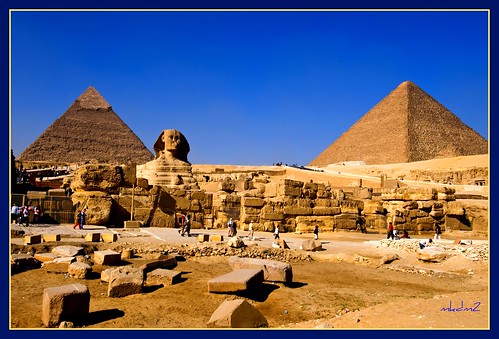
British politicians, ancient Roman rulers, and Art galleries arent the only ones doing battle for your vote during the month of May the ancient world needs your support too as it takes on those pesky modern upstarts in a new worldwide travel poll. Ancient destinations feature prominently on the shortlist for the inaugural Lonely Planet Travel Awards, which seek to find the worlds most popular and interesting travel experiences. Voting is open until May 31, 2010, with the results published online and in Lonely Planet Magazine from August 19, 2010. Everyone who votes has the chance to win a trip…
-
The ancient Spice Route (probably named as a result of the ancient Incense and Perfume routes) was an epic journey which initially began in Arabia, but eventually evolved to link Moluccas (the Indonesian Spice Islands) with Arabia and from there into Europe. The route generally is believed to take in Malacca, Sri Lanka, and Kerala in India. At Kerela, it split into two, with one route to Europe going via Baghdad and the other Accra. Arabia had the monopoly on the spice route for over 2000 years, and its said that both the Roman invasion of Persia in 24 BC…
-
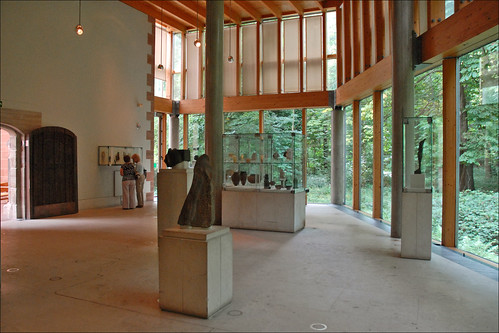
I will soon be visiting Scotland for a exciting archaeological event. No, it won’t involve traipsing around soggy fields looking for cup and ring marked stones. Instead, I will be finding out about one of Egyptology’s most respected figures, William Flinders Petrie. In the Footsteps of Petrie is a study day dedicated to the life of Petrie, founder, along with Amelia Edwards, of the Petrie Museum. The event will be held at the exquisite Burrell Collection in Glasgow, and will explore Petries life of excavation and collecting. A lineup of Egyptologists from across Britain’s museums will offer lectures, a film…
-
By ancient Olympic Games standards, the recent Australian Special Olympics IX National Games, an event held for athletes with an intellectual disability, were relatively small. As the Communications Manager for the games, my job was manic, but fortunately I had a team of volunteers to help coordinate the multitude of print and broadcast media on event as well as updating the Special Olympics Australia website, facebook and twitter at regular intervals throughout the day. Between frantic phone calls, tweets and manically hitting of the send email option, I did ponder for a moment how promoting and communicating results to the…