Plato has a lot to answer for when he wrote about Atlantis. Its been the inspiration behind TV series and Hollywood films; some even made for reasonable entertainment (think Captain Nemo and Man from Atlantis), and some, well sank (think Kevin Costner in Waterworld). Even James Bond, in The Spy who Loved Me, had an Atlantis element. He saved the earth from arch-villain Karl Stromberg, a powerful shipping magnate whose scheme for world domination was to blow up the land leaving the chosen few living safely beneath the ocean. Atlantis has it all; an ancient thriving city with ambiguous plans…

-
-
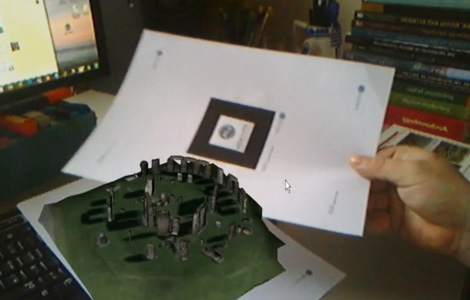
Augmented Reality (AR) seemed a pipe dream not long ago, but today you’ll find AR Japanese girlfriends (no kidding), pets – or ‘Petz’ – for your kids, tattoos, travel applications (read:iPhone or Android-based systems). In fact fighter pilots have been using it for ages (head-up displays for navigational purposes, not Japanese girlfriends, of course). But I must say this is the first ‘AR Stonehenge’ I’ve come across. Take a look at the video below – I’m sure you’ll agree it’s pretty impressive. Augmented Reality – a reality in which virtual, computer-generated images overlay the physical environment, and thus enhance it…
-
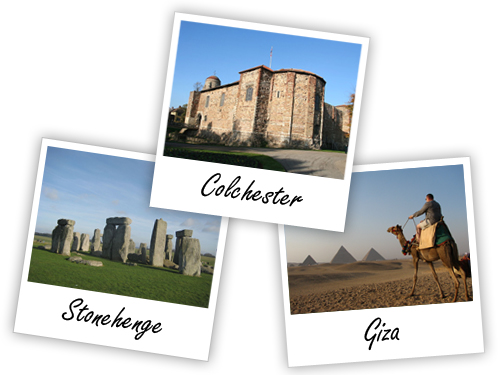
The Pyramids of Giza, Great Wall of China, Stonehenge and…Colchester? The Essex town is preparing an audacious bid to become a UNESCO World Heritage Site – and it’s not as unlikely as it sounds. Destination Colchester, a group of local business owners and heritage enthusiasts, is preparing a bid to be entered onto a tentative list of the UK’s heritage sites. If the bid, due next Friday (11 June), is successful Colchester could find itself rubbing shoulders with the likes of Bath Spa, Hadrian’s Wall and the Tower of London. On a personal note I’d also like to mention I…
-
Kilmarnock’s Dick Institute is the latest museum to be hit by mummymania, as it welcomes the mummy and coffin of an ancient Egyptian High Priest to an otherworldly exhibition. ‘The Journey Beyond – Ancient Egypt and Prehistoric Ayrshire’ will compare attitudes to life and death in two very different corners of the world: Egypt and southwest Scotland. Local Neolithic, Iron Age and Bronze Age burial items from Ayrshire will show how Scotland’s early inhabitants held strong views about life after death. Yet the star of the show is bound to be the mummy and coffin of Iufenamun, a 21st –…
-
It’s the kind of myth that has always had the power to fascinate people: a beautiful, wealthy and sophisticated ancient city is swallowed up by forces beyond man’s control, destroyed by the sea and earthquakes. There are examples around the world of these mythical submerged cities. We not only have Atlantis somewhere in the Atlantic Ocean, but in Taiwan there’s the legend of the submerged Mudalu, in Wales there is a drowned city called Cantre’r Gwaelod and a similar story tells the tale of Ys, a drowned city off the coast of Brittany in France. They are all myths that…
-
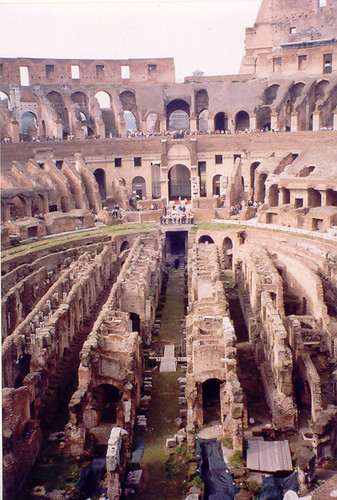
The Colosseum may be almost 2,000 years old, but it’s certainly not letting the grass grow under its feet. New initiatives are continuing to draw tourists to the Flavian Amphitheatre, the most recent of which is the restoration of the corridors beneath the amphitheatre, where wild animals, slaves and gladiators would have waited prior to being lifted onto the the arena floor. According to this BBC report, the sum of 23 million euros is being spent on restoring the Colosseum and preparing the network of underground tunnels, which will be opened to the public later this year. The network of…
-
The Houston Museum of Natural Science will be continuing the “Secrets of the Silk Road” exhibit currently being held at the Bowers Museum in Santa Ana, California. From August 27 to January 2 2011, visitors of the Houston Museum of Natural Science will be able to view the exhibit, which includes three Tarim mummies. 150 ancient artifacts from institutions in China’s Xinjiang Autonomous Region will also be on display as well, reavling surprising details about the people who lived along the ancient Silk Road. The display of the Tarim mummies marks the first time they have been shown in America.…
-
The Egyptians cut their multi-ton bricks so precise that, often, no mortar was needed for the construction of their monumental builds. The Romans mixed volcanic ashes in their ancient mortar, ensuring the Trajan Forum lasts for almost 20 centuries now. The ancient Chinese builders, however, opted for a more culinary solution: sticky rice mortar. Scientists have discovered the the secret behind an ancient Chinese super-strong mortar made from sticky rice, concluding it still remains the best material for restoring ancient buildings today. The mortar a paste used to bind and fill gaps between bricks, stone blocks and other construction materials…
-
Where is Atlantis? Ever since Plato mentioned the existence of the fabled island-city in the 4th century BC, archaeologists, historians and adventurers have spent much time and ink trying to chase down its origins. “Now in this island of Atlantis there was a great and wonderful empire which had rule over the whole island and several others, as well as over parts of the continent, and, besides these, subjected the parts of Libya within the columns of Heracles as far as Egypt, and of Europe as far as Tyrrhenia.” – From Plato’s Timaeus – Translation by Benjamin Jowett One of…
-
Dr Paul G Bahn Distinguished archaeologist and author Dr Paul G Bahn is a distinguished archaeologist, and a prolific writer and broadcaster on archaeology, prehistoric art and early man. In 2003 and 2004, he led the team that discovered Britain’s first Ice Age cave art at Creswell Crags in Nottinghamshire. He holds a PhD from Cambridge, conducting his thesis on the prehistory of the French Pyrénées. He is a fellow of the Society of Antiquaries, and a member of various international organisations, including the Société Préhistorique Française and a variety of rock art research associations. He is also a contributing…