• sean-williams

    ‘World’s Only Well-Preserved Gladiator Cemetery’ Discovered in York

    Around 80 gladiators have been discovered in what experts are calling the world’s only well-preserved gladiator cemetery, in the northern British town of York. The grisly find, made ahead of modern building works since 2004, includes the skeletons of men who had been killed with swords, axes and hammers – and one who had been bitten by a tiger. Other telltale signs the 1st-3rd century AD men were gladiators are their arm asymmetry, testament to years of training with heavy weapons, and seemingly ritual decapitation. Though most losing gladiators were killed by a stab to the throat, the practice may…
  • Ann

    ‘The Curse’ by Josh Ritter – A Mummy & Archaeologist Love Story

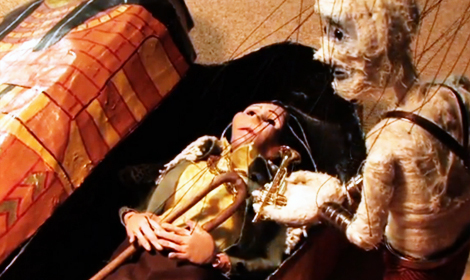
    When you see Dr Bob Brier lecturing about mummies, there is no doubt he’s passionate about them. The same goes for Dr Salima Ikram and all kinds of animal mummies (watch the video). But actual love between an archaeologist and a mummy? That’s something reserved solely for B-movies, until now: Musician Josh Ritter chronicles the love between an archaeologist and a mummy she discovers in Egypt, on new album ‘So Runs the World Away’. Aptly named ‘the Curse’, the song is accompanied by an enchanting puppet music video. When they are on their way from Egypt to New York by…

  • Ann

    Prehistorical Burial Mounds and WWII Defense Systems Mapped at New Forest

    A Lidar (Light Detection and Ranging) pilot survey at the New Forest National Park has revealed previously unknown features to archaeologists. The data, from a a 34 square kilometres section of the New Forest between Burley and Godshill, has allowed researchers to identify a wide range of features, from Iron Age field systems and Bronze Age burial mounds (known as barrows) to anti-glider obstacles, a practice bombing range and a searchlight position from World War II. Normally archaeologists rely on lengthy and labour-intensive field surveys to uncover such features, but airborne Lidar helps speed up the process. Tom Dommett, carrying…

  • greece

    Spedos Figurine (Cycladic)

    Attribution: Photo by Ann Key Dates 2550 BC Dated between 2700 and 2400 BC This figurine of a woman is Cycladic (Keros-Syros culture), dated to 2700-2400BC and said to be from Syros. Compared to other figurines from that type, it is rather large and clumpsy and made from a strange material. Most of the Cycladic figures are made from white marble, but this one is carved from compacted volcanic ash, presumably from the island of Thera (Santorini).  Perhaps because it was produced on one of the few islands in the Cyclades where marble is not found. The left eye of the figure…

  • greece

    Pythagoras and the Stars

    “Number rules the universe.” – Pythagoras Astronomy may already have been in rude health by the time the ancient Greeks built their fearsome empire, but it was the Hellenistic world which gave us some of the most radical – and accurate – foretelling of the universe. And it was the Ionian mathematician Pythagoras who formed some of the most intriguing conclusions about the heavens. “Philosophy begins with Thales.” – Bertrand Russell Pythagoras was far from the first thinker to stun the Greek empire with his observations of the planets, having been beaten to that title by the Milesian philosopher Thales.…

  • sean-williams

    Cleopatra: The Search for the Last Queen of Egypt Opens at Franklin Institute, Philadelphia

    Philadelphia’s Franklin Institute plays host to the world premiere of Cleopatra: The Search for the Last Queen of Egypt this Saturday (June 5). The exhibition, which runs until January 2 2011, promises to be a spectacular affair, combining over 150 artefacts relating to the famous queen, and visits the archaeology that is unearthing her amazing world day by day (click here for an interview with the Institute’s Troy Collins). The show is organised by National Geographic, the same brains behind the Terracotta Warriors’ recent trip across North America. The exhibition’s showcase treasures include statues, jewellery and everyday items from Cleopatra’s…

  • sean-williams

    How Many Ancient Artefacts Are on Display at the British Museum?

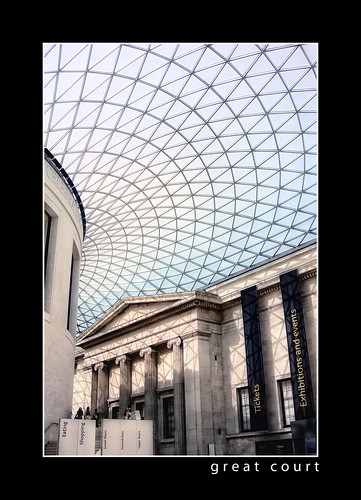
    How many ancient artefacts are on show at the British Museum? Sounds like an easy question: after all, surely it’s just a case of finding the right person and writing down a figure, right? I mean, the British Museum is the second most visited museum on the planet behind the Louvre, and well over half the Louvre’s collection is non-ancient (for an explanation of what ‘ancient’ actually is check out Jon’s blog here) – someone must know how much stuff is on show. For the short story, the numbers and how I came to my conclusions click here. If not…

  • world

    The Palace of Knossos – Discovery and Renovation

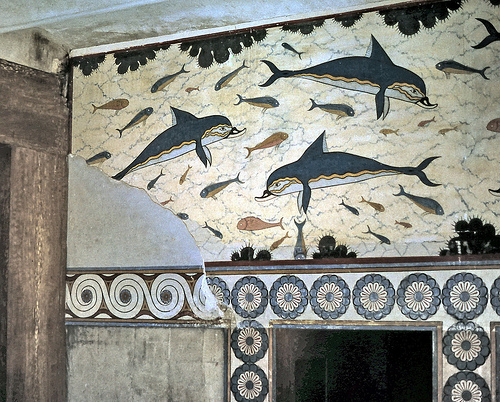
    Excavating physical remains that confirm the existence of a civilization only described in legend: it’s the dream of every archaeologist, and Sir Arthur Evans is one archaeologist for whom the dream came true. The year was 1900; the location was the outskirts of the modern day city of Heraklion, on the Greek island of Crete. The ruins Evans extracted from its baked earth were those of the Palace of Knossos, a spectacular Bronze Age citadel from which the dapper British antiquarian was able to begin uncovering and piecing together the forgotten history of one Europe’s first advanced civilizations. He christened…

  • wadders

    Battle of the Titans: Ancient Sites vs Mass Tourism

    Throughout the ages theyve survived intense battles, powerful natural disasters, adverse weather and incompetent archaeologists. Fascinating, beautiful, but surprisingly fragile, ancient sites are now under a new kind of attack mass tourism. Gone are the days of the Victorian explorer discovering magnificent ancient sites half buried by sand or jungle. Cheap airfares together with a plethora of guide and travel books, not to mention the Internet, encourage us to follow in the footsteps of historical figures and see ancient sites for ourselves or, in some cases, take advantage of the sunny weather and cheap booze – with a bit of…

  • mike-williams

    Inside the Shaman’s Mind

    Shamanism a practice by which a person communicates with the spirits can be found throughout the ancient worlds. Although shamanism takes many and varied forms around the world, what a shaman actually experiences whilst in trance is remarkably uniform. Almost all report leaving their bodies to journey to an otherworld where they meet and interact with spirits. The reason for such similarity lies within the mind itself and the shared neurobiology of every human. In fact, any one of us could have the same experience as a shaman if we put ourselves in trance. Shamans have varied ways of entering…