
Key Dates 4504 BC The Detmold Child has been radiocarbon dated to between 4504 and 4457 BC. It arrived at the Lippisches Land Museum in Detmold in 1987. The Detmold Child is an embalmed Peruvian baby of 8-10 months, discovered at an unknown location in Peru and currently held by the Lippisches Land Museum in Detmold, Germany. It is one of the oldest mummies ever discovered, and predates King Tut by more than 3,000 years, and Ötzi the Iceman by 1,000 years. It cane to the Lippisches Land Museum from a small ethnographic museum in Hessian Witzenhausen. Until then it…
-
-

A 5,500-year-old leather shoe has been found in a cave in Armenia. The shoe 1,000 years older than Giza’s Great Pyramid and 400 years older than Stonehenge is perfectly preserved and was found complete with shoelaces. It is believed to be the oldest example of enclosed leather footwear, out-dating the shoes worn by Otzi the Iceman by a few hundred years. The shoe is sole-less, made out of a single piece of cow hide and was shaped to the wearer’s right foot. It contained grass, which might have served to either keep the foot warm or to maintain the shape…
-
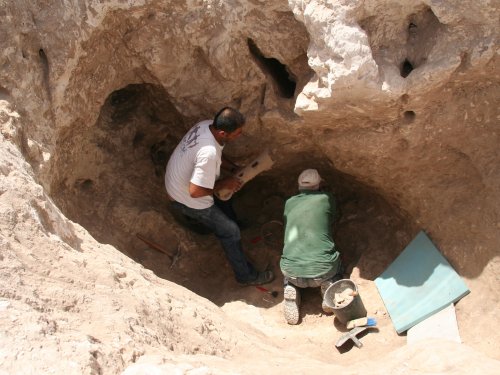
A massive haul of ancient cultic vessels dating back over 3,500 years has been discovered in Israel. The find, made ahead of gas pipe works at the base of Tell Qashish, near Tishbi Junction, has been described as a ‘bottomless pit’ of artefacts, and contains over a hundred intact objects – almost unheard of in archaeological circles. The find includes incense-burning vessels, a sculpted woman’s face – seen in the picture below – and various items of tableware. Experts from the Israel Antiquities Authority (IAA) who made the find believe the artefacts were part of an ancient pagan cult which…
-

Last week two twin towers were opened in North London. But it wasn’t a revival of the Old Wembley – this was the much awaited opening of the Shri Vallabh Nidhi temple on Ealing Road. Costing a cool £16 million and taking 14 years to build, the temple (or Mandir, in Hindi) did not disappoint – contemporary buildings today simply do not contain the stunning detail that this Indian temple boasts. Stepping outside Alperton tube station and breathing that (unfresh) London air, I distinctly felt I was back in the multicultural environment of my youth. Looking around I saw a…
-
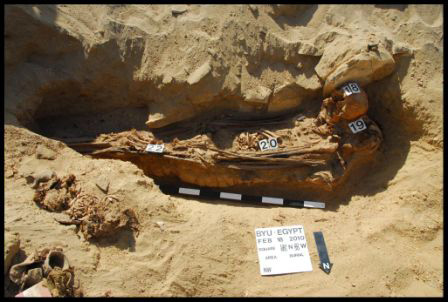
Nearly 4,600 years ago a third dynasty pharaoh named Snefru launched one of the greatest construction projects in human history. He decided, for reasons that are unknown to us, to build four pyramids scattered at different places across Egypt. He constructed two of them at Dashur (the Red and Bent pyramids), one at Meidum and another at a place called Seila. Together they used up more material than Khufus pyramid at Giza. Casing stones were used to give them a smooth appearance in other words make them into true pyramids.” This was the first time in Egyptian history that this…
-
We’re all strangely used to Donald Duck wearing nothing but a sailor’s shirt (it’d get him an ASBO these days), but what about Walt Disney’s second most famous creation as Queen Nefertiti, or the Mona Lisa? Or, if the site of a cross-dressing Donald shatters your childhood memories, how about Duckbert Einstein, or Duck Guevara? Duckomenta is one of this year’s stranger exhibitions. Taking Donald as their launchpad, artist cliqu InterDuck (that’s right) have recreated a plethora of famous pieces of art with the rasp-tongued mallard as star. But while the show, which visits Hildesheim’s Roemer-und-Pelizaeus Museum (in hot water…
-

Nearly 4,600 years ago a third dynasty pharaoh named Snefru launched one of the greatest construction projects in human history. He decided, for reasons that are unknown to us, to build four pyramids scattered at different places across Egypt. He constructed two of them at Dashur (the Red and Bent pyramids), one at Meidum and another at a place called Seila. Together they used up more material than Khufu’s pyramid at Giza. Casing stones were used to give them a smooth appearance – in other words make them into “true pyramids.” This was the first time in Egyptian history that this was done.…
-
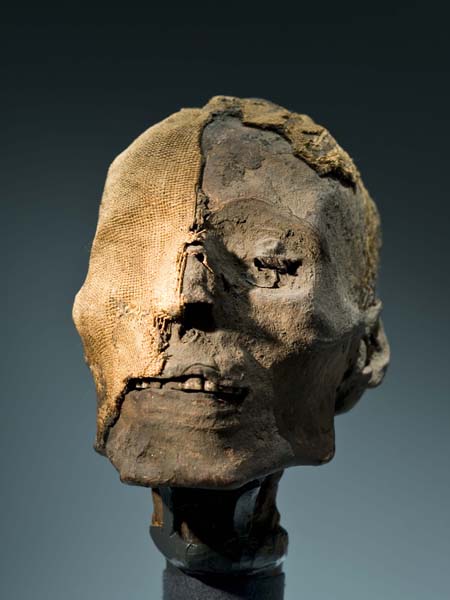
Tickets went on sale at the weekend for the premiere of Mummies of the World the largest single collection of mummies ever brought together in one exhibition, and the very first exhibition of its kind to be staged in the United States. Opening on July 1, itll take place at the California Science Centre in Los Angeles, and run for a limited time, before moving on to tour an as yet undisclosed string of museums around the US for up to three years. Organised by American Exhibitions Inc. (AEI), in association with Reiss-Engelhorn Museums (REM) of Mannheim Germany, the exhibition…
-
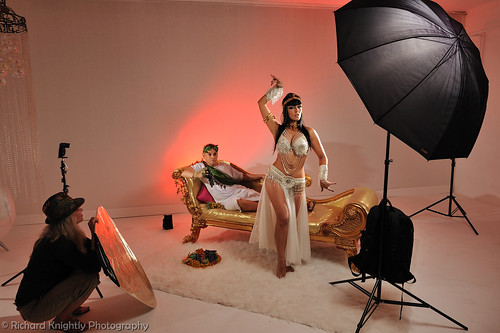
The exhibition ‘Cleopatra: The Search for the Last Queen of Egypt’ premired this weekend at the Franklin Institute in Philadelphia. Blogs and major newspapers have been in awe about the exhibition, featuring the amazingphotographs from the underwater excavations by Franck Goddioand articles about Cleopatra’s glamour and quite disastrous – love life. There’s nothing but praise for the ‘beautiful queen’ and mass coverage on the two quests for her tomb, where she rests with lover Mark Antony. But a true must-read before visiting the exhibition is Rosemary Joyce’s critical blog entry on how we perceive the last Queen of Egypt. She…
-
Key Dates 50 BC The item dates from the reign of Cleopatra, around 50 BC. Key People Cleopatra, the last queen of Egypt who signed the document. Mark Antony, Cleopatra’s lover and friend of Publius. Key People: Cleopatra Mark Antony At first glance this papyrus document may seem a nondescript artefact, albeit one from the Ptolemaic period of ancient Egypt. On closer inspection it may be one of the most significant artefacts relating to Cleopatra, the enigmatic last queen of Egypt. The papyrus is essentially a tax exemption, granting freedom from payment on the import of Roman wine to Egypt.…