• bija

    The Source of Trajan’s Aqueduct at Risk – from Men and Fig Trees

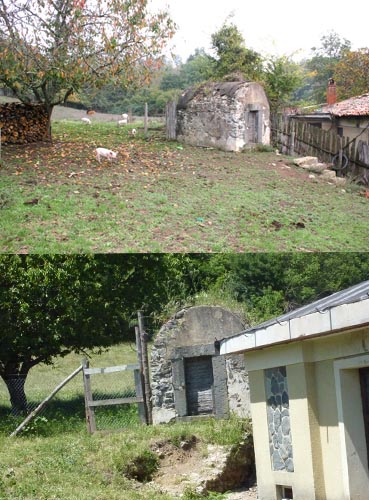
    It was reported in the Telegraph earlier this month that the documentary researchers who identified and filmed the source of an aqueduct built by Trajan in 109 AD are battling for access to the site with a local farmer, owner of the land on which the ancient site stands. The film-makers, father and son Mike and Ted O’Neill, visited the site with archaeologists during 2009 and their research was announced in January 2010 (read the full story here). However, since the end of January, the O’Neills and the archaeologists they are working with have not been able to gain access…
  • Ann

    5000-year-old Planning Application Holds Final Clue to Solve Stonehenge Riddle

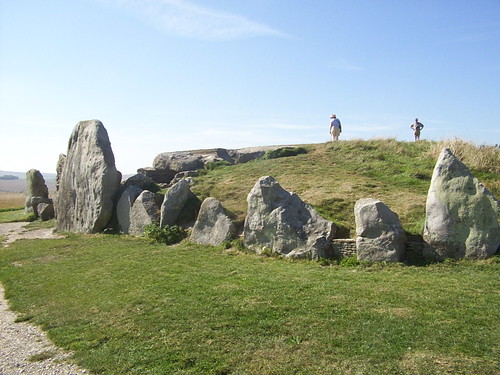
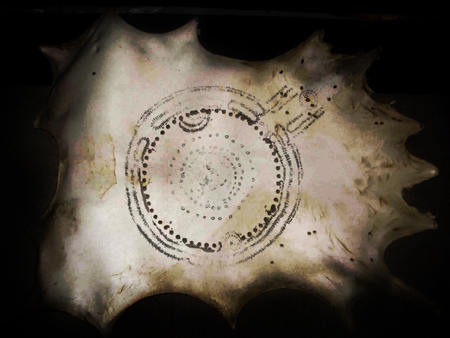
    On Midsummers day, while more than 20,000 gathered at Stonehenge to celebrate the Summer Solstice,it was revealed a long-lost prehistoric documentwasdiscovered at Salisbury. The fragile deer hide document will put an end to all speculations asto the Neolithic monument’s purpose, revealing that theworld’s most famous stone circle was never a place of worship or a giant calendar. Rather, it was the centre of commerce for Britain’sBronze Agecivilization, as far as 5,000 years back. According to entertainment website ‘NewsBiscuit’, after extensive study, Oxford University archaeologists concluded that the document is in fact a 5000-year-old failed planning application for a vast covered…

  • stephen english

    Top 10 Reasons Alexander Was a Great Commander

    ‘Alexander‘ – even today, 23 centuries after his death, his name still has the power to inspire. His achievements have stood the test of time and remain amongst the most remarkable in the whole annals of military history. With an army of typically only around 40,000 men, he conquered the largest, richest and most powerful empire the world had ever seen; and all of this in less than a decade. When Alexander became king, his military career began when he launched a campaign against Macedonia’s northern neighbours. This is a campaign that we know little about, but we can assume…

  • bija

    Earliest Paintings of Jesus’s Apostles Uncovered in Roman Catacomb

    It was announced at a press conference yesterday in Rome that the oldest known images of the apostles Peter, Andrew and John have been uncovered in one of the city’s Christian catacombs. The images date from the late fourth century AD and were found in the underground chambers of the catacombs of Santa Tecla, in the south of the city near San Paolo Fuori le Mura on via Ostiense. Professor Fabrizio Bisconti, a university professor at lUniversit Roma Tre and an expert in christian and medieval iconography, told me: Last year the earliest image of Saint Paul was discovered at…

  • General

    Rob Lee

    Professor – School of Biosciences – University of Exeter Dr. Rob Lee is a Professor in the School of Biosciences at the University of Exeter. His research looks at the study of languages. Recently he led a team that determined that the symbols carved on stones by the Picts, a society that flourished in Scotland from AD 300-843, constitute a written language rather than symbology. The team determined this by assessing the randomness of the symbols. They found that there is some predictability with the symbols, evidence that they constitute a written language.  Their results were published recently in the journal…

  • owenjarus

    4600-year-old Skeleton Discovered in Northern Ontario

    A team of archaeologists, working with the Kitchenuhmaykoosik Inninuwug First Nation, has discovered a 4,600-year-old burial at the mouth of the Bug River, on the south side of Big Trout Lake in Canada. Big Trout Lake is located in the far northwest of the province of Ontario. Even today its difficult to access. The provinces road system stops nearly 400 kilometres south of the area, making planes the most practical way to get in and out. The lake is located on the same latitude as Manchester, but the climate is far colder. In the winter the temperature can go down…

  • ellie

    Defleshing the Dead: What is Excarnation and Where Does it Occur?

    For the archaeologist and anthropologist, excarnation refers to a specific burial practice. It is the removal of the flesh off the skeleton, leaving only the bones to be buried, which could be allowed to occur naturally (by leaving the body out in the open, for example) or the process could be done physically, which can leave signs of scraping on the bones. So why is there the need to de-flesh bones and then dislocate them from the body in many prehistoric cultures? And which cultures in particular does this occur in? Mind the Fingers and Toes! Let’s pull up a…

  • ellie

    Video: The Legend of Eadgyth, England’s Lost Queen

    Bones found in Magdenburg Cathedral are those of Saxon Queen Eadgyth. In a fascinating lecture that saw science, archaeology and history working together to create concrete evidence of Queen ‘Edith’s’ legend. I went Indiana Ellie and hitched up to Bristol University to catch the breaking news on camera. They discovered that Edith had been reburied up to five times, and that each time her bones were wrapped in a new and expensive silk. Professor Harald Meller recreated the event from Edith’s final reburial: from the silk and 169 beetles found in the casket, he suggested that the beetles were attracted…

  • bija-knowles

    Time Team Excavates One of Roman Britain’s Largest Buildings at Castor

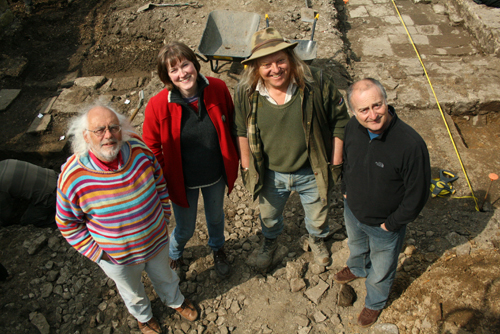
    Channel 4’s Time Team has been excavating in the graveyard of a church in the village of Castor, Cambridgeshire and has come up with some compelling evidence that confirms the presence of a large Roman building. Known as the praetorium, the third century building is thought to have been the second largest Roman building in Britain. While the Time Team have not yet reached their conclusions, they have found a Roman mosaic pavement, the foundations of a very large building or set of buildings, which include Roman baths, as well as signs of Saxon occupation after the Romans withdrew from…

  • prad

    Radar Reveals Ancient Egyptian City at Tell El-Dab’a

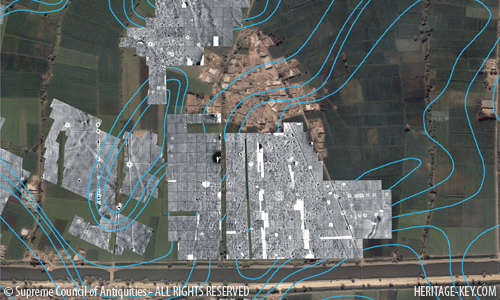
    Egypt’s Cultural Minister Farouk Hosni announced today that the Austrian mission at Tell el-Daba has located the southern suburban quarters of the ancient city of Avaris, the capital of the Hyksos in the Second Intermediate Period (1664-1569 BC). The excavation team found this area using a combination of magnetometry and resistivity surveys. Dr. Zahi Hawass, Secretary General of the Supreme Council of Antiquities (SCA), said that the computer-generated images of the city, which is still buried under the ground, show a very detailed layout of ancient Avaris. Several architectural features including houses, temples, streets, cemeteries and palaces can be seen.…