
Roman ship-discovery season is in full flow, with several finds and explorations announced in the past week. Yesterday Ansa ran a story about the discovery of a 25-metre merchant ship from the first century AD with its cargo of 500 amphorae containing fruit and vegetables still on board. The ship is said to be in perfect condition and was found south of Panarea, in the group of Aeolian/Lipari islands north of Sicily. The news agency reported that Italy’s Maritime Superintendency and the Aurora Trust, an American foundation, were responsible for the find. Aurora Trust found five wrecks off the Italian…
-
-
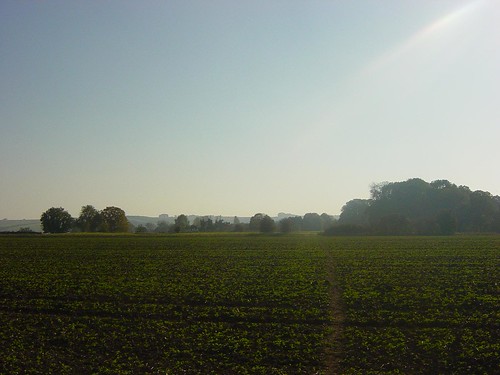
Archaeologists began working on one of Britain’s most mysterious ancient landmarks this Monday, as they aim to unravel its many hidden secrets (UPDATE: Click here to read about some of the finds). And while Marden Henge in Wiltshire may be almost unknown alongside its neighbour at Stonehenge, it is at least ten times bigger, making it one of Britain’s biggest stone circles. Unlike Stonehenge, and nearby Avebury, Marden contains no standing stones. Yet the six-week project by English Heritage, fresh from their visitor centre disappointment, will probe the site for clues as to whether it once did, and what it…
-
Alexandria, 30BC. When Cleopatra, the last Queen of Egypt, is forced to surrender to Octavian, she decides she’d rather die than fall in enemy hands. She locks herself in the temple, and manages to deceive her Roman captors: by inducing an Egyptian cobra to bite her on the arm, she kills herself. A quiet and painless death. Or so the story goes. 2,000 years after the famous suicide, German historian Christoph Schaefer is challenging this ‘suicide-by-snake’ theory, claiming the Queen used a mixture of hemlock, wolfsbane and opium to poison herself. Ruling out Death by Snake After studying historical texts…
-
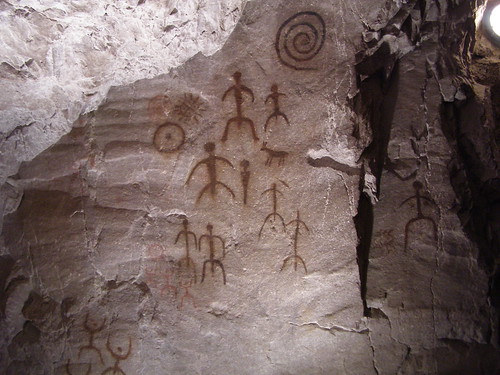
My award for archaeology’s equivalent of an IgNoble prize goes to boffins at Cambridge University and Austria’s Sankt Poelten University, who have triumphantly announced that rock engravings from the Copper Age in Europe were ancient movies (as opposed to doodles). Was this not a hopelessly obvious conclusion? Not to Cambridge’s Frederick Baker yesterday (June 29): “The cliff engravings…in our opinion are not just pictures but are part of an audiovisual performance.” “There was still no moving image but (the pictures) created sequences like in animation,” adds Baker. “This was not just a treat for the eyes but also for the…
-
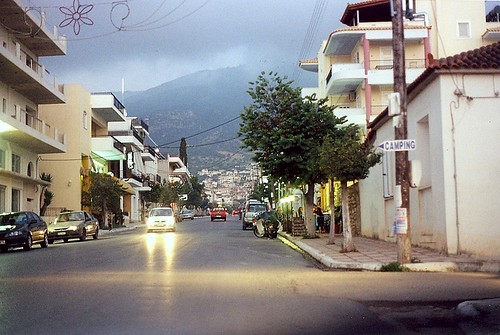
An ancient town that once may have launched ships to Troy has been discovered in a town in Greece. Archaeologists at the site in Kyparissia, on the western Pelopennese, have unearthed the outlines of buildings and ancient tiling ahead of roadworks, reports Hamara. The discovery will also be a boost for those who have long argued that the picturesque town, once known as Arkadia, supplied ships to Troy in antiquity. Yet the find is shrouded in controversy:some parts of the ancient town are higher than the depths of a neighbouring swimming pool complex – suggesting its owner knew of the…
-
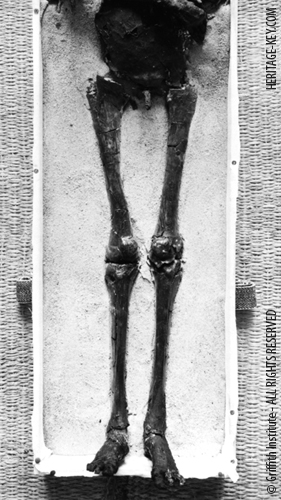
Tutankhamun’s penis was swapped because it was too small, according to a media report. New Scientist writer Jo Marchant believes the young pharaoh may have suffered from a rare genetic defect which, among other issues, causes under-developed genitalia. Antley-Bixler syndrome also results in elongated skulls, which could account for stylistic depictions of King Tut’s proposed father Akhenaten(read our recent article on how the boy-king could have died from sickle-cell disease here). Marchant claims the modest penis was most probably broken off “during a particularly brutal autopsy“, yet others say it could easily have been damaged during its early years of…
-

A troublemaking trio have filmed a trail of destruction, as they stole a double-decker bus and crashed it causing 30,000 damage in the Stonehenge town of Amesbury. The three, two 16-year-old girls and a man, 21, have been arrested and released on bail after shooting ‘stolen bus solstice 2010 hoodies amesbury (sic)’ which they posted to YouTube. The video has proved an instant hit on the site, registering almost 50,000 views. Yet it won’t be much use to the owners of two parked cars and three buses the yobs wrecked, on their Mad Max-style rampage through the Wiltshire town, just…
-
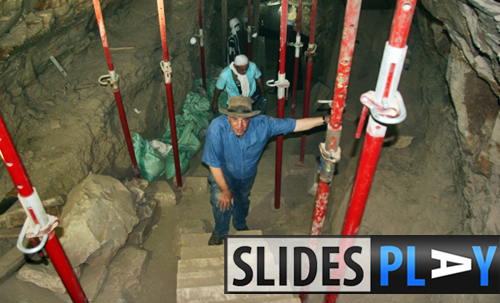
After more than 40 years, archaeologists have finally reached the end of the tunnel discovered in the tomb of Seti I. Hopes the tunnel would lead to the pharaoh’s secret burial site have been crushed, after the seemingly unfinished tunnel suddenly stopped after a back-breaking 174m. Pharaoh Seti I’s tomb, which is located in the Valley of the Kings, was first discovered in 1817 by strongman-turned-archaeologist Giovanni Belzoni (watch a video about Britain’s explorers). But clearing of the tunnel, cut into the bedrock near the end of the beautifully decorated tomb, was not started until the 1960s, under the direction…
-
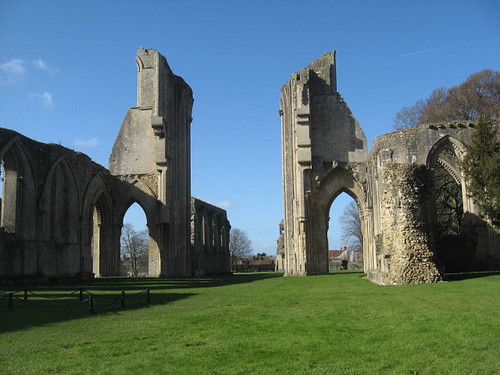
The King Arthur we are familiar with is a literary figure, but was he also a historical one? In my book Revealing King Arthur: Swords, Stones and Digging for Camelot, I show how archaeologists over the last 50 years have interpreted the evidence from Dark Age Britain. At first they were happy to link their discoveries to legendary names. Then came a backlash, when Arthurian links were ignored or derided. Now, new discoveries have raised again the possibility of a real King Arthur. The HISTORY channel documentary King Arthur’s Round Table Revealed (video preview) brings together the leading experts to…
-
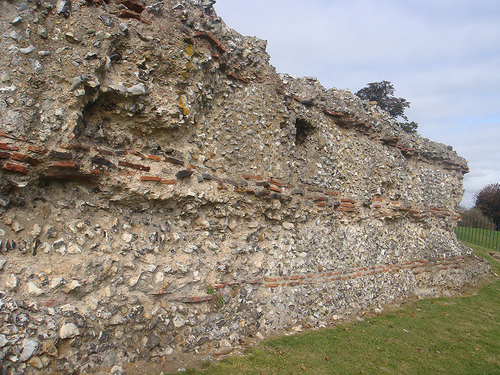
“Are there even 10 Roman walls in Britain?” I hear you ask… Read on and see for yourselves. 1. Hadrian’s Wall The Roman wall. By a distance the most famous Roman ruin in Britain, Hadrian’s wall was a way for the Romans to do more than just protect the northern border of the Empire. It marked their territory in a way that would leave those who came against it in awe. It was a protective measure, designed as an impassable obstacle to any invader, but also a controlling structure, monitoring trade across the border and collecting levies. The strength of…