
A group of three people dressed in black veils entered the British Museum and solemnly spilled an oil substance near the iconic Eastern Island Moai statue as a form of protest against BP for the Gulf Oil spill disaster. According to blog Culture24 they choose the Hoa Hakananai because of “its fabled links with the sudden demise of reputedly strong civilisations.” BP is a major sponsor for the British Museum as well as other art institutions including the Tate and Royal Opera. Says activist Ben Cooper: “Just like the forests on Easter Island, oil represents a resource being over-exploited despite…
-
-
Sir Andrew Lloyd Webber, the multi-millionaire musical impresario, has expressed a wish to purchase Highclere Castle, near Newbury, Berkshire. The Victorian castle has been the family seat of the Carnarvons since the 1670s, and was home to the fifth Earl of Carnarvon, who funded Howard Carter’s discovery of Tutankhamun‘s tomb (watch the video). Andrew Lloyd Webber’s offer came after the current Earl applied for permission to sell pieces of land on the fringes of the Highclere estate in the hope of raising 11 million to fund badly-needed repair works to the Victorian mansion. In a letter sent to the Earl…
-
When the latest Tutankhamun study was published in Jama, there were quite a few outcries that although the study looked into the direct ancestry of King Tut, it fully ignored the pointers to the pharoah’s racial ancestry, possibly hidden in the pharaoh’s DNA. As usual, Dr Zahi was accused of many things, most notable charges of ‘hiding that King Tut was black/white/purple.’ Now a retired physicist took the time to write down some of the DNA test results exposed in the Discovery Channel programme that featured the study’s results and concluded the data shown in the docu reveals Tut’s haplogroup…
-
Zahi Hawass has a new television show coming out on History Channel tomorrow, called “Chasing Mummies“. We had a look at the trailer and it seems like they are going for a highly pop-culture adventure-like, make-the-big-finds angle to attract the thrill-seekers. You had Ice Road Truckers, now get ready for Sand Dead Diggers starring the High Plains Sifter? It all has to be good for making archeology more exciting and discovering history more fun. But at the same time, you have to wonder if the History Channel, on the heels of Discovery Channel’s King Tut Unwrapped, is mixing up the…
-
Archaeologists have unearthed twelve ancient sphinx statues at Luxor, Egypt. The sculptures were found at a newly discovered part of the Avenue of Sphinxes, an ancient road stretching from the temple at Karnak to the temple of the goddess Mut at Luxor. The discovery, made as part of excavation and restoration works at the site by the Supreme Council of Antiquities (SCA), was announced by Egypt’s Minister of Culture, Farouk Hosni. The statues of the mythical creatures, inscribed with the name of Pharaoh Nectanebo I, were found in the last sector of the Avenue of Sphinxes, a part of the sacred…
-
Description A new documentary explores the history of King Arthur and whether the legendary Round Table was based on a iconic Roman Amphitheatre. Is it a coincidence that Arthur’s Round Table was originally described as a very large structure, seating 1,600 of his warriors in a circle? Read more about the ‘King Arthur Revealed’ documentary in Lyn’s blogpost. Related Heritage Experts Christopher Gidlow Credits Christopher Gidlow Transcription The team wondered whether the legendary round table was actually based on an iconic Roman building, such as, an amphitheatre. Christopher Gidlow: It’s a very intruiging hypothesis, that the round table, the item…
-
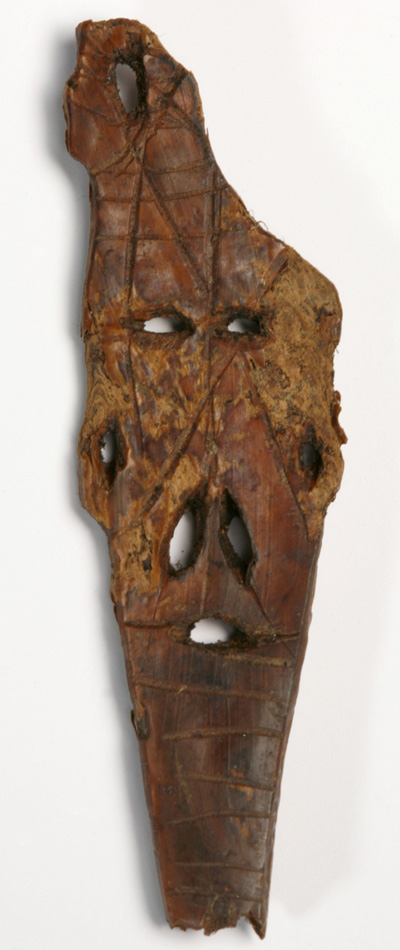
The Tunit made our country habitable. They built the line of boulder cairns that guide caribou to the river-crossings where they can be ambushed by hunters, and they furnished the rivers with fish-weirs. An Inuit story, from Ancient People of the Arctic by Dr. Robert McGhee Today archaeologists believe that the Tunit, who are mentioned in Inuit stories, flourished in the arctic during ancient times, vanishing around the 14th century AD. Archaeologists first encountered their remains in 1925 at a place called Cape Dorset on Baffin Island. They gave them the name Dorset culture, a term that is still used…
-
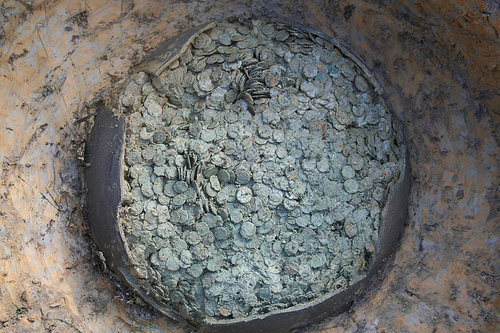
A metal-detector enthusiast has found one of the biggest ever hoards of Roman coins. It is the biggest hoard ever found in a single vessel in Britain, numbering 52,500 Roman coins of varying denominations. The finder was Dave Crisp, who was out with his metal detector in a field near Frome, in Somerset, when his machine alerted him to what turned out to be an earthenware pot full of coins from the third century AD. The coins were contained in a large earthenware jar and altogether weighed 160kg. It is estimated that they would have been worth the equivalent of…
-
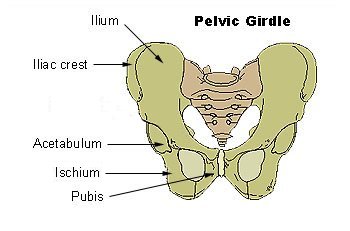
Somewhere in the world bones from an ancient skeleton are discovered buried in an unmarked grave. The head is missing, most of the chest is gone and only a small fragment of the pelvis has survived. Researchers are then faced with a problem how do you tell if this person is male or female? The pelvis holds the answer, but only a small amount of it is left. Today a team of researchers lead by John Bytheway and Ann Ross, from North Carolina State University, and Sam Houston State University, announced a solution to thisproblem – in the form of…
-
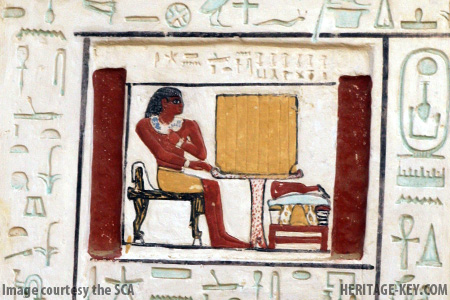
Archaeologists have discovered two ancient Egyptian tombs, belonging to a father and his son, at the Saqqara necropolis in Egypt. The rock-hewn painted tombs were unearthed last week, and with at least one tomb never looted, are considered an important find. The discovery was made during routine excavations at ‘Gisr El-Muder’, west of Djoser’s Step Pyramid, the first pyramid in Egyptian history. Work in the area has been ongoing since 1968. Dr Zahi Hawass, Egypt’s antiquities chief, says the tombs belong to 6th Dynasty government official ‘Shendwa’ and his son, ‘Khonsu’. The older tomb consists of a painted false door…