
The Venus of Orkney, a 4,500-year-old Neolithic sandstone figurine hailed as Scotland’s earliest depiction of a human face, has been a darling of British archaeology since it was excavated last year on the remote island of Westray. Now, the Venus, which earned a nomination at the recent British Archaeology Awards, will have to share the limelight archaeologists at the Links of Noltland site on Westray have uncovered a second remarkable Neolithic figurine, less than 100 feet from where the Venus was discovered. Like the Venus, the recently excavated figurine is a tiny, delicate pendant-like figurine. Standing less than two inches…
-
-
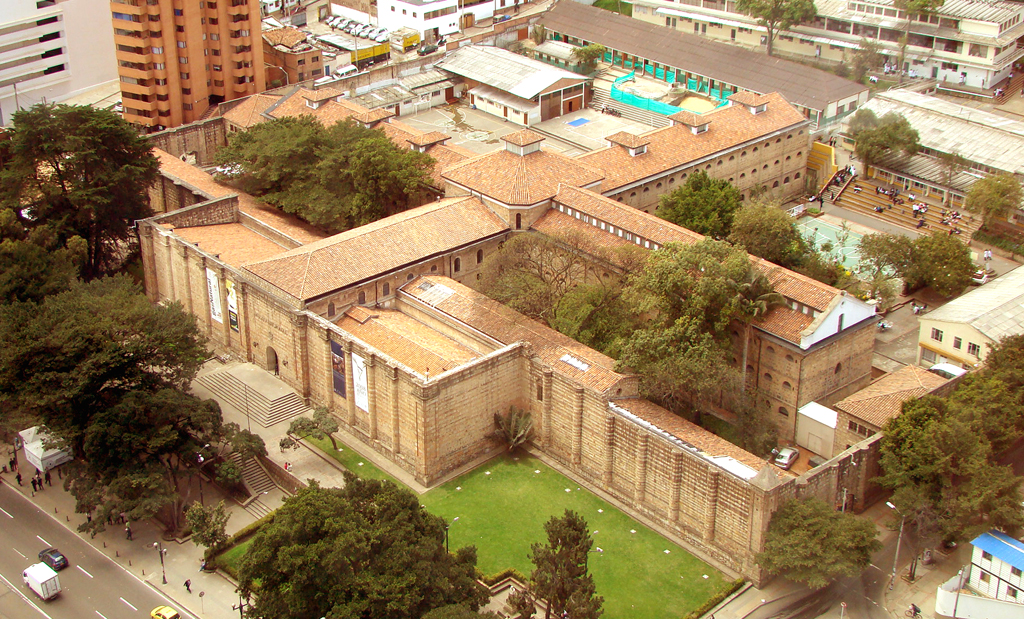
Attribution: Wikimedia Commons Key Dates The museum was founded in 1823. Bogotá Colombia The Colombian National Museum is the largest in Colombia, and is located in a huge building complex in the capital city Bogotá. he building itself was constructed in 1823, and was based on the Panopticon, an Orwellian prison devised by 18th century British social philosopher Jeremy Bentham (whose ‘mummy’ now resides in London’s UCL). The museum’s collections number over 20,000 pieces spanning thousands of years of Colombian and pre-Colombian history, from 10,000 BC to the 20th century. 2,500 items are on display at the museum, whose departments…
-
We had a busy start to the week with the launch of an exciting new contest to give our readers a chance to win 1,000 worth of travel with Addison Lee – Just imagine taking the cab to jet around London whenever you want! As well as wonderful prizes we also now offer the chance to earn badges that you can show off on Facebook and share with your friends. To learn more about our “Meet the Driver” contest which is sponsored by Addison Lee, simply click here and get started . Whilst the main contest is going on, we…
-
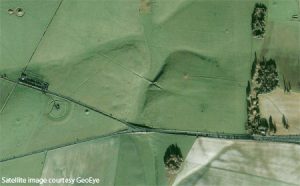
Archaeologists at the University of Birmingham are heading to Stonehenge to lead the Britain’s biggest-ever virtual excavation, a far from superficial look at the Stonehenge landscape. The Stonehenge Hidden Landscapes Project will use the latest geophysical imaging techniques to visually recreate the iconic prehistoric monument and its surroundings as it was more than 4000 years ago.Update 22/07/2010 First result is the discovery of a henge, about 900m from Stonehenge itself. Magnetometer images & photos here. The Stonehenge Hidden Landscapes Project, started early July, aims to bring together the most sophisticated geophysics team ever to be engaged in a single archaeological project in Britain to work alongside specialists…
-
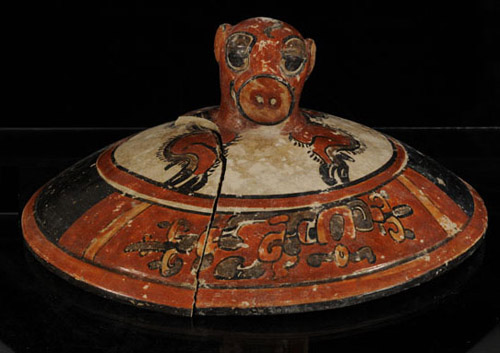
Archaeologists excavating in the Guatamalanjunglehave discovered a royal tomb, filled with colourful 1,600-year-old Mayan artefacts, beneath the El Diablo pyramid. The well preserved tombis packed with carvings, ceramics, textiles, and the bones of six children, possibly the remains of a human sacrifice. The archaeological team, led by Stephen Houston, professor of anthropology at Brown University, uncovered the tomb beneath the El Diablo pyramid in the city of El Zots, Guatamalain May. Last week, the discovery of the tomb, dated to between 350 and 400AD, was made public. Houston said the first pointer to the discovery was something odd in the…
-
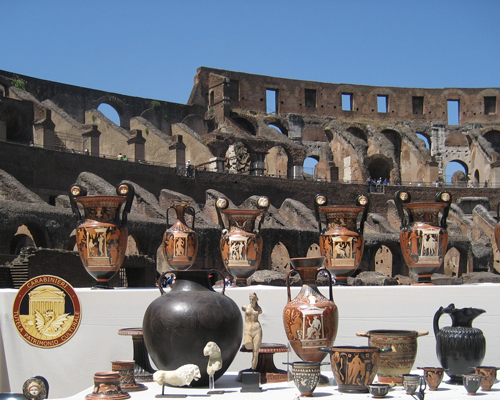
More than 300 looted antiquities, estimated to be worth more than EUR15 million, were displayed to the press this morning in Rome, having been repatriated to Italy after they were discovered in a warehouse in Switzerland. It was a scene slightly reminiscent of a Victorian detective novel, in which the robber and his looted candlesticks is unveiled before an impressed gathering of country house guests. Only today’s unveiling took place inside the Colosseum rather than on the pages of a 19th century novel and while there was no criminal present, there was plenty of loot, which consisted of objects such…
-
A unique piece of 4,500-year-old rock art has been unearthed in the Cambridgeshire village of Over. The prehistoric slab of sandstone is unlike anything previously found in Eastern England. The hand-sized neolithic artefact, which possible dates back as far as 2,500 BC, was found at Needingworth Quarry by Open University student Susie Sinclair. Intothe stone’ssurface, two pair of concentric circles are etched, typical of late Neolithic ‘Grooved Ware’ art. Researchers do not know if the motif represents a type of meaningful art, or if it is nothing more than Neolithic doodling. Examples of similar Grooved Ware art have been discovered…
-
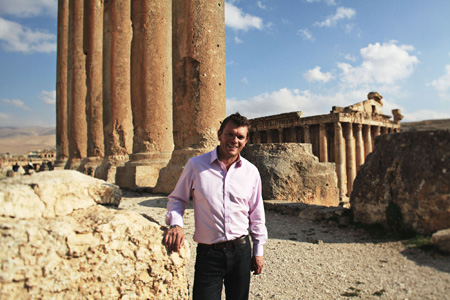
The BBC has officially announced its TVschedule for this autumn and winter, promising its audience a big focus on history, with new programmes and new presenters. What to expect from the Beeb this autumn and winter, when the rain and cold keeps you locked into your home? The autumn & winter 2010/2011 programming includes ‘Behind Closed Doors’ with Amanda Vickery, ‘The Do-Gooders’ with Ian Hislop and programming to mark the Battle of Britain’s 70th anniversary, with a drama-documentary based on Geoffrey Wellum’s book, First Light. Ancient history specials served on these coldand dark winter nights will be ‘Pompeii’with Mary Beard,…
-
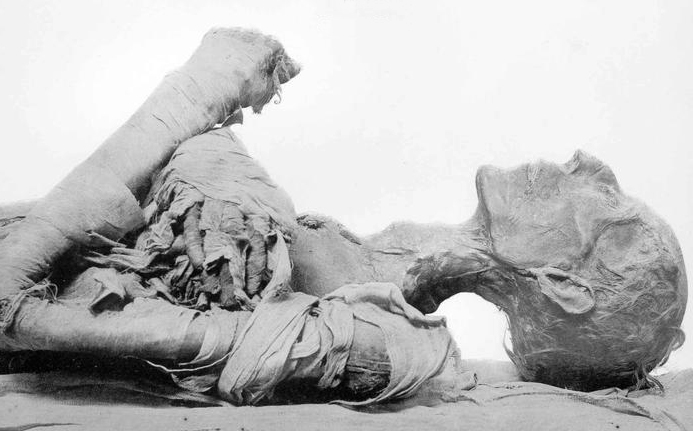
Archaeologists excavating at Ahnasia in Upper Egypt, have unearthed the remains of a 3,300-year-old temple built by pharaoh Ramesses the Great. According to a statement released by the SCA, excavations at Ahnasia, an archaeological area in Beni-Suef, recently uncovered remains of a temple that can be dated to the reign of 19th Dynastyking Ramesses II . Dr. Sabri Abdel Aziz, Head of the Pharaonic Sector in the SCA, said that inside the remains of the New Kingdom temple, excavators uncovered ten cartouches of Ramesses II and beneath them a relief saying that the ruler had ordered the construction of this…
-
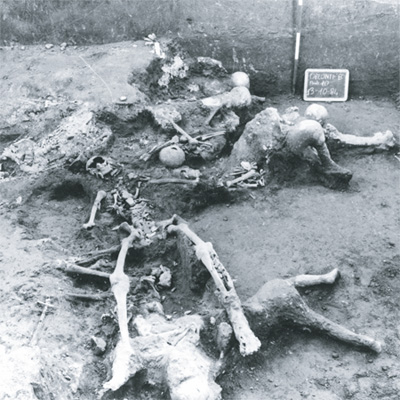
An Italian study of the plaster casts of the 79 AD Vesuvius eruption victims showsmost were not suffocated by ash, as is often assumed. Neither were they knocked down by fast-moving currents of hot gas. Rather, the extreme heat was the main cause of the instantaneous deaths at Pompeii. At temperatures up to 300C, the unfortunate citizens, including those seeking shelter inside buildings, were cooked alive. Italy, 79 AD. Vesuvius erupts, throwing up a high-altitude column from which ash began to fall, blanketing Pompeii and surrounding areas, and creating an invaluable archaeological record,preserved for almost 2,000 years. It is estimated…