• prad

    Who Nose What Happened to the Great Sphinx of Giza?

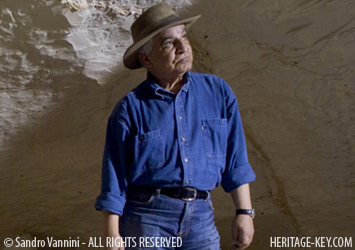
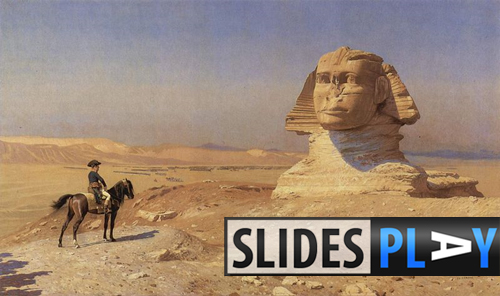
    The Great Sphinx of Giza is one of the world’s largest and oldest monuments, and isn’t without its mystery. Theories fly around regularly about whether there are secret tunnels or hidden halls under the Sphinx, which Dr Zahi Hawass, currently starring in the ‘Chasing Mummies‘ series, insists is not the case in this Heritage Key video (Watch the Video). But my question is much more simple – Whatever happened to the nose of the Great Sphinx? In a previous Heritage Key article, “Riddle of the Sphinx”, Robert Cook wrote about the legend that Napoleon’s troops used the Sphinx’s nose as…
  • publication

    Continent of Hunter-Gatherers: New Perspectives in Australian Prehistory

    Continent of Hunter-Gatherers New Perspectives in Australian Prehistory by Harry Lourandos This seminal book challenges traditional perceptions of Australian Aboriginal prehistory: that the environment is the major determinant of hunter-gatherers; that Aborigines were egalitarian and culturally homogeneous and therefore experienced few economic and demographic changes. Harry Lourandos argues that the social and economic processes of hunter-gatherers were complex and that the prehistoric period was dynamic and revolutionary. Lourandos presents prehistoric data, reviews archaeological and ethnohistorical evidence, and analyses environmental, demographic and socially-oriented perspectives – drawing from them an original hypothesis. He addresses initial colonisation, the role of Tasmanian Aborigines, the…

  • Ann

    Man’s First Domesticated Animals Were Tools Before Food

    Almost 32,000 years ago, man got its first puppy. Today still, humans have a special connection with animals, regardless if they are sitting on our laps, or – point on our plates. Why is it in our nature to accept of all kinds of creatures into our families and homes? What came first, the carbonade that would stay put, or the steadfast companion in the pursuit for game? And what if our first prehistoric attempts at art were no mindless doodling or sacred effigies, but an early publication of ‘Useful Beasts for Dummies’? In a paper describing a new hypothesis…

  • prad

    Dreaming of becoming an Archaeology Intern? Let our Zahi Hawass Videos Inspire You!

    Ever thought about a job that takes you across the length and breadth of Egypt, exploring the desert sands to find treasures and valuable artefacts that haven’t been touched in thousands of years?A career which gives you responsibility for some of the most famous and significant finds in history (as well as trying to get back others)?A vocation which earns you the nickname “Pharaoh” for your control over who gets to uncover the antiquities still to be found amidst the heat. And lets not forget starring in your own History Channel TV show! Dr Zahi Hawass, the Director of the…

  • owenjarus

    Mummies in Milwaukee! Mummies of the World coming to Wisconsin in December

    The good citizens of Milwaukee are set for a mummifying experience. From December 17, 2010 to May 20, 2011 the exhibit Mummies of the World will be hitting the Milwaukee Public Museum. The exhibit features 150 human and animal mummies showcasing mummification practices from around the world. The ‘Mummies of the World’ touring exhibit is currently on at the California Science Center. Egypt is famous for its mummies, but the practice is seen in many other cultures. The bogs of Northern Europe allow for mummification, as does the hot arid climate of Peru. Mummification techniques have even been used in…

  • malcolmj

    Top 10 Metal Detector Discoveries

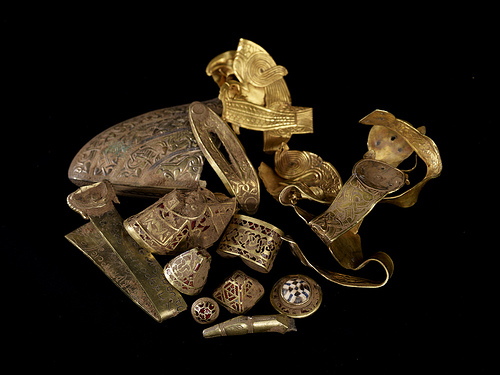
    The recent discovery of the biggest hoard of gold ever found in Britain has brought tears to the eyes of experts and amateurs alike. Terry Herbert stumbled upon the huge trove of Anglo-Saxon treasure – worth at least £1 million – while metal detecting in a Shropshire field. Herbert isn’t the only amateur to have hit the jackpot. Several finds by metal detectorists have stunned archaeologists and proven that the hobby can have surprisingly spectacular – and lucrative – results. Here we round up 10 of the top artefacts discovered by metal detector in Britain. 1. The Shrewsbury Hoard, 2009…

  • owenjarus

    Ancient Stone Monument to Napi Discovered on Canadian Prairies

    A stone effigy monument, in the shape of a Blackfoot creator god named Napi, has been discovered in southern Alberta south of the Red Deer River near the hamlet of Finnegan. One day Old Man determined that he would make a woman and a child; so he formed them both the woman and the child, her son of clay. After he had moulded the clay in human shape, he said to the clay, “You must be people … They walked down to the river with their Maker, and then he told them that his name was Na’pi, – Old Man.…

  • Ann

    What will Otzi the Iceman’s DNA teach us?

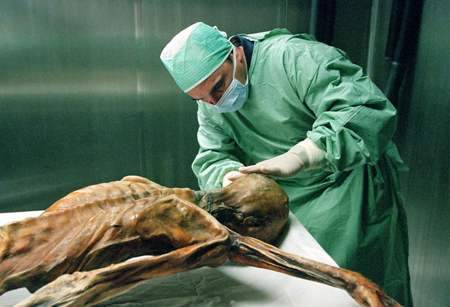
    tzi has not been put on ice, on the contrary – things are hotting up for him! By decoding tzi the Iceman’s DNA, scientists have reached a new milestone in their study of the world’s mostfamous glacier mummy. Experts from three institutions have pooled their skills in order to map tzis entire genetic make-up: Albert Zink, Head of the EURAC Institute for Mummies and the Iceman, together with Carsten Pusch, from the Institute of Human Genetics at the University of Tbingen and Andreas Keller from the biotech firm febit in Heidelberg. Together the researchers reached a historic moment in the…

  • jon-himoff

    Chasing Fame and Mummies: Zahi Hawass Goes Global

    There is a billboard on Sunset Boulevard in Los Angeles where Zahi Hawass is framed in the photo to look bigger than the Great Pyramid.Supposedly, it is all a matter of perspective. In the same way you can take your own view on the reality television series “Chasing Mummies” from History Channel. (If anyone in LA can snap a good shot of that billboard, please add it to the comments below.) In terms of realityTV fare on the tube, I guess this show is pretty good. It is action packed. The series has a strongstar driving the drama andmany interesting,…

  • greece

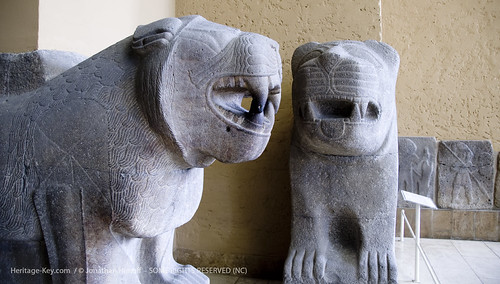
    Lions of Sam’al (Zincirli Lions)

    Attribution: Jon Himoff Key Dates 1888 The site was excavated from 1888 to 1902 in Zincirli Hoyuk. The Zincirli lions were discovered during excavations at Zincirli Hoyok in Turkey. They were executed under Aramaean influence and were part of the portal of the Citadel of Sam’al (Zincirli). They are part of a group of lions, some of which are now also in the Istanbul Archeological Museum. The city of Sam’al in Turkey developed during the late Hittite era, and became the capital of the late Hittite Kingdom, before becoming part of the Assyrian Empire. When the German Oriental Society began…