• owenjarus

    Nefertiti and the Aten in Colour! 16,000 Amarna Art Talatat blocks in Luxor with Original Pigment Preserved

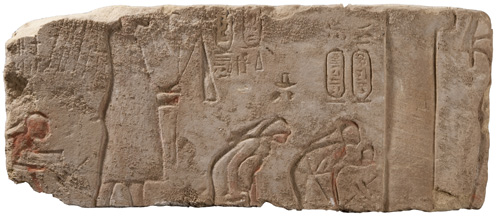
    Archaeologists are examining a cache of talatat blocks in Luxor that depict Amarna period art in their original colour. “The amount of detail which is shown, where the colour had been preserved, it’s just amazing,” said Dr. Joceyln Gohary. “Some of the most striking details are in the clothing – particularly of the queen, Nefertiti – details of the dress and jewellery that she’s wearing,” she said. Dr. Gohary is leading an American Research Center in Egypt (ARCE) project that is documenting, cleaning and conserving them.
  • Ann

    PASE Domesday Online Database launches ahead of BBC Two Domesday Special

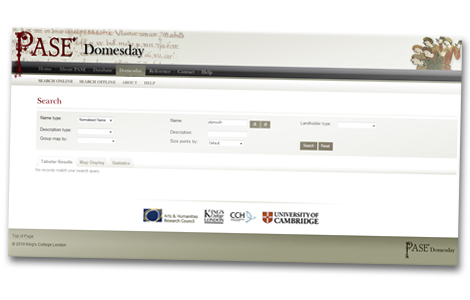
    PASE Domesday, a database of Domesday Book linked to mapping resources, has been launched online today, ahead of tomorrows Domesday special to be broadcast on BBC Two (preview video ‘The Domesday Inquest’). In the documentary, Dr Stephen Baxter seeks to prove that the Domesday Book could not have been used to collect taxes, arguing that it is about something far more important than money. According to Dr Baxter, its real purpose was to confer revolutionary new powers on the monarchy in Norman England. The Domesday Book The Domesday Book is the product of a great survey of England commissioned by…

  • prad

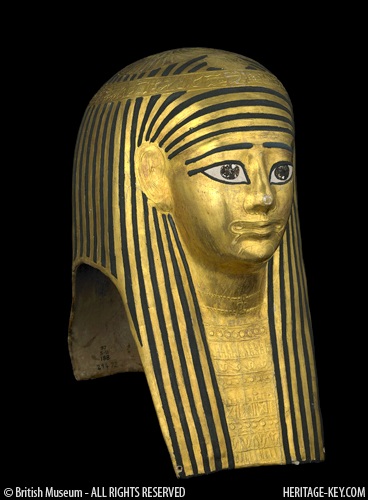
    British Museum’s Book of the Dead Exhibtion Preview Video of Ancient Egyptian Wooden Mask

    The British Museum’s upcoming exhibition, “Ancient Egyptian Book of the Dead” is set to open on 4th November 2010 and a video posted on the British Museum’s Youtube channel gives a teaser to one of the artefacts which will be a part of the show. The quick video shows the cleaning of Nesbanebdjed’s wooden mask from his coffin in the museum’s Organic Conservation laboratory, which will be one of the pieces on display when the exhibition opens this Autumn. The star of the show will doubtless be the beautifully illustrated papyrus and linen works depicting the journey from death to…

  • Ann

    Teotihuacan Tunnel found under Temple of Quetzalcoatl, the Feathered Serpent

    Archaeologists have discovered a 1,800 year old tunnel that leads to a system of galleries 12 meters below Teotihuacan’s Temple of Quetzalcoatl, the Feathered Serpent, in Mexico. Spanning an area of more than 83 square kilometres, Teotihuacan is one of the largest archaeological sites in Mexico and is a UNESCO World Heritage Site. The city had nearly 250,000 inhabitants when it was at its height in the early 1st millennium AD. It also contains some of the largest pre-Columbian pyramids in the New World. Archaeologists hope that the galleries they detected are actually the tombs of Teotihuacans rulers. “For a…

  • mary-ann-craig

    Britain’s Prehistoric Funerals – Six Feet Under, or a Bronze Age Mound?

    You might never have heard of Irthlingborough, in Northamptonshire, but an excavation there in the 1980s revealed some pretty spectacular archaeology, as explained in the first of a series of HKTV videos (Watch the Video). The archaeologists found a round burial mound with cremations buried in the sides. Below the cremation burials, there was a lattice of rotted cattle bones, which had been placed on the top of a heaped stone cairn. Below the cairn was a wooden platform that had now collapsed, and below the platform, at the heart of the mound, was a chamber, with a mans body…

  • Ann

    Ipswich Museum celebrates opening of new Egyptian gallery with ‘CSI My Mummy’

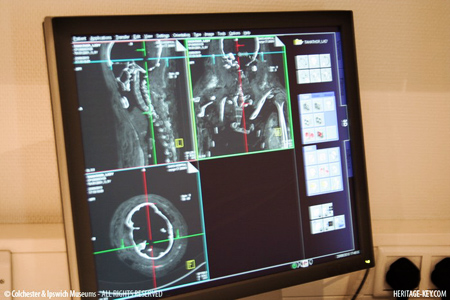
    This week sees the opening of the Ipswich Museum‘s new Egyptian Gallery. Visitors will be able tomarvel at the mummy of Lady Tahathor, or find out about daily life in ancient Egypt as they journey down the Nile. But wait… there has been a terrible crime! A thief has broken into the museum, and stolen a very rare and precious Egyptian artefact! Can you- or your kids -help solve the mystery? This Saturday, on the 7th of August, the Ipswich Museum celebrates the grand reopening of its Egyptian Gallery. At the centre of the new set-up is the mummy of…

  • Ann

    A real archaeological puzzle: Germans reassemble ancient sculptures destroyed in WWII

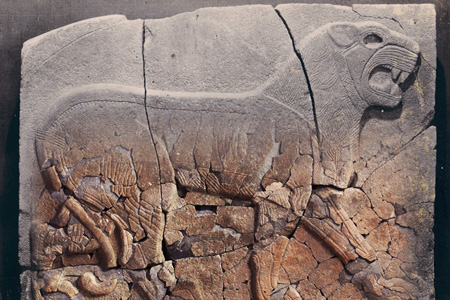
    After nine years of shifting through WWII bombing debris, restoration experts have puzzled back together over 30 Aramaean sculptures and reliefs. Watch the slideshow. When in November 1943 an air raid on Berlin destroyed the Tell Halaf Museum and its contents, it was thought one of Germany’s most important Near Eastern collections was lost forever. A year later more than 27,000 fragments were recovered from the museum’s ruins and taken to the cellars of the Pergamon Museum for storage. Luckily, archaeologists never throw something away. Restoration of the 3000-year-old sculptures and bas-reliefs eventually started in 2001. Now, after almost a…

  • malcolmj

    Easter Island Was Devastated by Western Invaders and Not Internal Conflict

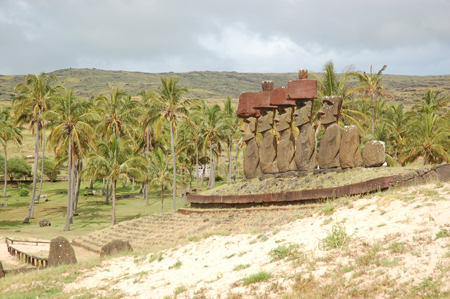
    An archaeologist from the University of Manchester has produced new research suggesting Western invaders should be blamed for the demise of the ancient people and culture of Rapa Nui or Easter Island, further contradicting the once popular idea that its primitive, warlike Polynesian inhabitants had already themselves provoked societal collapse long before the remote southeastern Pacific island was first visited by European explorers in 1722. Backing an already substantial body of opinion, Dr Karina Croucher a post-doctoral researcher in the School of Arts Histories and Cultures argues that the Easter Islanders must have had a sophisticated and successful culture until…

  • Ann

    AMNH Explorer iPhone App – Map of the American Museum of Natural History Goes Mobile and Beyond

    In this digital age, largemuseum maps and heavy guide booksbadly needed when visitingthe bigger institutions seem so passe. But how exactlydo you get around then? At the American Museum of Natural History in New York, you can now chart your own course with their AMNH Explorer (video preview) a brand new app that is part custom navigation system and part personal tour guide for the museum’s world-famous halls. The app promises totake youfrom the edge of the universe to the age of the dinosaurs, providing turn-by-turn directions.When you urgentlyneed to find the bathroom, it will even calculate you the quickest…

  • owenjarus

    19th Century Manuscript and Drawings by Egypt Explorer Frédéric Caillaud Discovered

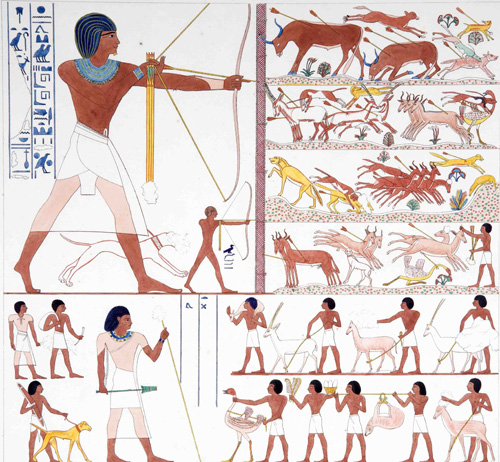
    An unpublished manuscript, written by 19th century Egypt explorer Frdric Caillaud, has been discovered and it points the way to a 3,500 year old tomb of an Egyptian official. It is called Arts and Crafts of the Ancient Egyptians, Nubians and Ethiopians. It iswritten in French and illustrated with drawings. The American Research Center in Egypt (ARCE) is in the process of translating and publishing it. The work is being led by Dr. Andrew Bednarski. He gave a lecture and interview recently in Toronto, and provided me withsnippets from the bookand pictures ofthree of the drawings. Frdric Caillaud was one…