
Attribution: Jon Himoff Neues Museum, Berlin Germany Key Dates The artefacts date from throughout the occupation of the ancient Greek city of Troy, which archaeologists date as having been populated from as early as 3000 BC until as late as the 1st century BC. They were discovered during excavations in the 1870s, and donated to the “German people” in 1881. Much of the collection was looted by the Russians in 1945. Key People The items were discovered by the famous and eccentric German businessman and archaeologist Heinrich Schliemann. Key People: Heinrich Schliemann Schliemann’s Troy Treasures comprise a varied selection of…
-
-
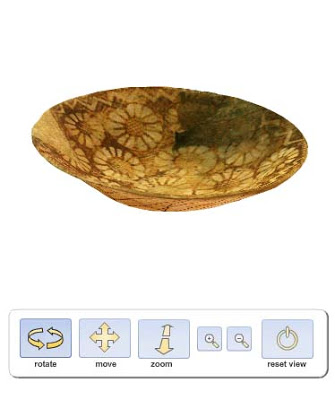
In an effort to share their extensive collection of pottery from the American southwest with both museum and internet visitors, the Arizona State Museum is collaborating with the Center for Desert Archaeology on the Virtual Vault Project. Models of each vessel are being created using 3DSOM Pro, a tool for automatically generating 3D models from photos of an object. The software is produced by Creative Dimension Software Ltd. “The Vault will go far beyond static electronic exhibit modules that depict a vessel and list its type and ware designation, description, dating, and function – instead, it is being developed as…
-
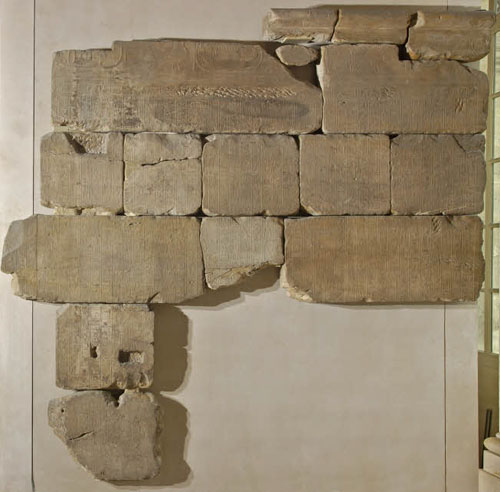
Everyone makes them (some of us more compulsively than others): scribbled on post-it notes, or kept mentally in our imaginations we all make lists. And we’re not the only ones either; lists have been around for a long time possibly since the first writing systems and certainly since Sumerian scribes began to keep accounts in the fourth millennium BC in Mesopotamia. So what is it about the beauty of a list its numerical order, hierarchy, completeness that makes them such a part of how we like to categorise, order and understand the world? An exhibition opening at the Louvre on…
-
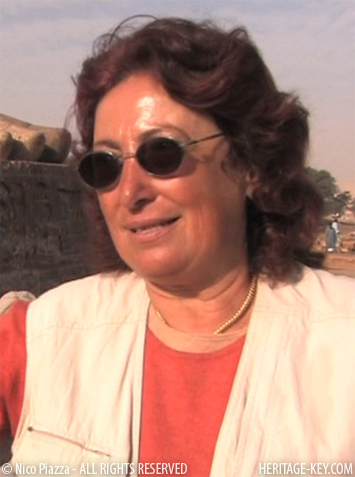
Attribution: Nico Piazza Hourig Sourouzian Egyptologist, Art Historian and Head of the Amenhotep III Temple Conservation Project Dr Hourig Sourouzian is a highly-respected German-Armenian Egyptologist and art historian, and the head of the Amenhotep III Temple Conservation Project. She is one of the world’s leading authorities on Egyptian royal statuary. Sourouzian was born in Baghdad, to parents of Armenian descent, and grew up in Beirut. She studied Egyptology and art history in the Louvre and obtained a PhD in art history from the University of Paris-Sorbonne with a thesis on Egyptian royal statuary. Sourouzian additionally studied classical Arabic at the…
-
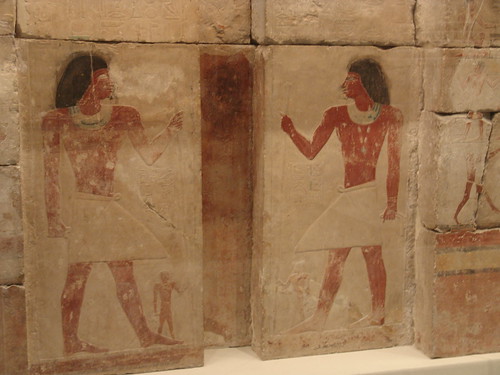
A lighter chapter to the ongoing issue of repatriating Egypt’s treasures will close today, as an ancient shrine fragment touches down on Egyptian soil after a year of international co-operation. The red granite chunk, part of a shrine, or ‘naos’, was bought by New York’s Metropolitan Museum of Art from a private collector last October, with the sole intent to send it back to its home nation. Today sees the fragment of the shrine, which commemorates King Amenemhat I, the first pharaoh of the 12th Dynasty (1991 – 1962 BC), finally return to Egypt after a combined effort between the…
-
Located on the coast of north-west Libya, Sabratha was incorporated into the Roman Empire during the second and third century AD as a trading post, when it flourished as an outlet for wares being exported from Africa. The city, nearby to Leptis Magna, was most notable for a fantastic Roman theatre which was built during 175-200AD as part of the reconstruction of the city under Emperor Septimius Severus’s rule. The remains are some of the finest examples of Roman architecture today, as is captured in a beautiful panorama in Rafa Vjajes’ photograph. The three storey structure had over 25 entrances…
-
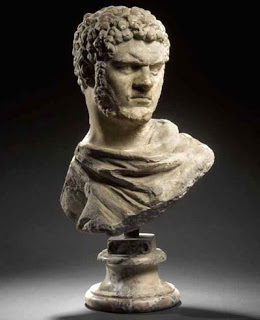
A bust of the Roman Emperor Caracalla will be auctioned off October 28 by Bonham’s. The auction house estimates the bust will bring 250,000. The lot description says the bust dates to the period after he murdered his brother and co-emperor Geta and their website lists the provenance as the current owner having a receipt from Mr. Dennis Leen, Beverly Hills, California dated 1976. But Dennis and Leen is not a individual but an exclusive interior design company in Beverly Hills who curently specialize in high quality antique reproductions. This information brought me up short. Is a receipt from a…
-
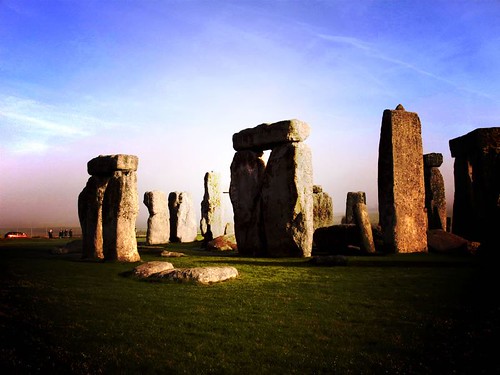
You might expect the youth of today to be more interested in Britain’s modern icons – but what happens when you ask the kids about their favourite sites? A survey of the nation’s youngsters, compiled by budget hotel chain Travelodge, has revealed Stonehenge to be the country’s top tourist spot, closely followed by Hadrian’s Wall. The prehistoric Salisbury stone circle predates contemporary entries on the top ten list, such as the London Eye, by over 5,000 years. The capital’s giant ferris wheel could only muster third place, while Antony Gormley’s Angel of the North made eighth. Edinburgh Castle is the…
-
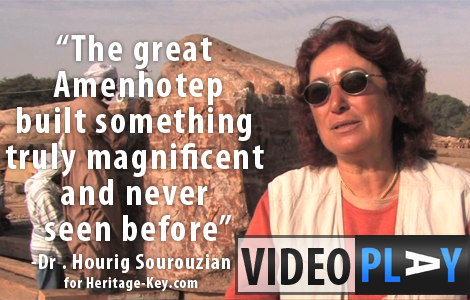
18th dynasty pharaoh Amenhotep III was the king of Egyptian kings. Under his rule, from around 1391 to 1353 BC, Egyptian civilization reached its very apex all powerful, influential beyond compare, rich beyond dreams and basking in opulent artistic splendour. In a list compiled by American business and financial bible Forbes in 2008, Amenhotep was ranked as the 12th richest person in human history. His funerary temple was therefore never going to be a modest affair. As we discover in a new video interview shot by Nico Piazza with the highly-respected German-Armenian archaeologist leading the excavation of the site, Dr…
-
The Antechamber of the Tomb of Seti I (KV17) is a small room which precedes the burial chamber, and features on its tomb walls scenes depicted from the Book of the Dead. The renown photographer in the field of Egyptology, Sandro Vannini took several photographs throughout KV17, including the First Pillared Room which we featured recently. This week we look at the tomb engravings of the Antechamber, and who they depict. Sandro’s photography is the finest way to see Seti I’s tomb, after years of excavation have left it in a poor state of disrepair and leading to its closure…