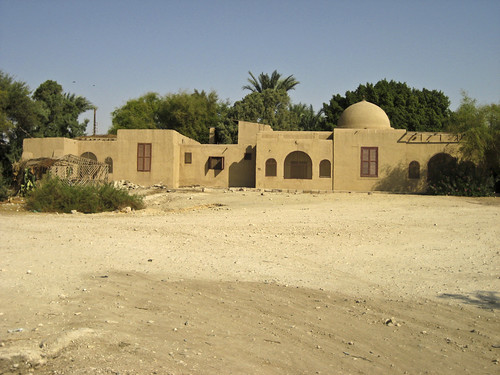
The rest house of Howard Carter, discoverer of King Tutankhamun‘s tomb, has reopened to the public today as a museum. The mud-brick building, near the Valley of the Kings on Luxor‘s West Bank, was one of the projects earmarked by Egypt’s Supreme Council of Antiquities three months ago, as costly facelifts to Luxor were undertaken – including renovations to Luxor Temple and the Deir el-Bahritemple of Queen Hatshepsut. The house, from where Carter made his greatest discovery in 1922 with the backing of Lord Carnarvon, allows visitors to see the office and tools which made Carter an overnight celebrity 87…
-
-
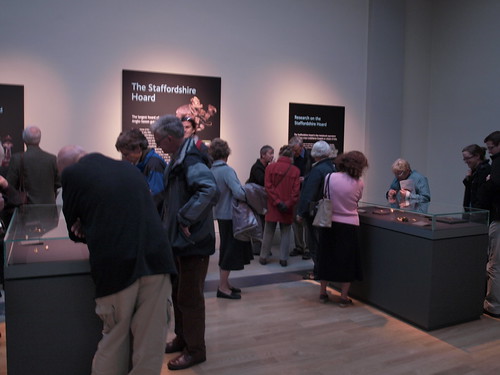
As blogged earlier today, the Staffordshire Hoard made its way to London’s British Museum this week, to feverish public interest. And not wanting to miss out on the party, Heritage Key took a trip to Bloomsbury today, to give you a first-hand look at how it has been laid out for the capital’s history lovers. As you can see, there weren’t queues tailed back hundreds of yards outside the building – as was the case at earlier displays in Birmingham – but interest was high, with HK struggling to burst through the crowd for some decent shots. Only a handful…
-
As blogged by Sean yesterday, a precious hoard of Iron Age gold treasures worth an estimated 1 million has been discovered by a first-time metal detector enthusiast near Stirling. It was unveiled to the media at an event at the National Museum of Scotland this morning. The collection was described as the most important hoard of Iron Age gold found in Scotland to date. The Stirling Hoard: Gold Iron Age Torcs The artefacts four neck ornaments of European significance, dating from between the 1st and 3rd centuries BC were discovered by a local man, David Booth, on private land back…
-
Attribution: jaywaykay Cairo Egypt Key Dates The museum was established in 1835. It moved to Boulaq in 1858. However the Boulaq building was destroyed in 1878. The museum moved to its current location in 1902. The Royal Mummy Room was closed in 1981, yet reopened in 1985. Key People President Anwar Sadat closed the Royal Mummy Room in 1981. The treasures of King Tutankhamun are held in the museum. Tutankhamun The Egyptian Museum of Antiquities, to give it its full name, is home to some 120,000 of the most treasured Egyptian artifacts in the country. The museum was founded in…
-
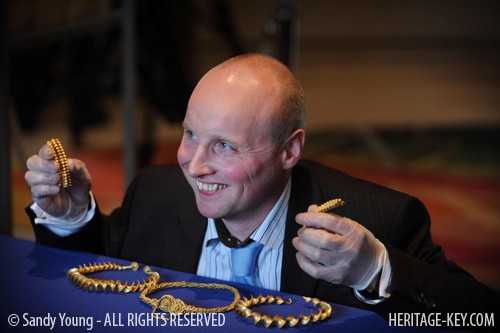
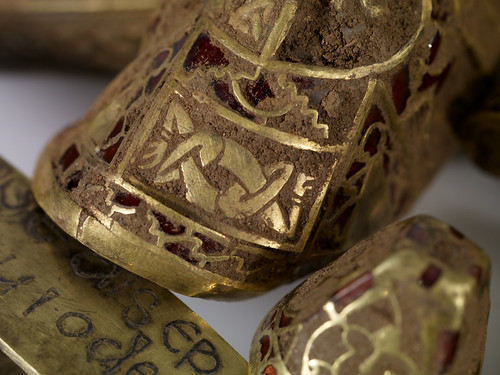
The Staffordshire Hoard has arrived on display at the British Museum in London, as the farmer on whose land it was found has described his experience as ‘incredible’. Heritage Key will be heading there to see the maginficent treasure today – look out for the pictures right here! The gold pieces, thought to be part of a Saxon war bounty, were found in a field in the midlands county this July. They have since gone on show at Birmingham’sMuseum and Art Gallery, where up to 100,000 people flocked to see them still encrusted with the mud which had hidden them…
-
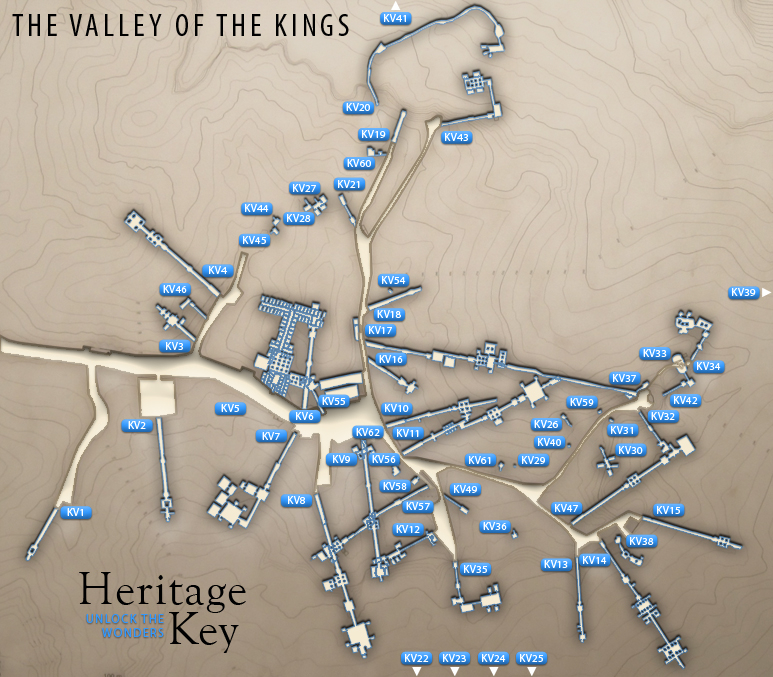
Attribution: astique Luxor Egypt Key Dates The tombs here were constructed between 1550 and 1070 BC. Key People The pharaohs of the 18th, 19th and 20th Dynasties of Ancient Egypt’s New Kingdom were buried here, along with some of their wives, children and courtiers. Standing on the west bank of the Nile, across from ancient Thebes (now Luxor), the Valley of the Kings is one of Egypts most sensitive archaeological sites. Further discoveries in 2005 and 2008 have put the total number of tombs in the necropolis at 63 and these range from simple, single pits to lavish complexes, the largest of…
-
Calcite was a popular material used in ancient Egyptian times as the stone’s cool surfaces meant that the contents, such as perfumed fats and unguents, would be better preserved. However, perfumed fats were a luxury item and popular with grave-robbers in ancient times as they were easy to carry, and difficult to identify as being from a tomb. The Tomb of King Tutankhamun (KV62) was believed to have been raided of about 350 litres of perfumed fats and unguents, according to an estimate by the famous explorer Howard Carter! One of the most beautiful artefacts from King Tutankhamun’s tomb was…
-
Archaeologists exploring the lost Maya city of El Mirador claim they’ve found the world’s biggest pyramid. The massive structure, called La Danta (The Tapir), may have its summit hidden beneath Guatemala’s jungle canopy. Yet its volume is reckoned to be larger than that of the Great Pyramid of Khufu in Egypt’s Giza Plateau. The city itself, dubbed the ‘Maya Cradle of Civilization‘, is the size of a modern metropolis; bigger than downtown Los Angeles. And experts believe there are thousands more pyramids yet to be found. Yet there is more to El Mirador, tucked in Guatemala’s northern wilderness just a…
-
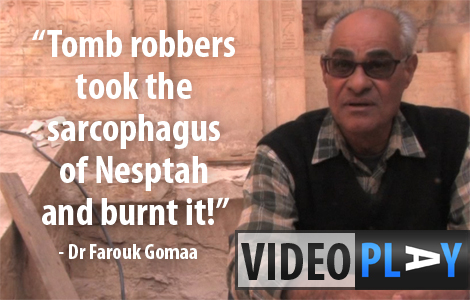
The tomb is one of the largest in Thebes, says Dr Farouk Gomaa, the highly-respected archaeologist from the University of Tbingen in Germany who is leading the exploration of the burial monument of Montuemhat, in a new video interview for Heritage Key by Nico Piazza. Clearly, Montuemhat was a powerful and influential figure in ancient Egypt if he was able to carve out such a substantial resting place for himself in the necropolis of the pharaohs. Yet you wont find him on any Egyptian king lists. In this latest ArchaeoVideo from the Theban tombs, from where Sandro Vannini has been…
-
Why Super-Cements May Hold Secrets of the Pyramid Builders Cement is quite literally the foundation on which modern civilization is built. It’s mankind’s most common building material, and has been a key component in most of the world’s construction projects for over a century. Its origins are certainly ancient, and stretch back at least far as the Romans, and probably older still. The Romans may have learned cement-making from the Greeks.