
In a conversation with Heritage Key (HK), Paul Denis (PD), the curator of Fakes & Forgeries Yesterday and Today, a newly announced exhibit at the Royal Ontario Museum, talks about how fake ancient artefacts are affecting the museum world. Among the things discussed are: -The emergence of ancient Greek coins as a new hot area for fraudsters. -Why the internet is an awful place to acquire artefacts. -How curators (with a little scientific help) pick out fakes. He also shares some interesting news: of the hundreds of Zapotec artefacts his museum has, about 50 percent are forgeries. He explains how they got duped on such a grand scale.…
-
-
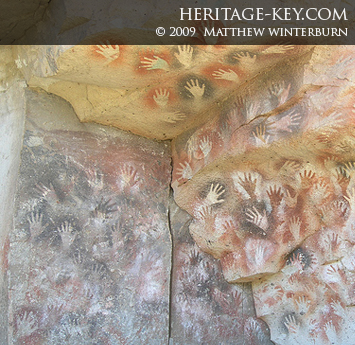
Cave art is the oldest example of non-portable art in history, and dates back in some cases as far as 32,000 years. It can be found painted, scratched, etched, smudged and pecked onto the walls of caves all over the world, on almost every continent. Here we examine ten of the most famous sets of examples yet discovered. Bhimbetka Rock Shelters, India The spectacular Bhimbekta rock shelters in Madhya Pradesh, central India, contain the oldest traces of human life in the region. The vast selection of cave paintings and other forms of rock art found within them are the first…
-
Key Dates 4504 BC The Detmold Child has been radiocarbon dated to between 4504 and 4457 BC. It arrived at the Lippisches Land Museum in Detmold in 1987. The Detmold Child is an embalmed Peruvian baby of 8-10 months, discovered at an unknown location in Peru and currently held by the Lippisches Land Museum in Detmold, Germany. It is one of the oldest mummies ever discovered, and predates King Tut by more than 3,000 years, and Ötzi the Iceman by 1,000 years. It cane to the Lippisches Land Museum from a small ethnographic museum in Hessian Witzenhausen. Until then it…
-
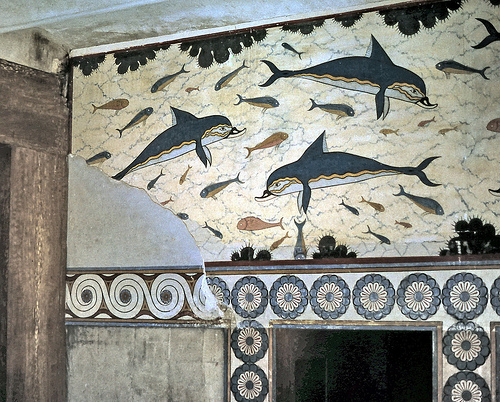
Excavating physical remains that confirm the existence of a civilization only described in legend: it’s the dream of every archaeologist, and Sir Arthur Evans is one archaeologist for whom the dream came true. The year was 1900; the location was the outskirts of the modern day city of Heraklion, on the Greek island of Crete. The ruins Evans extracted from its baked earth were those of the Palace of Knossos, a spectacular Bronze Age citadel from which the dapper British antiquarian was able to begin uncovering and piecing together the forgotten history of one Europe’s first advanced civilizations. He christened…
-

Where is Atlantis? Ever since Plato mentioned the existence of the fabled island-city in the 4th century BC, archaeologists, historians and adventurers have spent much time and ink trying to chase down its origins. “Now in this island of Atlantis there was a great and wonderful empire which had rule over the whole island and several others, as well as over parts of the continent, and, besides these, subjected the parts of Libya within the columns of Heracles as far as Egypt, and of Europe as far as Tyrrhenia.” – From Plato’s Timaeus – Translation by Benjamin Jowett One of…
-
Key Dates 1370 BC The Egtved Girl in Denmark has died circa 1370 BC. She was a Bronze Age girl whose well-preserved remains were discovered in a barrow in 1921. The oak log that she was buried in is dated to the summer of 1370 BC. Although the body itself is missing, the acidic bog conditions of the soil made that the Egtved Girl’s clothing is extremely well preserved. The Egtved Girl must have been 16 to 18 years-old when she died, and was a slim, 160cm tall girl with long blond hair and well-trimmed nails. At her feet were…
-
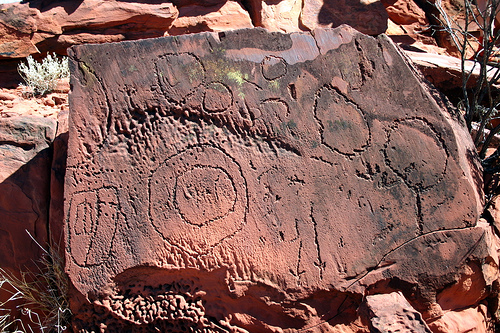
Up until the 1950’s, it was widely believed that Australia wasn’t inhabited by the Aboriginals until 10,000 years ago. The breakthrough use of Carbon 14 dating extended the date to around 40,000 years ago. New techniques such as optically stimulated luminescence (OSL) and accelerator mass spectrometry (AMS), are giving evidence for an earlier date for arrival. Charles Dortch has dated recent finds on Rottnest Island, Western Australia at 70,000 years BP and following the analysis of pollen and charcoal, there were suggestions of people using fire to clear land in the Lake George basin in the Southern Tablelands of New…
-
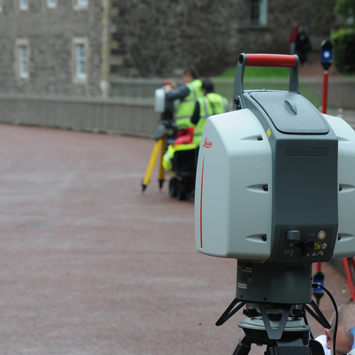
2010’s well underway now, and with it the new decade. At Heritage Key we’ve begun the teenies by asking a cross-section of heritage experts to get their crystal balls out, in a bid to try and predict what they think (or at least hope) will be the big discoveries, themes, advances and breakthroughs in their individual fields – and in archaeology and heritage studies at large – over the next ten years. We spoke to all from a mummy expert to a pyramid theorist, a museum education team leader, an expert in forensic archaeology, an expert in experimental archaeology, an…
-
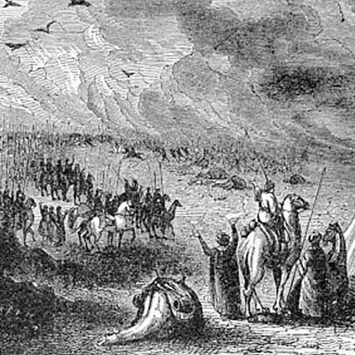
Thanks to GPS, satellite imaging and digital communication systems, it’s uncommon for so much as a solitary soldier to go missing on the battlefields of the 21st century. But in ancient times – when civilizations often knew precious little of the world outside their sometimes narrow boundaries – it was apparently possible for entire armies to march against a foreign foe and fall off the face of the earth altogether, without conclusive explanation. Myth has undoubtedly embellished – and in some cases overtaken – the truth behind the famous tales of vanished forces such as the Legio IX Hispana, which…
-
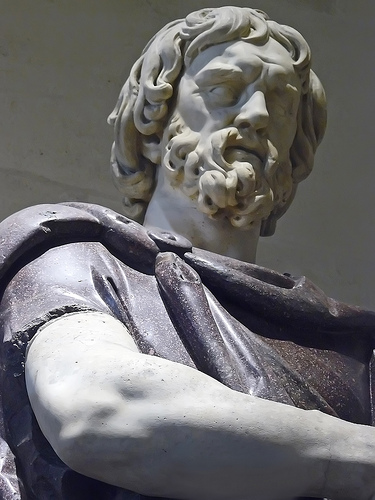
I have been interested in history since I was a child and love to share my interest through my photography. Over the years, I have shot thousands of pictures of historical art and architecture at archaeological sites and in museum galleries around the world and uploaded them to Flickr for other history enthusiasts, teachers, and researchers to enjoy and use in their educational activities. If you would like to do the same, you may find some of the following tips helpful. Photography in Museums and Galleries Many museums allow photography of artwork in their permanent collections. However, few museums permit…