• sean-williams

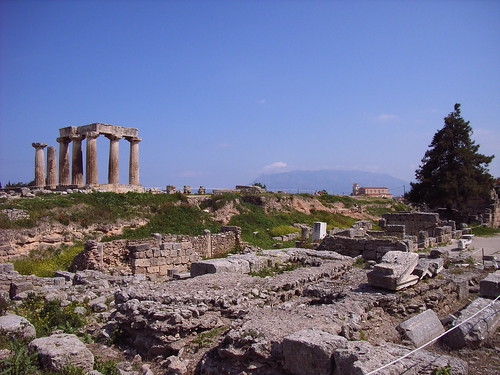
    2 ‘Fabulous’ Ancient Greek Statues Recovered in Corinth Sting Operation

    Police have seized two ‘outstanding’ ancient Greek statues in the Peloponnese, shortly before they were due to be sold for 10 million (8.6m). Two men aged 42 and 48 were arrested while loading the pair of 2,500-year-old relics onto the back of a truck near the ancient city of Corinth. Police are seeking a third man they believe to be the group’s ringleader. The pair of marble statues stand 5’8″ and 5’9″ tall, and are of the Kouros style popular during the 6th and 7th centuries BC. Experts believe both were made by the same sculptor between 550 and 520…

  • wadders

    Travel the Spice Route: Maps and Tips to Plan Your Trip

    The ancient Spice Route (probably named as a result of the ancient Incense and Perfume routes) was an epic journey which initially began in Arabia, but eventually evolved to link Moluccas (the Indonesian Spice Islands) with Arabia and from there into Europe. The route generally is believed to take in Malacca, Sri Lanka, and Kerala in India. At Kerela, it split into two, with one route to Europe going via Baghdad and the other Accra. Arabia had the monopoly on the spice route for over 2000 years, and its said that both the Roman invasion of Persia in 24 BC…

  • wadders

    Pigeons, Post, and Spartan Runners: Sports PR in the Ancient Olympics

    By ancient Olympic Games standards, the recent Australian Special Olympics IX National Games, an event held for athletes with an intellectual disability, were relatively small. As the Communications Manager for the games, my job was manic, but fortunately I had a team of volunteers to help coordinate the multitude of print and broadcast media on event as well as updating the Special Olympics Australia website, facebook and twitter at regular intervals throughout the day. Between frantic phone calls, tweets and manically hitting of the send email option, I did ponder for a moment how promoting and communicating results to the…

  • sean-williams

    Clegg and Cameron: Britain’s Spartan Kingship?

    Having two leaders might be uncharted territory for Britain, but it’s an arrangement that worked well over 2,500 years ago when Sparta was ruled by two kings. The fearless Greek city-state found that having two leaders was the best way to plunder its neighbours and promote harmony amongst its citizens. This Monday ‘Dave and Nick’, as the PM and his deputy are to be known, gave a press conference backing their ambitions for the next five years. This government would be a radical, reforming government where it needs to be and a source of reassurance and stability at a time…

  • malcolmj

    Greek Financial Crisis Echoes Ancient Era of King Cassander

    Financial austerity measures were a grave problem in ancient Greece too it seems quite literally. In the same week that the European Union and the International Monetary Fund have been asked by Greece to unblock the first tranche of a 110-billion (93 billion) bail-out loan package in exchange for severe spending cuts, archaeologists have revealed how 2,300 years ago people in the northern Greek region of Macedonia were forced to scale back on funeral offerings, probably on orders from the king. The AFP reports that senior archaeologist for the Greek Archaeological Service Manthos Besios told Athens daily newspaper Ta Nea…

  • site

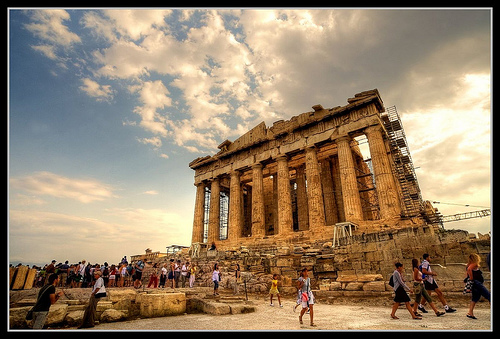
    Parthenon of Athens

    Attribution: Lluís Sala Athens Greece Key Dates The first Parthenon on the site dated back to 570 BC. The existing Parthenon was built between 447 and 438 BC to replace Parthenon II. In the 5th century it was transformed into a church, before becoming a mosque under Turkish rule in the 1460s. The building was attacked and almost destroyed in 1687 during Morozini’s siege of the Acropolis. Lord Elgin caused more damage when he looted it in the 19th century, subsequently selling much of its contents to the British Museum. The Parthenon underwent restoration from 1896-1900 and from 1922-1933. A…

  • egypt

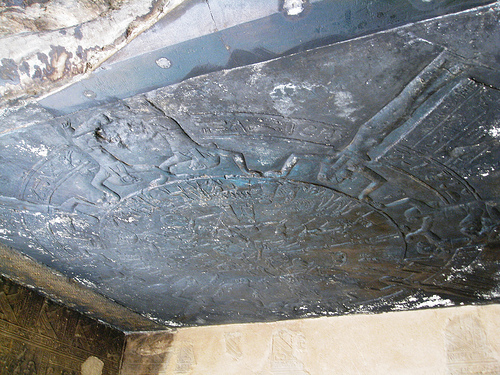
    Dendera Zodiac: The World’s First Horoscope?

    One of the most famous, popular and mysterious ancient Egyptian treasures of the Louvre, the 2060-year-old Le zodiaque de Dendéra – the Dendera Zodiac – has witnessed more than its fair share of controversy over the centuries. Stripped from the portico of a chapel dedicated to Osiris at the Hathor Temple at Dendera in 1820, then shipped to Paris, the beautifully carved bas-relief played an unlikely role in fierce disputes over science and faith in Napoleonic and Restoration France. Today, the zodiac continues to spark debate. As the first known depiction in history of the classical zodiac of twelve signs,…

  • sean-williams

    Clegg Would Return Elgin Marbles to Athens

    Liberal Democrat leader Nick Clegg vows to return the Elgin Marbles to Greece if voted into power in today’s general election. As an MEP (Member of the European Parliament) in 2002 Clegg even spearheaded a conference on sending the marbles back to Athens named Marbles in Exile. Clegg described the marbles being housed in the British Museum (BM) like displaying Big Ben in the Louvre. When Tory MEPRoger Helmer criticised the stance, Clegg wrote to him, “During the opening of the Marbles in Exile exhibition yesterday, I took the opportunity to read out your message. Everyone agreed that you appear…

  • sean-williams

    HK Fantasy Election Policy Roundup: Alexander the Great’s Manifesto

    Britain might be staring a hung parliament in the face, but Heritage Key’s election has quickly become a two-horse race. And with just a few hours to go ’til the votes are counted in our grand finale (alas, no Jon Snow and his ever-brilliant green-screenery), it’s time to swot up on Alexander the Great’s manifesto. Alexander was born in Pella, modern-day Greece, in 356 BC. His father Philip II was already one of the Macedonian Empire’s greatest kings, and was determined that his son would make the nation even greater. A rigorous education ensued, during which Alexander was even afforded…

  • rebecca-t

    How to Vote in the Fantasy Election: Main Parties Policy Analysis

    Its been a tense few days on the Heritage Key fantasy election trail. Since the worlds ancient leaders first went to the polls on Saturday, voters have turned out in typical numbers to exercise their right to vote. Early indications show that this years election is a two-horse race: firmly in the lead is Alexander the Great, with Romes Augustus closing in as a close second. Alexander can certain talk the talk. But are the voters swayed by his powers of persuasion and provocative title, or are they actually voting for policies? Is rival Augustus the thinking historians choice, or…