
Cyprus that great crossroads of the ancient world is going to be the focus of a special event happening this Sunday at the Royal Ontario Museum in Toronto Canada. Five archaeologists will give talks about their research and how it is changing our understanding of the island. Heritage Key will be at the event and will publish reports. Cyprus was truly a crossroads of the ancient world. Greeks, Phoenicians, Egyptians, Romans and the Sea People all left their mark on the island. They did it by way of trade, migration, settlement and conquest. Just a month ago Heritage Key reported…
-
-
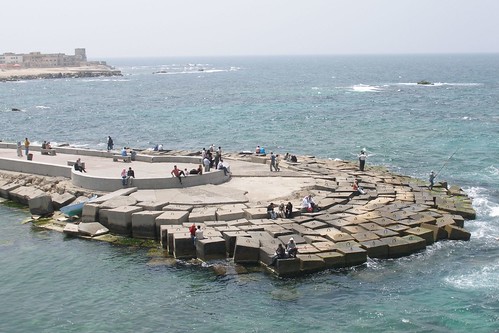
Just as Cleopatra’s tomb could be discovered at Taposiris Magna, some of her greatest treasures will be winging their way to the States. Next June Cleopatra: The Search for the Last Queen of Egypt will be showcased at Philadelphia’s Franklin Institute for six months, before heading to three other US cities on a massive tour. The exhibition will bring together some of the best-known artefacts and freshest discoveries from Cleopatra’s city of Alexandria. The Institute’s senior vice president of marketing, programs and business development Troy Collins says the show’s treasures are coming from two major sources: “Land sources from the…
-
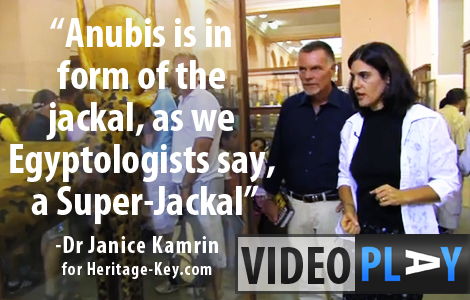
The three ritual beds of Tutankhamun are a very serious proposition, guarded by some of the ancient world’s fiercest chaperones. King Tut’sAnubis Shrine, fashioned in the seventh year of Akhenaten’s reign, was something to be carried processionally during the final movements of the king’s mummy. Dr Janice Kamrin (watch a video of Dr Kamrin exploring the lost tombs of Thebes with Zahi Hawass here) points out that Anubis “is in the form of a jackal, or as we Egyptologists like to say a ‘super-jackal’, because he’s not quite a jackal: he’s a better form of the jackal.” Anubis certainly cuts…
-
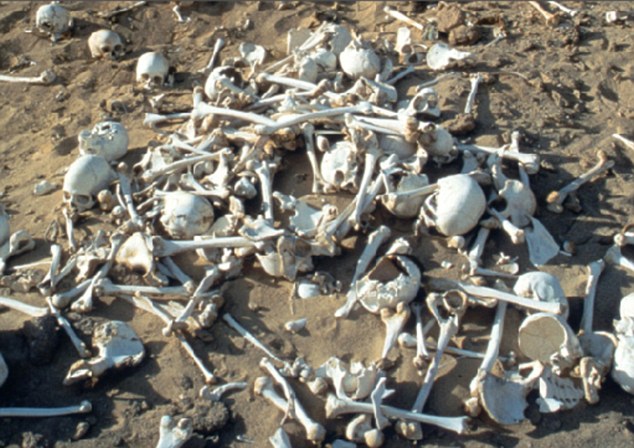
Remember the ‘groundbreaking discovery’ of Cambyses’ lost Persian army a few weeks back, in the Western Desert of Egypt? Almost as soon as it had been announced, Zahi Hawass’ Supreme Council of Antiquities were all over it, rejecting the Castiglioni brothers’ claims they’d found the legendary fleet near Siwa Oasis. Yet any doubts as to the brothers’ credibility have been lost on Iranian officials, who have branded Dr Hawass’ rejection of the discovery as politically motivated, and have urged UNESCOto step in to save the army’s remains. The request by Iran’s Cultural Heritage, Handicrafts and Toursim Organisation (ICHHTO) was made…
-

The Canopic Chest of King Tut was recently featured in a video with Dr Janice Kamrin, as she walks around the Egyptian Museum in Cairo, and explains what this beautiful artefact would have been used for (Skip to the video by clicking here). As one of the treasures of the Cairo Museum, it was photographed in stunning detail by the established Egyptology photographer Sandro Vannini, and the images are bought to the Internet by Heritage Key. Discovered in the Tomb of King Tutankhamun (KV62), it is one of several Egyptian alabaster artefacts that were found by famed explorer Howard Carter.…
-
Some people might look to Dr Zahi Hawass, bedecked in Indiana Jones denim shirt and Stetson hat, for a paragon of archaeological cool. Others could point to Kathleen Martinez, currently hunting for the tomb of Cleopatra at Taposiris Magna, as the epitome of a dynamic modern adventurer. But how many Egyptologists could realistically hold their own on long-running US chat show TheLate Late Show, hosted by Scottish funnyman Craig Ferguson? I’m struggling to think of any – much less anyone who’s done it three times. It must have been child’s play when the lovely Dr Kara Cooneyspoke to me about…
-

Luxor, Egypt is one of the most culturally rich parts of the world and is often described as the “World’s Greatest Open Air Museum” for all the various tombs, temples and monuments in the area. Luxor is close to the site of the ancient city of Thebes, the capital of the New Kingdom and famed for its luxurious standards of living and high social order. The city served as an important trading route, and the base of political power in Egypt which made it a favourable destination for Pharaohs and nobles to be buried in tombs. The vastness of the…
-
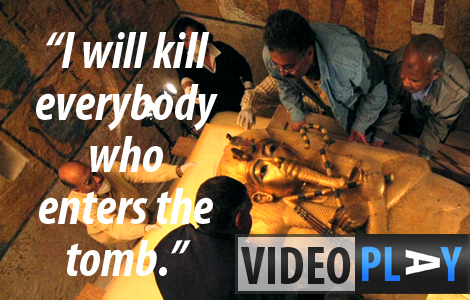
Tutankhamun, or King Tut as he’s affectionately known, was the boy king who ruled Egypt during the New Kingdom’s 18th dynasty, from 1333 to 1324 BC. In life he wasn’t the most important or memorable of Egypt’s pharoahs, but in death he’s become the one pharoah everyone’s heard of. His death at the age of 19 has been the topic of much discussion (You can watch last week’s video on the mystery of King Tut’s death here) and he was buried in the Valley of the Kings, on the west bank of the Nile near Luxor (ancient Thebes). His tomb…
-
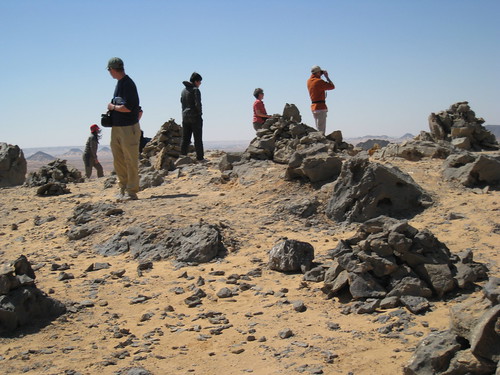
A Maltese explorer claims he may have solved one of Egypt’s oldest mysteries. Mark Borda and Egyptian accomplice Mahmoud Marai, an adventure holiday planner, have discovered a large rock in the Western Desert, some 450 miles west of the Nile Valley – inscribed with a king’s cartouche, royal images and hieroglyphs. Ancient Egyptians are thought never to have strayed past Dakhla Oasis, located around 200 miles from the river. Mr Borda will not disclose the location of his find to protect it from prying eyes. He immediately sent details of the text to compatriot and Egyptologist Aloisia De Trafford, based…
-
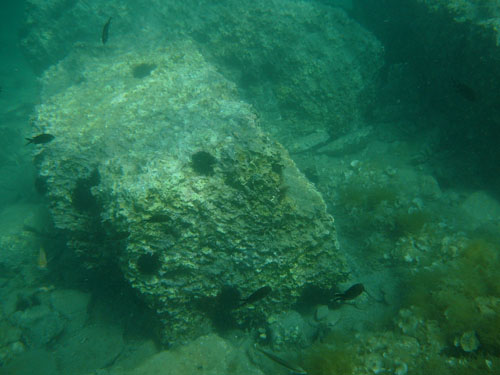
Underwater archaeology may still be in its relative infancy, but that hasn’t stopped it making some of the world’s biggest recent discoveries. From Cleopatra to ancient plonk, there’s plenty more under the sea than a load of old shipwrecks – though they can be pretty spectacular too. Even Egyptological legend Zahi Hawass is getting a piece of the action, scouring the Nile for ancient treasure. So we thought we’d strike while the iron’s wet and bring you a top ten of the world’s underwater archaeology sites. If you think we’re talking rot, or if there’s anywhere we’ve missed, don’t hesitate…