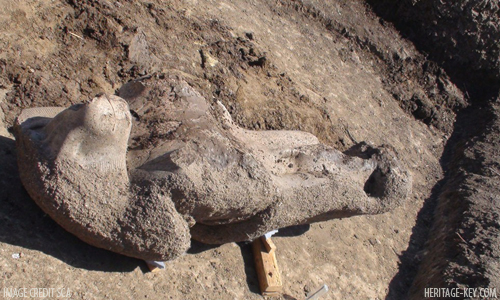
Archaeologists have discovered a colossal statue of the ancient Egyptian god Thoth at the north-western side of King Amenhotep III’s funerary temple at Luxor. The red granite statue depicting Thoth, the ancient Egyptian deity of wisdom, is 3,5 metres tall and 140 cm wide. In a statement, Dr Zahi Hawass said that evidence found at the excavation suggests more colossi could be found here still. The first traces of these large statues were uncovered during works aiming at controlling the subterranean water level on Luxor’s west bank. Only months ago, the head of 2,5 metres high statue depicting Pharaoh Amenhotep…
-
-
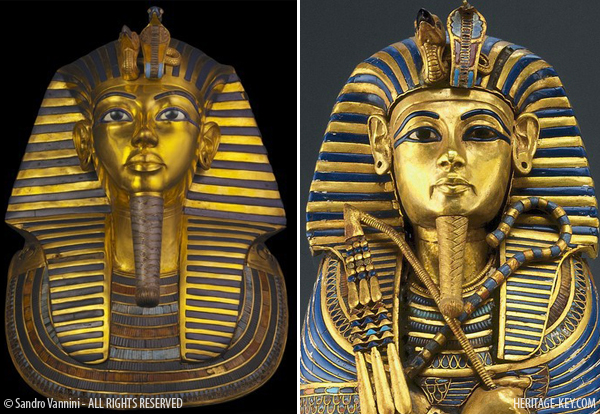
Dr. David Silverman is delighted at the thought that visitors to Tutankhamun and the Golden Age of the Pharaohs, one of two King Tut exhibitions touring North America right now, would come away as I did – with an itching interest in Akhenaten, who was almost certainly King Tuts father. Hes also enthused at the idea that viewing the vast exhibition at the Discovery Time Square Exposition, with 130 significant objects from King Tuts tomb and the 100 years preceding the boy kings life, will spur people to go take a look at King Tuts funerary urns up at the…
-
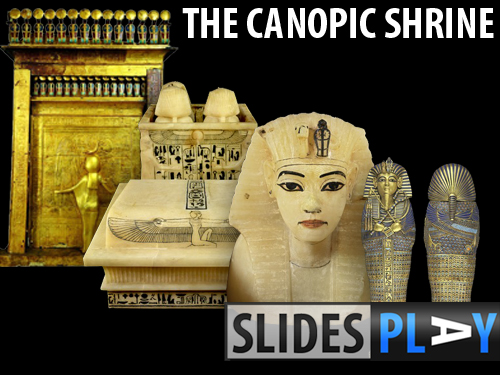
Several alabaster artefacts were discovered inside the Tomb of King Tutankhamun (KV62) by Howard Carter when he began excavating the tomb in 1922. The Canopic Shrine was one of the intruiging discoveries for how packed together it was, with a box containing several artefacts in a manner comparable to a Russian doll! The Canopic Shrine is a large gilded wooden box flanked by a Canopy and supported on a sledge. Inside the shrine was the Canopic Chest, which has four hollowed spaces inside which are sealed by Human-Headed Stoppers. Inside the hollows were four small Canopic Coffinettes. ‘Canopic Shrine’ Slideshow…
-
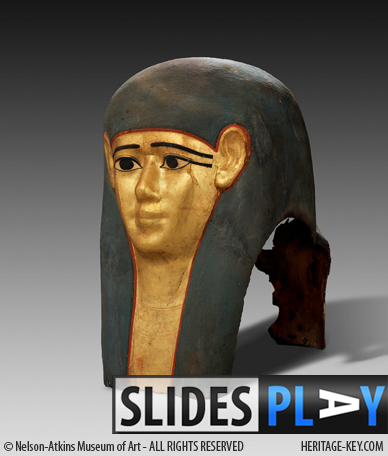
The Nelson-Atkins Museum of Art in Kansas City has just opened a new Egyptian gallery that features the coffin, cartonnage and shabtis of an Egyptian noblewoman who died around 2,300 years ago. Her name was Meretites which means beloved by her father. Her funerary artefacts date to some point between 380-250 BC. This date means that she may well have been contemporaneous with Alexander the Great and witness to a remarkable period of Egyptian history. Alexander the Great advanced into Egypt in 332 BC, taking over power from the Persians. He would go on to conquer an empire that stretched…
-
Dr Michel Baud of the Louvre Museum in Paris gave an interesting lecture last week about his excavations of a pyramid at Abu Roash. The monument was badly preserved and its stone had been quarried in Roman times, but the certain details, such as its apparent solar connections, were still discernable. Earlier, Vassil Dobrev stated that the pyramid may actually be a solar temple. However, Baud dismisses these claims…. Nearly 4,500 years ago, in the time of the Old Kingdom, the pharaoh Khufu built one of the greatest monuments on earth – the Great Pyramid. His pyramid was actually a…
-
Archaeologists working at the Avenue of Sphinxes in Luxor, Egypt, have uncovered the remains of a fifth century Coptic church and a Nilometer, a structure used to measure the level of the Nile during floods. According to a statement released by the SCA, the church’s remains were found on the second of five sections of the ancient religious path leading to the Karnak temple. Thechurch was built with limestone blocks originally belonging to the Ptolemaic and Roman temples that once stretched along the Avenue. The blocks are well preserved, with many of them bearing depictions Ptolemaic and Roman kings offering…
-
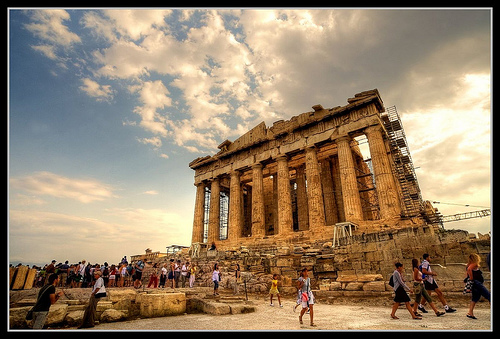
Attribution: Lluís Sala Athens Greece Key Dates The first Parthenon on the site dated back to 570 BC. The existing Parthenon was built between 447 and 438 BC to replace Parthenon II. In the 5th century it was transformed into a church, before becoming a mosque under Turkish rule in the 1460s. The building was attacked and almost destroyed in 1687 during Morozini’s siege of the Acropolis. Lord Elgin caused more damage when he looted it in the 19th century, subsequently selling much of its contents to the British Museum. The Parthenon underwent restoration from 1896-1900 and from 1922-1933. A…
-
The man with the toothless smile and sharp eyes beckons you over to see his papyrus, meanwhile another calls you to his perfume shop. Sales pitches vary: Special price for pretty lady or if youre male, You want something for your wife, not your wife? OK, for your mistress then? Apart from the hassle of the hustlers and the danger of having an over-priced piece of papyrus on your wall when you get home, what other risks do you face in Cairo? Is it safe to travel there at all? Cairo does have a certain charm, but a first visit…
-
What can graffiti tellus about ancient cultures?That’s just one of the questions being explored at a Coptic Studies symposium to be held on May 29 at the University of Toronto. Coptic refers to the branch of Christianity that spread to Egypt as early as the first century AD. It also refers to a writing system that was in use from that time until present day. The symposium is being organized by Dr. Ramez Boutros of the University of Toronto. Dr. Boutroshas been in the news recently as part of the team that recently discovered a third church and tons of…
-
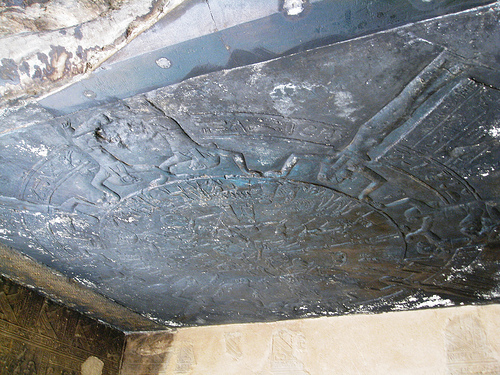
One of the most famous, popular and mysterious ancient Egyptian treasures of the Louvre, the 2060-year-old Le zodiaque de Dendéra – the Dendera Zodiac – has witnessed more than its fair share of controversy over the centuries. Stripped from the portico of a chapel dedicated to Osiris at the Hathor Temple at Dendera in 1820, then shipped to Paris, the beautifully carved bas-relief played an unlikely role in fierce disputes over science and faith in Napoleonic and Restoration France. Today, the zodiac continues to spark debate. As the first known depiction in history of the classical zodiac of twelve signs,…