• christopher gidlow

    Top 10 Archaeological Clues to the Real King Arthur

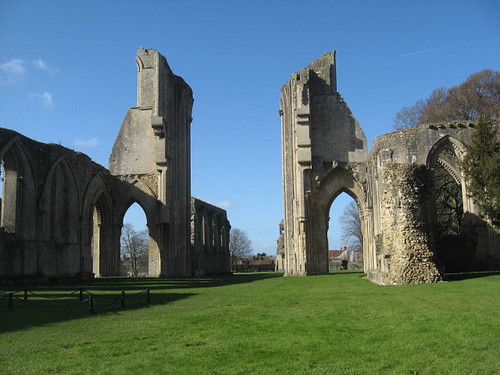
    The King Arthur we are familiar with is a literary figure, but was he also a historical one? In my book Revealing King Arthur: Swords, Stones and Digging for Camelot, I show how archaeologists over the last 50 years have interpreted the evidence from Dark Age Britain. At first they were happy to link their discoveries to legendary names. Then came a backlash, when Arthurian links were ignored or derided. Now, new discoveries have raised again the possibility of a real King Arthur. The HISTORY channel documentary King Arthur’s Round Table Revealed (video preview) brings together the leading experts to…

  • sean-williams

    England’s World Cup Woe is an Ancient Affair

    Triesman slammed the Spanish, then we berated an Italian before surrendering to the Germans. But it’s a Macedonian England’s hierarchy should have studied before the country’s calamitous World Cup campaign. Alexander the Great didn’t get his name for nothing, but the way in which his empire imploded should have been a lesson to the FA long before its capitulation on Sunday. The Lesson Alexander the Great was born to be a leader. A son of Philip II of Macedon, Alexander enjoyed an unrivalled education under the tutelage of Aristotle. Aged just 19 he’d been handed the reigns of the empire,…

  • owenjarus

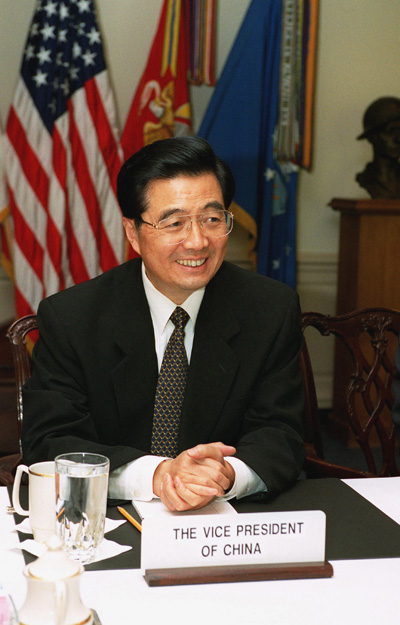
    Chinese president Hu Jintao may kick-off Terracotta Warriors show in Toronto

    A Toronto newspaper is reporting that Chinese President Hu Jintao may kick-off the Terracotta Warriors exhibit, at the Royal Ontario Museum, on June 26. It will be the largest Terracotta Warriors show ever displayed in North America featuring 250 artefacts in total including 16 human terracotta figures. It’s opening day coincides with the start of the G20 summit in Toronto, which the president will be attending. The Toronto Starreports that the president and his wife Liu Yongqing have been formally invited by the museum. Were hoping, but we know there are lots of things on their agenda, exhibit curator Dr.…

  • sean-williams

    Colchester Mummy Scan Reveals ‘Strange Bones’ in Skull

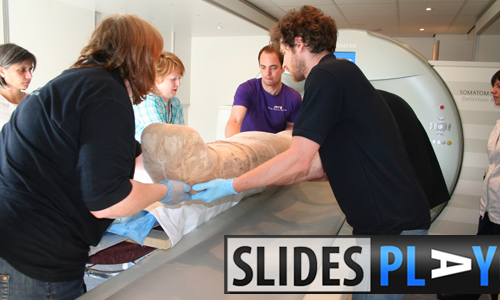
    The skull of an ancient Egyptian mummy in Colchester is packed with ‘strange bones’, a CT-scan has revealed. The scan on 2,500-year-old Lady Ta-Hathor yesterday also revealed an odd bundle between her thighs, thought to be the remains of her organs. Full results from the scan, made ahead of Ta-Hathor’s display at Ipswich Museum’s new Egyptian Gallery, are expected only after an assessment by a team in Manchester. Yet it immediately showed she was healthy with no bone defects, and had died of natural causes aged in her mid-twenties – not far off the era’s life expectancy of 30. Ta-Hathor’s…

  • sean-williams

    Newly-Discovered Roman Gladiator Skeleton goes on Display in York

    A Roman skeleton discovered recently at ‘the world’s only well-preserved gladiator cemetery’ has gone on display in York. The skeleton, one of 80 found in the city over the past seven years, went on show at the Jorvik Viking Centre on Tuesday (June 22) and promises to be a hit with visitors. The skeleton is one of the dig’s most important, bearing bite marks from a large carnivore. Experts have claimed it as proof gladiators were made to fight wild animals, such as bears and tigers, in the arena. The excavation itself has aroused huge interest across worldwide, and was…

  • stephen english

    Top 10 Reasons Alexander Was a Great Commander

    ‘Alexander‘ – even today, 23 centuries after his death, his name still has the power to inspire. His achievements have stood the test of time and remain amongst the most remarkable in the whole annals of military history. With an army of typically only around 40,000 men, he conquered the largest, richest and most powerful empire the world had ever seen; and all of this in less than a decade. When Alexander became king, his military career began when he launched a campaign against Macedonia’s northern neighbours. This is a campaign that we know little about, but we can assume…

  • General

    Rob Lee

    Professor – School of Biosciences – University of Exeter Dr. Rob Lee is a Professor in the School of Biosciences at the University of Exeter. His research looks at the study of languages. Recently he led a team that determined that the symbols carved on stones by the Picts, a society that flourished in Scotland from AD 300-843, constitute a written language rather than symbology. The team determined this by assessing the randomness of the symbols. They found that there is some predictability with the symbols, evidence that they constitute a written language.  Their results were published recently in the journal…

  • owenjarus

    4600-year-old Skeleton Discovered in Northern Ontario

    A team of archaeologists, working with the Kitchenuhmaykoosik Inninuwug First Nation, has discovered a 4,600-year-old burial at the mouth of the Bug River, on the south side of Big Trout Lake in Canada. Big Trout Lake is located in the far northwest of the province of Ontario. Even today its difficult to access. The provinces road system stops nearly 400 kilometres south of the area, making planes the most practical way to get in and out. The lake is located on the same latitude as Manchester, but the climate is far colder. In the winter the temperature can go down…

  • sean-williams

    Underground Nile Delta City is Ancient Hyksos Capital of Avaris, say Experts

    An underground city discovered in the Nile Delta is the Hyksos capital city of Avaris, says Egypt’s Minister of Culture. Farouk Hosni made the claim to Chinese news agency Xinhua in the wake of the discovery at Tell El-Dab’a, in the Delta’s north eastern limits, by an Austrian archaeological team. SCA Chief Zahi Hawass says radar imaging at the site shows the outlines of streets, temples and houses of the long-lost city, which became the capital of Egypt between 1664 and 1569 BC. (explore the image) Austrian team leader Irene Mueller says a Nile river tributary which passed through the…

  • ellie

    Stonehenge: Archaeology, History and Mystery

    All done and dusted! The first live lecture is now over (Watch it again here). The pain and the shakiness has subsided and I can relax! Thank you all for logging in: The chat in brief looked at four areas. First we looked at the Renaissance era and the overriding dependancy society had on God and religion as a framework for life. It was considered that other cultures, communities and societies of times gone by had been rudimentary and basic compared with that of pre-1680 Christian Europe. For years people had been fascinated by unusual objects and nature, but until…