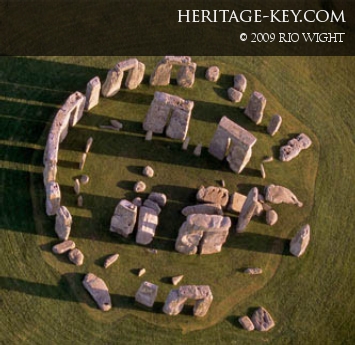
Stonehenge leaps out from its West Country surroundings like Liberace in a dole queue, so it’s no surprise that Britain’s grandest prehistoric monument has been the focus of a myriad projects since the dawn of archaeology. So what is Stonehenge’s archaeological history? And what light has centuries of excavation shed on the enigmatic treasure? Aubrey Discovers (Some of) The Aubrey Holes Stonehenge’s recorded archaeological history begins at the turn of the 17th century, with a small dig carried out by the pre-eminent physician William Harvey. Yet as much as Harvey was a pioneer of medicine, he was hardly a dab…
-
-
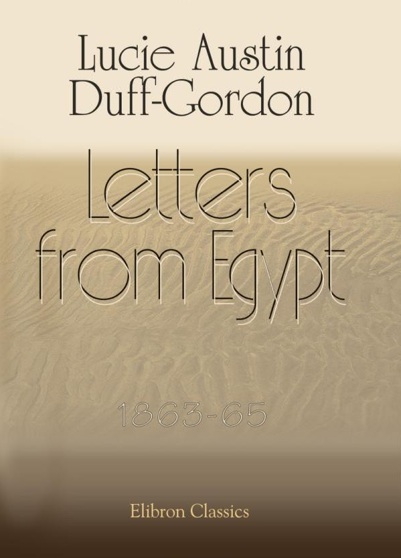
Letters from Egypt, 1863-1865 by Lucie Duff Gordon In 1862 Lucie Duff Gordon, the cousin of Harriet Martineau and a friend of Caroline Norton, Meredith and Thackeray, headed to Egypt on a solo trip designed to rid herself of consumption. She spent the next seven years in a ruined house above a temple in Luxor. She integrated quickly, setting up a hospital and welcoming the people of Luxor into her house. Her story is told through her letters. This Elibron Classics book is a facsimile reprint of a 1865 edition by Macmillan. Adamant Media Corporation (6 Dec 2001) 386 pages
-
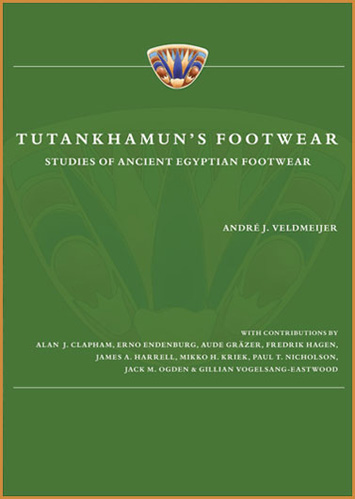
Tutankhamun’s Footwear Studies of Ancient Egyptian Footwear by André J.Veldmeijer, Alan J. Clapham, Erno Endenburg, Aude Gräzer, Fredrik Hagen, James A. Harrell, Mikko H. Kriek, Paul T. Nicholson, Jack M. Ogden, Gillian Vogelsang-Eastwood The discovery of Tutankhamun’s tomb by Howard Carter in 1922 is one of the most significant archaeological discoveries of all time. It took Carter and his team 10 years to clear the contents of the tomb and among the objects found was a large collection of shoes and sandals. The footwear is analysed here in detail for the first time since the discovery using Carter’s records and…
-
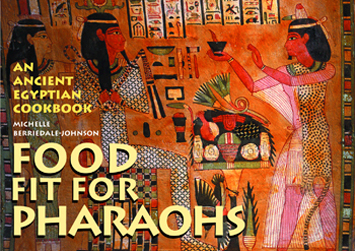
Food Fit for Pharaohs An Ancient Egyptian Cookbook by Michelle Berriedale-Johnson The great River Nile was the source of life for the ancient Egyptians, annually flooding its banks to leave behind some of the most fertile soil on Earth. The favourite dishes of the Egyptian people are some of the oldest and simplest, based on wholesome ingredients such as honey, dates, raisins, nuts, beans, whole wheat grains, cumin, garlic, mint and lemon. This charming small book introduces these dishes. It is beautifully illustrated with full-colour images of food and feasting drawn from original paintings on walls and papyrus. It is…
-
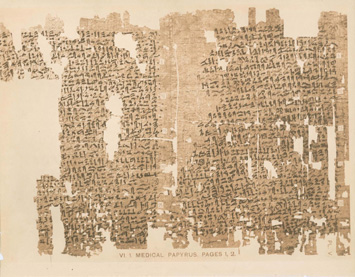
The Edwin Smith Papyrus was this year touted as “the birth of analytical thinking in Medicine and Otolaryngology,” in the medical journal The Laryngoscope. Along with a collection of other fascinating papyri, the script gives an incredible insight into the knowledge, skills, and procedures of ancient Egyptian medicine, and offers some tips on how to treat trauma issues, such as a man with a massive gouge in his head. Much of what we know about Egyptian medicine comes from roughly a dozen medical scrolls that have survived. The oldest one is the Kahun Scroll, dating to 1820 BC, which focuses in Gynaecology. The two…
-
Key Dates 1186 BC The papyrus dates from the XX Dynasty of Ancient Egypt, which lasted from 1186-1069 BC. It was discovered in the early 19th century. Key People It was probably created by a painter from Deir El-Medina village. When French scholar (and translator of the Rosetta Stone) Jean-François Champollion viewed the papyrus in Torino in 1824, he described it in his notes as: “an image of monstrous obscenity that gave me a really strange impression about Egyptian wisdom and composure.” Key People: Jean-François Champollion The Turin Erotic Papyrus is a famous (or rather, infamous) 12th/11th century BC Egyptian…
-
Think you know all there is to know about these goliaths of the ancient world? Heritage Key picks out ten key facts about pyramids. 1. There are actually 118 pyramids in Egypt. Sure, you might have heard of Khufu‘s, or Khafre’s – or even Djoser’s incredible Step Pyramid at Saqqara, the first known pyramid ever built. But what about the ones which don’t grab the headlines: Amenemhat III‘s Black Pyramid of Dashur looks more like Ayer’s Rock than an Egyptian tomb, and Sahure’s fine mausoleum in Abusir once stood 47m high. 2. The 118th pyramid was unearthed by Egypt’s most…
-
Question – who can completely fill up a cavernous 1,500 seat domed hall on a Saturday night in Toronto? Answer – Dr. Zahi Hawass “I don’t get to introduce rock stars,” said Art Gallery of Ontario CEO Matthew Teitelbaum. Well tonight he did. Forget the critical New Yorker article, the mixed reviews of the new Tut exhibition at the Art Gallery of Ontario, or the fact that local Toronto media largely stayed away from this lecture. The world’s most well-known Egyptologist completely filled Convocation Hall, with people who had all paid a small admission fee (no more than $18) to…
-
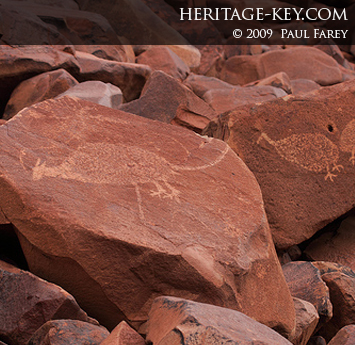
There’s no doubting the natural durability of cave and rock art – in many cases ancient paintings, carvings and sculptures have resisted tens of thousands of years of the withering effects of history and the elements to still be around to reveal their splendor today. Yet, that’s not to say that their continued survival is guaranteed, particularly as many sites become more and more popular as tourist attractions and therefore increasingly subject to human wear and tear. Other examples simply don’t have the protection they need and are at the mercy of vandals and robbers, while some are threatened by…
-
Key Dates 1800 BC The papyrus is from the Late Middle Kingdom, between 1850 – 1700 BC. Key People Horus, god of the king, sky and vengeance in ancient Egyptian religion. Seth, aka Set, god of storms, chaos and the desert. Osiris, god of the underworld. The Tale of Horus and Seth is an ancient Egyptian myth about Horus and Seth’s rivalry for the Egyptian throne, held in the story by Osiris, Horus’ father and god of the underworld. There are several versions of the story worldwide, but this particular one, held at the Petrie Museum in London, allegedly contains…