Egypt announced today that a gold Umayyad coin was unearthed last Thursday during an excavation at the Monastery of St. John the Little, in the desert west of the Nile Delta. In a statement Dr. Zahi Hawass, Secretary General of the SCA, said both sides of the well-preservedcoinare decorated with Kufic inscriptions, the oldest calligraphic form of the Arabic script. One side of the coin bears the name of Allah. The second side is inscribed: in the name of God the Merciful. The coin’s edge is decorated with the year it was minted. It dates to the year 103 of…
-
-
My generation has grown up almost exclusively exposed to war in the Middle East. Two wars in Iraq, one in Afghanistan and countless battles between neighbouring nations in the region. The Middle East has been a battleground since time began – and now you can see exactly who has conquered it through the ages with mapsofwar.com‘s great-looking 90 second walkthrough. The map begins in 3,000 BC with the invention of the Egyptian Empire – though there’s no mention of the Sumerian states which comprised the Cradle of Civilization – and shows the spread of the Hittites, Israelis, Assyrians and Babylonians…
-
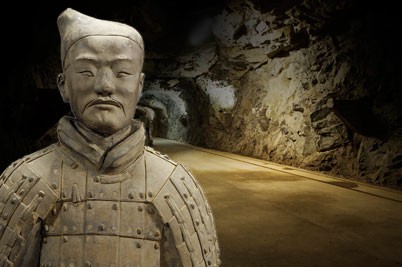
At the end of August the Terracotta Army will visit Sweden, and the soldiers will bring with them the story of China’s birth. In a unique location,the Terracotta Warriors and a collection of never-seen-before objects from simular gravesites will tell the story of how the vast Chinese empire was built on the idea of eternal power. This idea – stretching both space and time – was given shape through momumental burial sites and buildings, and the unification of China. The sophisticated empire that was established would last over two thousand years. A selection of Terracotta Army statues and recent archaeological…
-
Today the ‘The Lost World of Old Europe The Danube Valley, 5000-3500BC’ exhibition opens at the Ashmolean Museum in Oxford. When visiting you can expect to see the famed goddess figurines which have triggered intense debates about women’s roles in Old European society; the oldest major gold treasure found (in the earliest known male elite burial); and more exuberant (and suprisingly ‘modern’) art and pottery from Europe’s first civilisation. Having only previously visited New York, it’s a must-attend exhibition containing objects on loan from over 20 museums in Romania, Bulgaria and Moldova. It’s a chance to learn about a relatively…
-
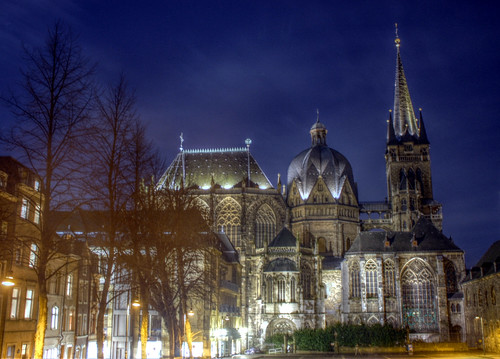
The grave of Charlemagne, the Frankish king whose empire comprised most of western Europe in the 8th and 9th centuries AD, may be lost forever according to archaeologists. Experts have finally dispelled the popular theory that Charlemagne was buried in the atrium of Aachen Cathedral, finding no evidence earlier than the 13th century. Charlemagne, who was declared Emperor of the Romans by the Pope during his reign, is still thought to have been buried in the area. But with this setback experts are increasingly doubtful as to whether it will ever be discovered. Aachen archaeologist Andreas Schaub, who has worked…
-
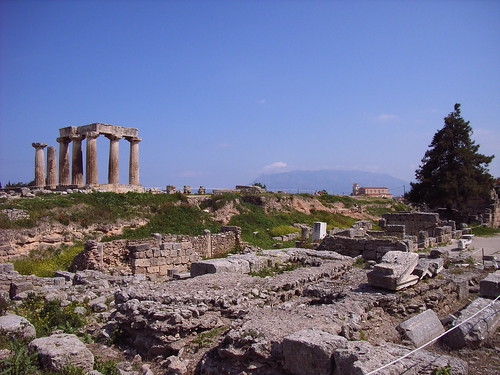
Police have seized two ‘outstanding’ ancient Greek statues in the Peloponnese, shortly before they were due to be sold for 10 million (8.6m). Two men aged 42 and 48 were arrested while loading the pair of 2,500-year-old relics onto the back of a truck near the ancient city of Corinth. Police are seeking a third man they believe to be the group’s ringleader. The pair of marble statues stand 5’8″ and 5’9″ tall, and are of the Kouros style popular during the 6th and 7th centuries BC. Experts believe both were made by the same sculptor between 550 and 520…
-
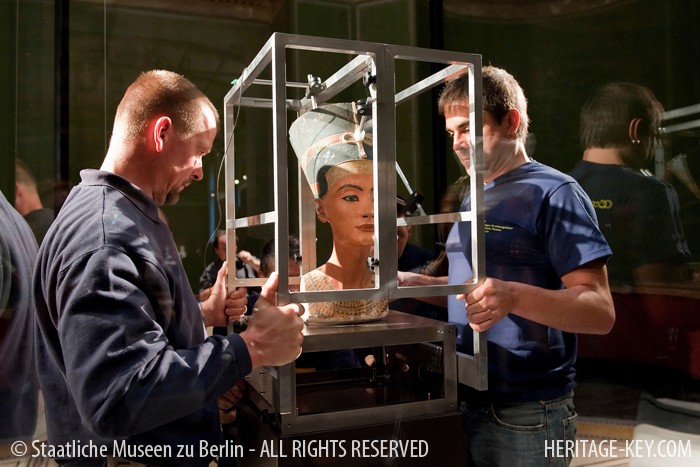
Germany has made a firm response to last week’s announcement by Zahi Hawass that Egyptian government will officially demand the return of the Bust of Nefertiti. Minister of Culture Bern Neumann today made it clear once again that the bust is going nowhere: Nofretete stays in Berlin! Hawass claims the bust of Nefertiti Nofretete in German was smuggled out of Egypt illegally and should be returned. According to Egypt’s head of antiquities, archaeologist Ludwig Borchard intentionally lied to Egyptian officials about the value of the bust. Bernd Neumann, also board member of the Prussian Cultural Heritage Foundation, which oversees the…
-
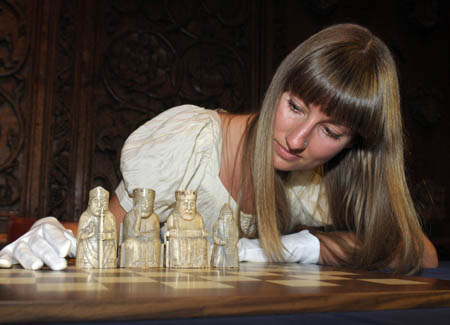
A reunion 180 years in waiting will occur this Friday in Edinburgh, as Lewis Chessmen pieces from north and south of the border are displayed side-by-side for the very first time at the National Museum of Scotland (NMS). The exhibition (one of our top ten to look forward to worldwide this year) marks the arrival of a 20-piece sample of the ornate, ivory-carved 12th/13th century artefacts in Edinburgh on loan from the British Museum, and the beginning of a tour of the country that between now and September 2011 will visit Aberdeen, Shetland and finally Stornoway on the Isle of…
-
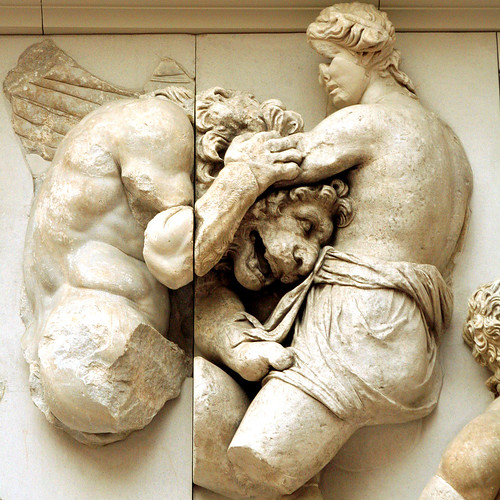
Both of these monumental pieces of sculpture are beautiful, both portray good overcoming evil and the greatness of civilised man over barbarians. The Parthenon itself is awe-inspiring. If you haven’t managed to see it yet (a perfect opportunity for a holiday in Athens!), when you get up to the Acropolis and walk around, look at the Parthenon frieze, the pediments, the metopes, and then you should get ready to pick your jaw up off the floor! It is honestly one of the most magical buildings that I have ever seen. Everything about it proclaims the glory of Athens – it’s…
-
This week Egypt’s antiquities chief Zahi Hawassplans to make a formal request for the return of the Bust of Nefertiti from Berlin. Neues Museum officials have already dismissed his continued attacks on the legality of the bust’s ownership, and are all but certain not to let go of their most prized asset. Hawass still has the backing of millions worldwide. But Nefertiti should stay where she is, and his quest to repatriate Egypt’s ancient relics is misguided, dangerous even, to Egypt’s cultural heritage. Dr Hawass has been planning the campaign for quite some time: in August last year he told…