• britain

    Roman London: The Battles and Rebellions that Shaped the City

    When Roman troops led by Aulus Plautius arrived on the banks of the Thames shortly after they landed in Britain (probably on the east coast of Kent or near Southampton) in 43 AD, they would have found little more than a few Iron Age settlements on the banks of a river, with few roads and not much trade to speak of. Within a century the Roman settlers had laid down the foundations of a bustling trade town, which rebuilt itself after numerous attacks, fires and a possible Plague epidemic, with a population peaking between 45,000 and 60,000 by the mid…
  • sean-williams

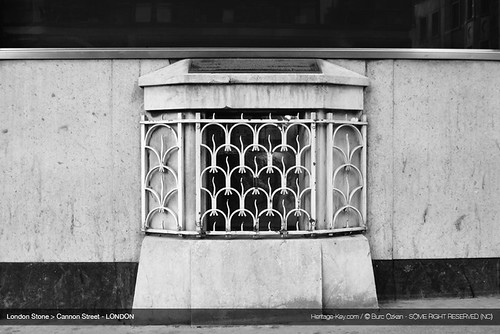
    Talk to the London Stone Live on Monday Night!

    Ever thought you’d been speaking to a brick wall day? Well now’s your chance to try it out for real, as we hook up with the London Stone on Twitter on Monday for what promises to be the masonry equivalent to Frost vs Nixon. And though you can get a huge dose of the stone’s history in our inaugural Ancient World in London video, this is a web event not to be missed. Learn all about one of London’s weirdest treasures at 7pm Monday! As arbiters of ancient info, Heritage Key has managed to bypass the artefact’s hefty entourage for…

  • site

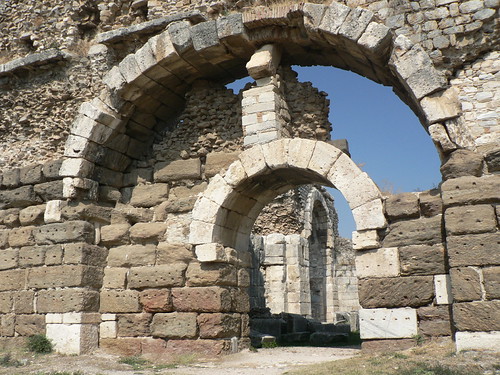
    Miletus

    Attribution: Lazy B Millet Turkey Key Dates Miletus was first occupied at around 3500 to 3000 BC. Minoans occupied the area from around 1900 BC. The first settlers from Crete arrived in Miletus at around 1400 BC. The Greeks freed Miletus of Persian rule in 479 BC and famously rebuilt. Alexander the Great seized Miletus in 334 BC. It was annexed by the Romans in 133 BC. The Apostle Paul led his Third Missionary Journey through the city in 57 AD. Miletus’ first excavations commenced in 1873. Key People Hippodamus; the famous Greek architect who built Miletus as the world’s…

  • rome

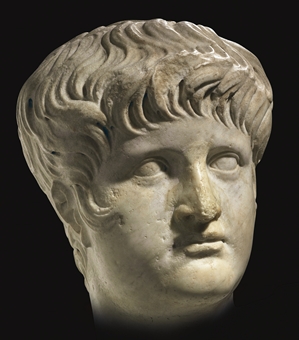
    Emperor Nero

    Attribution: Joe Geranio 37 – 68 Last Roman emperor of the Julio-Claudian Dynasty Relationship People Associated Claudius I Emperor Nero was born in 37AD and died in 68AD. He was the fifth and final Roman Emperor of the Julio-Claudian dynasty. He inherited the throne and title Caesar from his adoptive uncle Claudius in 54AD. He ruled from 54AD to 68AD.  His reign was characterized by his attention to trade, diplomacy and improving the cultural infrastructure of the Empire.  He built theatres and promoted athletic games but was also known as a tyrant and for his wild extravagance. He is also…

  • Ann

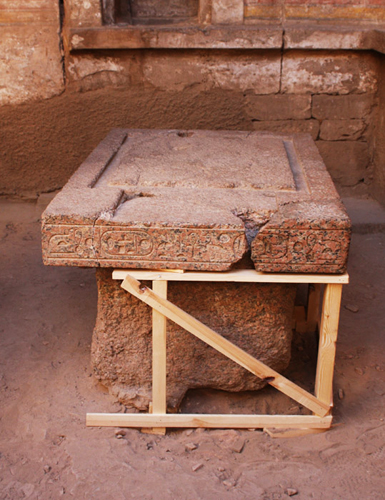
    Ancient Egyptian Artefact, Returned by Met Museum, to be Reunited with Statue at Karnak

    Egypt’s Minister of Culture Farouk Hosni and Dr. Zahi Hawass returned a piece of red granite belonging to an ancient Egyptian temple to its rightful place – the base of Amenemhat I’s naos. Both officials are on an inspection tour along the Avenue of Sphinxes that connects the Temple of Luxor with that of Karnak, home to the Ptah temple where the naos is to be found. The naos pieace was returned to Egypt last October by the Metropolitan Museum of Art in New York, after it was purchased by the Museum from an antiquities collector in New York in…

  • owenjarus

    The Warrior Emperor and China’s Terracotta Army Exhibition at the ROM – Full Details

    News of this exhibit has been leaking out in bits and pieces for weeks. But today the official announcement of it was made and full details have been released. The exhibit will be hitting the Royal Ontario Museum in Toronto Canada starting in late June. The precise exhibition start/end dates are being arranged. As reported earlier the exhibit will be stopping at the Glenbow Museum in Calgary and the Royal BC Museum in Victoria BC. A stop in Montreal was announced several months back. Also, as hk previously reported, this will be the biggest Terracotta Warriors exhibition ever to hit…

  • malcolmj

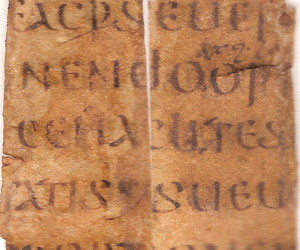
    Cracking the Codex: Long Lost Roman Legal Document Discovered by Researchers at University College London

    Dr Simon Corcoran and Dr Benet Salway of the history department at University College London have found fragments of an important Roman law code that previously had been thought lost forever. Its believed to be the only original evidence yet discovered of the Gregorian Codex a collection of constitutions upon which a substantial part of most modern European civil law systems are built. They made their remarkable find by painstakingly linking 17 pieces of seemingly incomprehensible parchment. Together they form, according to Dr Salway, a page or pages from a late antique codex book rather than a scroll or a…

  • site

    Birnie

    Attribution: Vegan Family Moray Scotland Key Dates A Celtic settlement existed at Birnie from around 1000 BC to 200 AD. The Romans are known to have visitied the site from after 70 AD until as late as around 200 AD. Two large coin hordes were discovered at the site by archaeologists in 1998 and 2001 respectively. The dig remained ongoing in 2009, with at least one more year of fieldwork planned. Key People The excavation of Birnie is led by Dr Fraser Hunter of the National Museum of Scotland. Birnie is an archaeological site in the north-east of Scotland, near in…

  • publication

    Roman Britain: A New History

    Roman Britain A New History by Guy de la Bédoyère In this lively, authoritative account of a crucial period in Britains history, Guy de la Bédoyère puts the Roman conquest and occupation within the larger context of Romano-British society and how it functioned.With nearly 300 illustrations and dramatic aerial views of Roman sites, and brimming with the very latest research and discoveries, Roman Britain will delight and inform all those with an interest in this seminal epoch of British history. Thames & Hudson (22 Feb 2010) 288 pages

  • veigapaula

    Lifestyles of the Rich and Famous… Egyptians

    The rich and famous people of ancient Egypt lived a decadent lifestyle with fine wine, sex, high fashion, and plenty of partying. How do they compare with their equivalents today – the modern western celebrity set? The main differences might be regarding who were the richest people then, and who are the richest people now. In ancient Egypt the pharaoh was at the top of the pyramid and his family, noble people who owned land, and the priests came after. Scribes, architects and doctors were well off, and skilled craftsmen also had many privileges. Peasants and unskilled workers were low…