Today Britain will brave fierce drizzle to excercise its right to freedom (and decide Heritage Key’s Fantasy Election 2010). But while Churchill’s lionised canon taught us to fight on the beaches, the hills, fields and towns, there’s one place he plainly forgot to mention: museums. Right now anyone wishing to see ancient marvels like the Rosetta Stone, Elgin Marbles and Assyrian Lion Hunt can do so free of charge, a nonpareil since 2001. Those in favour of free entry claim that it opens antiquity up for everyone, that visitors to Britain’s museums have increased by over 20 million, and that…
-
-
Liberal Democrat leader Nick Clegg vows to return the Elgin Marbles to Greece if voted into power in today’s general election. As an MEP (Member of the European Parliament) in 2002 Clegg even spearheaded a conference on sending the marbles back to Athens named Marbles in Exile. Clegg described the marbles being housed in the British Museum (BM) like displaying Big Ben in the Louvre. When Tory MEPRoger Helmer criticised the stance, Clegg wrote to him, “During the opening of the Marbles in Exile exhibition yesterday, I took the opportunity to read out your message. Everyone agreed that you appear…
-
Britain might be staring a hung parliament in the face, but Heritage Key’s election has quickly become a two-horse race. And with just a few hours to go ’til the votes are counted in our grand finale (alas, no Jon Snow and his ever-brilliant green-screenery), it’s time to swot up on Alexander the Great’s manifesto. Alexander was born in Pella, modern-day Greece, in 356 BC. His father Philip II was already one of the Macedonian Empire’s greatest kings, and was determined that his son would make the nation even greater. A rigorous education ensued, during which Alexander was even afforded…
-
Its been a tense few days on the Heritage Key fantasy election trail. Since the worlds ancient leaders first went to the polls on Saturday, voters have turned out in typical numbers to exercise their right to vote. Early indications show that this years election is a two-horse race: firmly in the lead is Alexander the Great, with Romes Augustus closing in as a close second. Alexander can certain talk the talk. But are the voters swayed by his powers of persuasion and provocative title, or are they actually voting for policies? Is rival Augustus the thinking historians choice, or…
-
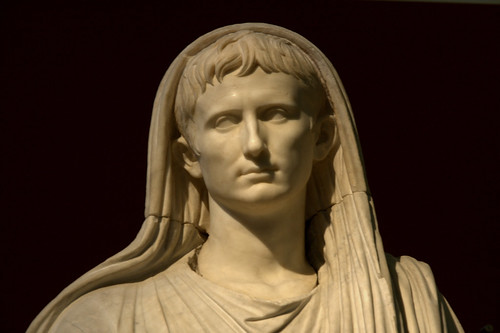
Augustus may have been a political genius but he was far from being a swaggering military hero like other famous leaders from history. He was a sickly, pale youth, yet he had the staying power and resilience to enable him to outlive his rivals and found the Roman empire. Read on to find out why Augustus was the best leader of all times and deserves to win the Heritage Key Fantasy General Election 2010! He reigned for 41 years and is best remembered as a ruler with extraordinary vision but also as a moderate man committed to peace and family…
-
It’s the end of the Ancient World in London video series! We’ve travelled up and down the country getting the inside line on London’s impressive history, and we’ve seen no small number of ancient wonders along the way. So here’s a video of our best bits and what we thought of them – from the rebellion of Boudicca to the fearsome Maunsell Sea Forts. The series has been much more than the videos, though: we’ve been running bloggers’ challenges, real-world and virtual events, a pub quiz and even a special concert. Of course you can still see Stonehenge, the Valley…
-
At its peak during the 2nd century AD, Roman London (Londinium) had a population of up to 60,000 people and represented a thriving urban centre. But as the Roman Empire declined over the next 300 years, so too did the city. In 410, Britain was cut loose from the Empire altogether, and with it London. Troops and officials departed, and the city was left to fend for itself. Exactly what happened during the immediately ensuing phase in London’s history – which is referred to as the Sub-Roman period, and lasted from approximately 450 until 600 AD – is mysterious. A…
-
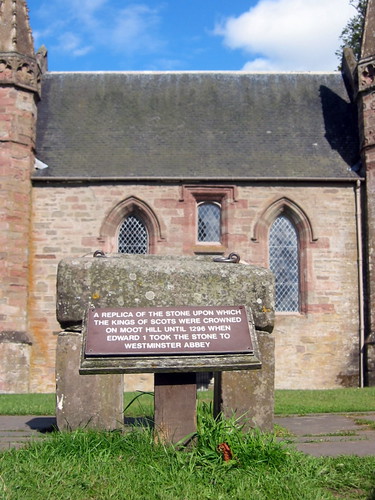
Police in Perthshire, Scotland are investigating the theft and prompt abandonment of a replica of the Stone of Destiny the battered, iconic, controversial and well-traveled symbol of Scottish royalty from outside Moot Hill Chapel at Scone Palace in Perthshire, by a seemingly ill-informed criminal gang. The real stone which itself has twice been stolen in the past, once from its original spot at Scone by King Edward I of England in 1296 and once from Westminster by a group of Scottish students in 1950 (they later gave it back) resides at Edinburgh Castle. It is said to be the seat…
-
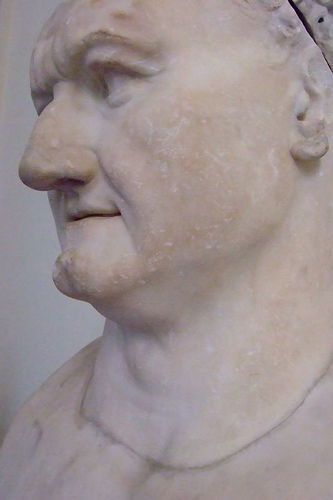
Attribution: 17 Nov 9 – 79 Emperor Key Dates Born in November 9 AD, Vespasian ruled from 69-79 AD. Relationship People Children Emperor Titus , Domitian Associated Gnaeus Julius Agricola Titus Flavius Vespasianus was born on 17 November 9 AD. He became emperor of the Roman empire at 69 AD until his death in 79 AD. Born in the Sabine countryside around Rome in Falacrina near Reate, Vespasian went into the army and served in Thrace in 36 AD. He quickly rose through the ranks and became praetor in 40 AD. His marriage to Domiciliary the Elder produced the sons…
-
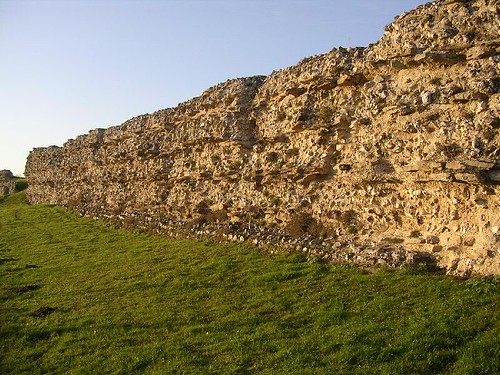
Boudicca’srampaging Celts tore through Calleva Atrebatum, now Silchester, killing thousands of Romans and leaving the town a smouldering wasteland. That’s what 13 years of excavations at the Berkshire town suggest, say a leading expert. Professor Michael Fulford of the University of Reading claims Silchester bears all the scars of the AD60 rebellion, in which up to 80,000 people were massacred by Boudicca and her Britons. An Iron Age settlement was found at Silchester just last year – and though it is often overlooked in the pantheon of Roman British towns Prof. Fulford insists it was at least as important than…