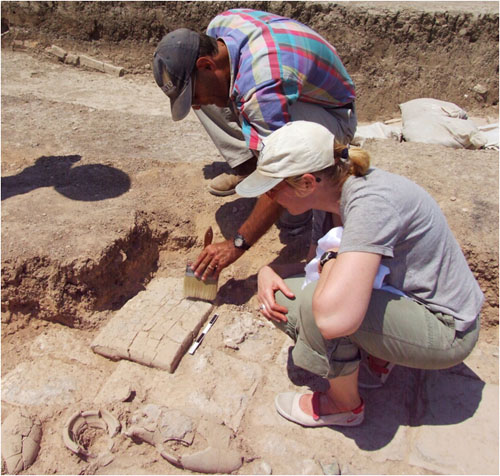
A team of researchers – excavating a 2,700 year old temple at the ancient city of Tayinat in southeastern Turkey – have discovered evidence that its inhabitants prominently displayed a tablet which bore a pledge of loyalty to the heir of an Assyrian king. At their height the Assyrians controlled an empire that stretched from southern Iraq to the Mediterranean coast. In their art and writing, “the Assyrian king was portrayed as supreme ruler of the known world and viewed with absolute authority as the earthly representative and human embodiment of (the Assyrian god) Ashur,” said Professor Tim Harrison of…
-
-
In 399 BC the Greek philosopher Socrates, by then around the age of 70, was executed in his home state of Athens. He was prosecuted for the rather dubious crimes of “not acknowledging the gods the city acknowledges” and “subverting the youth of the city”. His case was brought to court and prosecuted by a man named Meletus Meletou. After a one day long trial (the norm back then) he was found guilty by a jury of 501 peers – and sentenced to death. Modern day historians suspect that this trial was politically motivated. Indeed Socrates is said to have referred…
-
The word “Aryan” has become inseparably associated with the racialist world-view of the Nazis, despite the fact that – far from specifying a blonde-haired, blue-eyed “master race” – it was originally a perfectly innocent self-designator for a tribe of ancient nomadic Indo-Iranians who lived in the region of modern Iran, Afghanistan and India from around 2700 to 350 BC (more about “Aryan’s” passage from a simple piece of linguistic terminology to a racialist rationale for megalomaniacal world domination here). Saturated as they are in misconception, mirth, myth, and wild fantasy, the “Aryans” have become something of a lightning-rod for weird…
-
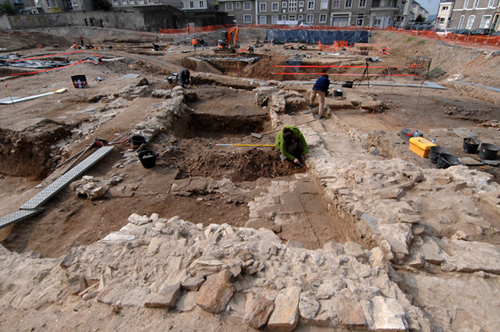
Archaeologists excavating a 9,000 square metre area at Angers, in the Loire District, France, have discovered the remains of the first mithraeum a sanctuary dedicated to the Indo-Iranian god Mithras in the west of France. The cave sanctuary, a rectangular building, is dated to the third century AD. The Mithraeum The small, vaulted chapel in which worshippers hosted banquets and sacrifices dedicated to the god, is decorated with a starry sky. The excavations revealed drums of columns perhaps statue bases, but possibly altars. A sort of vestibule allowed worshippers to don their ceremonial robes before entering the sanctuary. The Mithraic…
-
Archaeologists have discovered two ancient temples – over 4000 years old – in Peru’s northern jungle. If the preliminary dating is correct, this is the country’s oldest temple building found so far. The temples were found near the village of Jaén, Cajamarca, in northern Peru. The excavation sites (image slideshow), locally known as Monte Grande and San Isidro, were previously used for agriculture and even as a rubbish dump. The Excavations at the Monte Grande and San Isidro Temples The complex appears to have been built around 2,000 BC. According to Peruvian archaeologist Quirino Olivera, the temples can be associated…
-
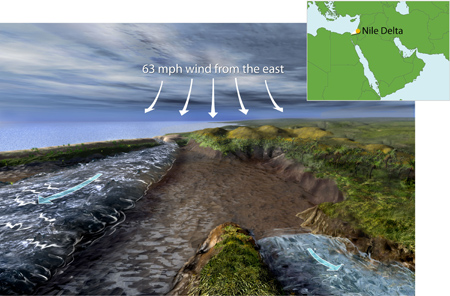
The biblical narrative of the crossing of the Red Sea has inspired and mystified people for millennia. So far, Archeologists and Egyptologists have found little direct evidence to substantiate many of the events described in Exodus, said to have taken place more than 3,000 years ago. Now, a new study offers a new hydrodynamic explanation for the miracle a strong east wind, blowing overnight, could have created a land bridge (watch the video) and allowed for passage. By pinpointing a possible site south of the Mediterranean Sea for the crossing, the study – based on a reconstruction of the likely…
-
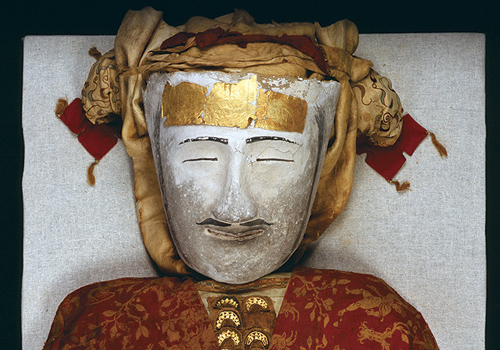
Tickets go on sale today for “Secrets of the Silk Road” a landmark exhibition from China making its only East Coast stop at the University of Pennsylvania Museum of Archaeology and Anthropology (Penn Museum) in Philadelphia February 5 through June 5, 2011. The exhibition aims to reflect the wide extent of the Silk Road trade and cultural interchange (see some of the highlights in this slideshow). Despite of what its name suggests, the Silk Road isn’t one single route. Rather, it is an extensive interconnected network of maritime and overland trade routes extending from Southern Europe through The Arabian Peninsula,…
-
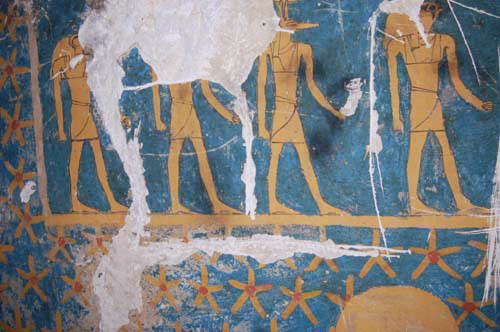
Archaeologists have rediscovered the ‘lost’ tomb an ancient Egyptian priest at the Theban Necropolis in Egypt.It was announced today by Egypt’s Minister of Culture, Farouk Hosny, that the team excavating and conservating the tomb has now cleared the burial shaft of tomb and reached its burial chamber. The tomb is located at Qurnet Murai, south Assasif, on the west bank of the Nile opposite to Luxor, and belonged to a priest named Karakhamun. It dates to the 25th Dynasty (the Reign of Shabaqo, circa 700BC) and is referenced as TT223 (Theban Tomb 223). The el-Assasif area is a well known…
-
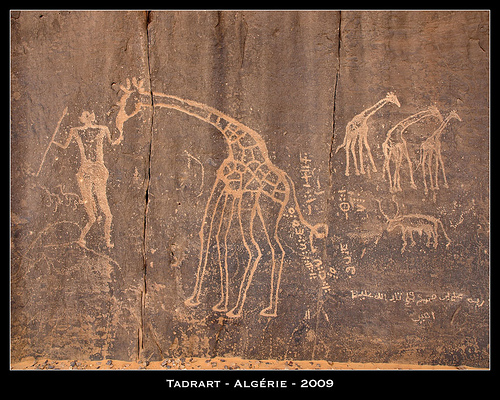
Attribution: jpmiss Sahara Desert Algeria Key Dates The earliest prehistoric paintings probably date to 9000 BC. The prehistoric rock paintings of Tassili n’Ajjer in the Sahara desert in Algeria, probably date from 9000 BC on. They were made during a period when the climate was wetter than now and the Sahara was closer to savannah than desert conditions, and therefore able to support greater human occupation as is evident from finds of stone tools and ancient rubbish heaps as well as the rock art itself. The rock art can be classified into the following periods: the Bubalus period (from c.9000 BC), the Roundhead period (c.6000-4000 BC),…
-
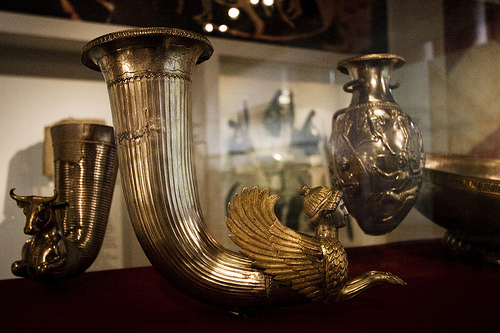
Attribution: Ann Key Dates 350 BC Key People King Kotys I The Borovo Treasure was accidentally discovered in 1974, when a field about 2 kilometres from the village of Borovo, Ruse (Bulgaria) was ploughed. Sadly, the plough machine’s cutting implements severely damaged the five silver artefacts, but thanks to great restoration work, nowadays their ‘scars’ are nearly invisible. No tumulus was found at the location, and why the silver treasure was buried here remains a mystery. The Borovo Treasure is a luxurious five-vessel silver gilted drinking set – decorated with gold. It consists of three rhytons (ending in the protomes of…