• malcolmj

    10 Things I Didn’t Know About the Lewis Chessmen

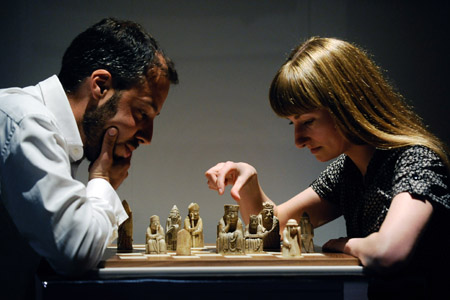
    I’ve had something of a crash-course on the subject of the Lewis Chessmen since it was announced back in October last year that pieces from the London and Edinburgh collections would be reunited for a major touring exhibition of Scotland running throughout 2010 and 2011. I researched the story of the Lewis Chessmen for this article, blogged on the findings of new research on their origins and usage, pitted them against King Tut’s ivory senet board in a face-off, and reported on the premiere last month of the exhibition at the National Museum of Scotland (NMS). I was beginning to…
  • world

    The Detmold Child

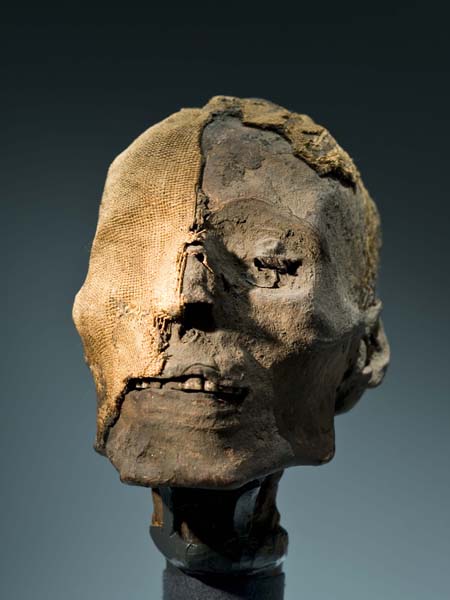
    Key Dates 4504 BC The Detmold Child has been radiocarbon dated to between 4504 and 4457 BC. It arrived at the Lippisches Land Museum in Detmold in 1987. The Detmold Child is an embalmed Peruvian baby of 8-10 months, discovered at an unknown location in Peru and currently held by the Lippisches Land Museum in Detmold, Germany. It is one of the oldest mummies ever discovered, and predates King Tut by more than 3,000 years, and Ötzi the Iceman by 1,000 years. It cane to the Lippisches Land Museum from a small ethnographic museum in Hessian Witzenhausen. Until then it…

  • sean-williams

    ‘Bottomless Pit’ of Ancient Cult Vessels Discovered in Israel

    A massive haul of ancient cultic vessels dating back over 3,500 years has been discovered in Israel. The find, made ahead of gas pipe works at the base of Tell Qashish, near Tishbi Junction, has been described as a ‘bottomless pit’ of artefacts, and contains over a hundred intact objects – almost unheard of in archaeological circles. The find includes incense-burning vessels, a sculpted woman’s face – seen in the picture below – and various items of tableware. Experts from the Israel Antiquities Authority (IAA) who made the find believe the artefacts were part of an ancient pagan cult which…

  • prad

    Wembley’s New £16 Million Hindu Temple Built Using Ancient Methods

    Last week two twin towers were opened in North London. But it wasn’t a revival of the Old Wembley – this was the much awaited opening of the Shri Vallabh Nidhi temple on Ealing Road. Costing a cool £16 million and taking 14 years to build, the temple (or Mandir, in Hindi) did not disappoint – contemporary buildings today simply do not contain the stunning detail that this Indian temple boasts. Stepping outside Alperton tube station and breathing that (unfresh) London air, I distinctly felt I was back in the multicultural environment of my youth. Looking around I saw a…

  • owenjarus

    The million mummy question: Why are there a million mummies buried near Snefu’s Seila pyramid?

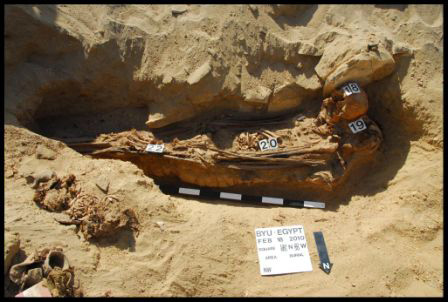
    Nearly 4,600 years ago a third dynasty pharaoh named Snefru launched one of the greatest construction projects in human history. He decided, for reasons that are unknown to us, to build four pyramids scattered at different places across Egypt. He constructed two of them at Dashur (the Red and Bent pyramids), one at Meidum and another at a place called Seila. Together they used up more material than Khufus pyramid at Giza. Casing stones were used to give them a smooth appearance in other words make them into true pyramids.” This was the first time in Egyptian history that this…

  • malcolmj

    Mummies of the World Touring Exhibition to Premiere in California, Tickets On Sale

    Tickets went on sale at the weekend for the premiere of Mummies of the World the largest single collection of mummies ever brought together in one exhibition, and the very first exhibition of its kind to be staged in the United States. Opening on July 1, itll take place at the California Science Centre in Los Angeles, and run for a limited time, before moving on to tour an as yet undisclosed string of museums around the US for up to three years. Organised by American Exhibitions Inc. (AEI), in association with Reiss-Engelhorn Museums (REM) of Mannheim Germany, the exhibition…

  • greece

    Pythagoras and the Stars

    “Number rules the universe.” – Pythagoras Astronomy may already have been in rude health by the time the ancient Greeks built their fearsome empire, but it was the Hellenistic world which gave us some of the most radical – and accurate – foretelling of the universe. And it was the Ionian mathematician Pythagoras who formed some of the most intriguing conclusions about the heavens. “Philosophy begins with Thales.” – Bertrand Russell Pythagoras was far from the first thinker to stun the Greek empire with his observations of the planets, having been beaten to that title by the Milesian philosopher Thales.…

  • world

    The Palace of Knossos – Discovery and Renovation

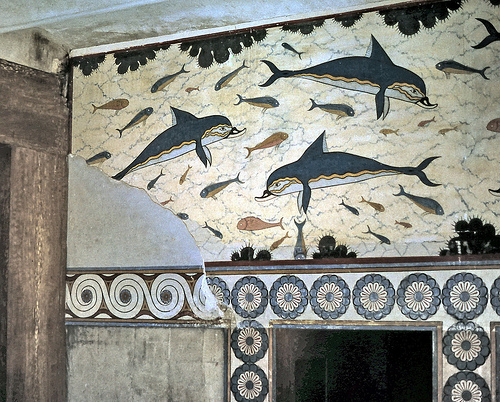
    Excavating physical remains that confirm the existence of a civilization only described in legend: it’s the dream of every archaeologist, and Sir Arthur Evans is one archaeologist for whom the dream came true. The year was 1900; the location was the outskirts of the modern day city of Heraklion, on the Greek island of Crete. The ruins Evans extracted from its baked earth were those of the Palace of Knossos, a spectacular Bronze Age citadel from which the dapper British antiquarian was able to begin uncovering and piecing together the forgotten history of one Europe’s first advanced civilizations. He christened…

  • mike-williams

    Inside the Shaman’s Mind

    Shamanism a practice by which a person communicates with the spirits can be found throughout the ancient worlds. Although shamanism takes many and varied forms around the world, what a shaman actually experiences whilst in trance is remarkably uniform. Almost all report leaving their bodies to journey to an otherworld where they meet and interact with spirits. The reason for such similarity lies within the mind itself and the shared neurobiology of every human. In fact, any one of us could have the same experience as a shaman if we put ourselves in trance. Shamans have varied ways of entering…

  • wadders

    Without Evidence: Atlantis Theories, Slightly More Left of Centre

    Plato has a lot to answer for when he wrote about Atlantis. Its been the inspiration behind TV series and Hollywood films; some even made for reasonable entertainment (think Captain Nemo and Man from Atlantis), and some, well sank (think Kevin Costner in Waterworld). Even James Bond, in The Spy who Loved Me, had an Atlantis element. He saved the earth from arch-villain Karl Stromberg, a powerful shipping magnate whose scheme for world domination was to blow up the land leaving the chosen few living safely beneath the ocean. Atlantis has it all; an ancient thriving city with ambiguous plans…