• malcolmj

    Caves of Altamira Reopen: Spanish Culture Ministry to Defy Scientists’ Warnings

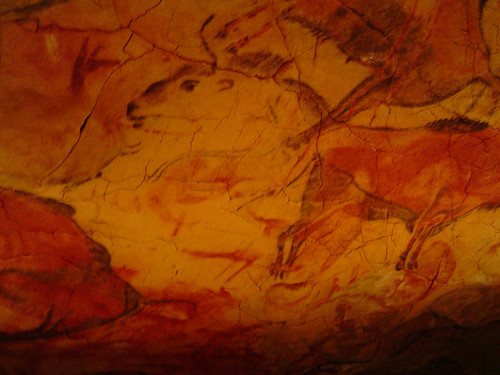
    The Spanish Culture Ministry have announced that the Caves of Altamira the so-called Sistine Chapel of Paleolithic art are to reopen after eight years of closure, despite serious warnings from scientists that the world-famous ancient drawings and polychrome rock paintings within may suffer irrevocable damage from moisture generated by visitors. In a statement to reporters on Tuesday, Spanish Culture Minister Angeles Gonzalez-Sinde and the sites board of directors announced that public access will resume before the end of this year, albeit on an unspecified, restricted basis. The cave complex located in the Cantabria region of northern Spain, and first discovered…
  • Ann

    Angelina Jolie Cleopatra in Film of Stacy’s Schiff’s Biography of Egyptian Queen

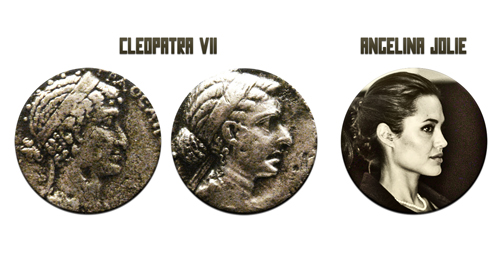
    Angelina Jolie will play Cleopatra, the last queen of Egypt, in a film adapted from Stacy Schiff’s upcoming book ‘Cleopatra: A Life’. It’s hardly likely to subdue those arguing Cleopatra was little more than ‘Egypt’s sex kitten’ (opposed by myself, Nele and Rosemary Joyce in her blog and book ‘Ancient Bodies’, I must say), but it’s exciting news nonetheless. The book won’t be published until autumn 2010, but producer Scott Rudin has already purchased film rights, saying the movie ‘is being developed for and with Jolie’. Author Schiff has even hinted at Brad Pitt playing Roman general Mark Antony, reminding…

  • prad

    Stonehenge Film ‘Remnants’ Explores the Megalithic Civilisation

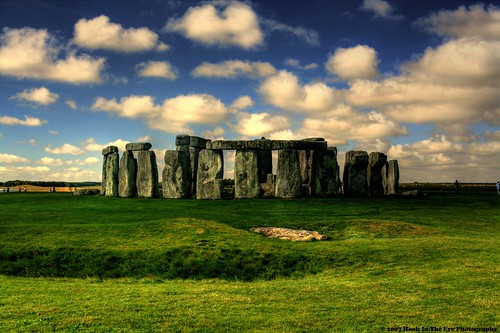
    The world’s most photogenic stone circle, Stonehenge, is the subject of a film called “Remnants” by Grant Wakefield which explores the Neolithic civilisation, looking at how we know so little about a culture which spanned over 3 millennia. With the Summer Solstice 2010 this weekend, it’s worth reminding ourselves of the beauty of this sacred ancient site. Heritage Key also has explored Stonehenge during the Spring Equinox (Watch the Video), and talked to Druid Frank Somers about how the stones came to be (Watch the Video). The Neolithic people vanished without leaving anything but their remnants, and it is these…

  • owenjarus

    ROM set to announce new CEO… but what should his or her goal be?

    In a matter of weeks, or even days, the Royal Ontario Museum, in Toronto Canada,will be announcing who their next CEO is going to be. I dont have any knowledge as to who it is, but, can certainly say that the new leader has an almost impossible act to follow. William Thorsell, the museums current leader, will be retiring in August. His ten year termat the museum was one of unprecedented growth. Under his leadership the ROM built an expansion that saw its Bloor Street frontage turned quite literally into a giant crystal. Collections that had been in storage from…

  • malcolmj

    10 Things I Didn’t Know About the Lewis Chessmen

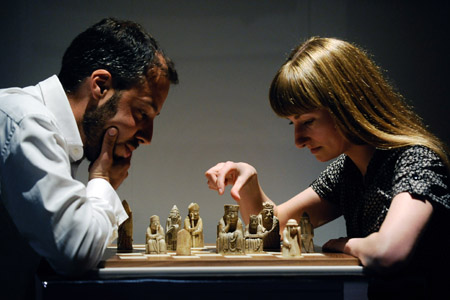
    I’ve had something of a crash-course on the subject of the Lewis Chessmen since it was announced back in October last year that pieces from the London and Edinburgh collections would be reunited for a major touring exhibition of Scotland running throughout 2010 and 2011. I researched the story of the Lewis Chessmen for this article, blogged on the findings of new research on their origins and usage, pitted them against King Tut’s ivory senet board in a face-off, and reported on the premiere last month of the exhibition at the National Museum of Scotland (NMS). I was beginning to…

  • sean-williams

    ‘Bottomless Pit’ of Ancient Cult Vessels Discovered in Israel

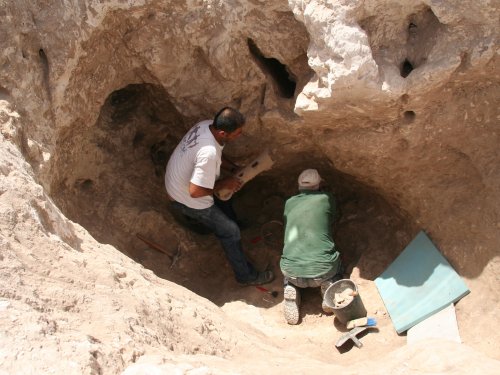
    A massive haul of ancient cultic vessels dating back over 3,500 years has been discovered in Israel. The find, made ahead of gas pipe works at the base of Tell Qashish, near Tishbi Junction, has been described as a ‘bottomless pit’ of artefacts, and contains over a hundred intact objects – almost unheard of in archaeological circles. The find includes incense-burning vessels, a sculpted woman’s face – seen in the picture below – and various items of tableware. Experts from the Israel Antiquities Authority (IAA) who made the find believe the artefacts were part of an ancient pagan cult which…

  • prad

    Wembley’s New £16 Million Hindu Temple Built Using Ancient Methods

    Last week two twin towers were opened in North London. But it wasn’t a revival of the Old Wembley – this was the much awaited opening of the Shri Vallabh Nidhi temple on Ealing Road. Costing a cool £16 million and taking 14 years to build, the temple (or Mandir, in Hindi) did not disappoint – contemporary buildings today simply do not contain the stunning detail that this Indian temple boasts. Stepping outside Alperton tube station and breathing that (unfresh) London air, I distinctly felt I was back in the multicultural environment of my youth. Looking around I saw a…

  • sean-williams

    ‘Duckfretete’ Nefertiti Invades Germany

    We’re all strangely used to Donald Duck wearing nothing but a sailor’s shirt (it’d get him an ASBO these days), but what about Walt Disney’s second most famous creation as Queen Nefertiti, or the Mona Lisa? Or, if the site of a cross-dressing Donald shatters your childhood memories, how about Duckbert Einstein, or Duck Guevara? Duckomenta is one of this year’s stranger exhibitions. Taking Donald as their launchpad, artist cliqu InterDuck (that’s right) have recreated a plethora of famous pieces of art with the rasp-tongued mallard as star. But while the show, which visits Hildesheim’s Roemer-und-Pelizaeus Museum (in hot water…

  • greece

    Spedos Figurine (Cycladic)

    Attribution: Photo by Ann Key Dates 2550 BC Dated between 2700 and 2400 BC This figurine of a woman is Cycladic (Keros-Syros culture), dated to 2700-2400BC and said to be from Syros. Compared to other figurines from that type, it is rather large and clumpsy and made from a strange material. Most of the Cycladic figures are made from white marble, but this one is carved from compacted volcanic ash, presumably from the island of Thera (Santorini).  Perhaps because it was produced on one of the few islands in the Cyclades where marble is not found. The left eye of the figure…

  • world

    The Palace of Knossos – Discovery and Renovation

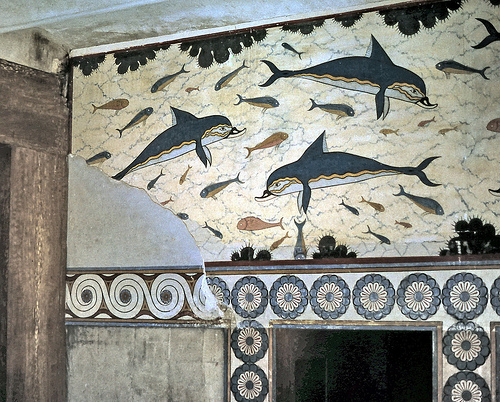
    Excavating physical remains that confirm the existence of a civilization only described in legend: it’s the dream of every archaeologist, and Sir Arthur Evans is one archaeologist for whom the dream came true. The year was 1900; the location was the outskirts of the modern day city of Heraklion, on the Greek island of Crete. The ruins Evans extracted from its baked earth were those of the Palace of Knossos, a spectacular Bronze Age citadel from which the dapper British antiquarian was able to begin uncovering and piecing together the forgotten history of one Europe’s first advanced civilizations. He christened…