
Key Dates City Wall of Xian is an extension of the old Tang Dynasty structure, as a result of the wall-building campaign ordered by Zhu Yuanzhang, the first emperor of Ming Dynasty (from 1370 A.D.- 1375 A.D). Xian China Key People Zhu Yuanzhang City Wall of Xian is an extension of the old Tang Dynasty structure, as a result the wall-building campaign ordered by Zhu Yuanzhang, the first emperor of Ming Dynasty (from 1370 A.D.- 1375 A.D). After the enlargement, the city wall stands 12 meters, 12-14 meters across the top, 15-18 meters thick at bottom and 13.7 kilometres in…
-
-
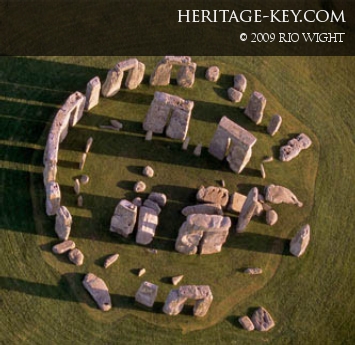
Stonehenge leaps out from its West Country surroundings like Liberace in a dole queue, so it’s no surprise that Britain’s grandest prehistoric monument has been the focus of a myriad projects since the dawn of archaeology. So what is Stonehenge’s archaeological history? And what light has centuries of excavation shed on the enigmatic treasure? Aubrey Discovers (Some of) The Aubrey Holes Stonehenge’s recorded archaeological history begins at the turn of the 17th century, with a small dig carried out by the pre-eminent physician William Harvey. Yet as much as Harvey was a pioneer of medicine, he was hardly a dab…
-
Letters from Egypt, 1863-1865 by Lucie Duff Gordon In 1862 Lucie Duff Gordon, the cousin of Harriet Martineau and a friend of Caroline Norton, Meredith and Thackeray, headed to Egypt on a solo trip designed to rid herself of consumption. She spent the next seven years in a ruined house above a temple in Luxor. She integrated quickly, setting up a hospital and welcoming the people of Luxor into her house. Her story is told through her letters. This Elibron Classics book is a facsimile reprint of a 1865 edition by Macmillan. Adamant Media Corporation (6 Dec 2001) 386 pages
-

Key Dates 330 BC This wooden cult statue of Osiris dates from the Ptolemaic period, around 332-330 BC. One of the most interesting aspects of this life size statue of the god Osiris is that it was quite likely used as a cult statue for worship. It is in wood, finished with plaster or gesso, and was painted; originally, the body of the god was wrapped in linen bands exactly like an Egyptian mummy, so that the statue showed the entombed Osiris as god of the dead or of the afterlife. The eyes are inlaid with glass and stone, giving…
-
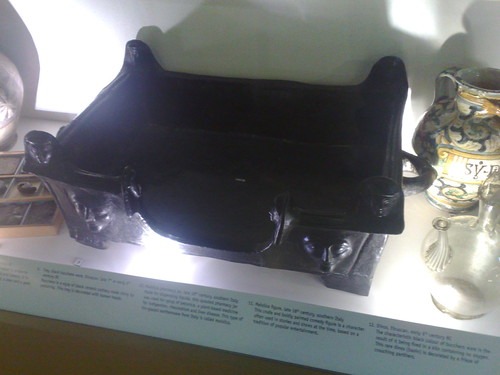
Key Dates 650 BC Created during the Late Period of ancient Egypt (c 700-600 BCE) This Etruscan black bucchero ware tray was made during the late 7th or early 6th century BC. Bucchero is a style of black ceramic pottery made shiny by polishing. The tray is decorated with human heads. Origin & Collection On display at: The Hunterian Museum Images Put your Flickr photos of this object into the Heritage Key group, and tag them with keyobject-1701, to see them here!
-
Key Dates 1186 BC The papyrus dates from the XX Dynasty of Ancient Egypt, which lasted from 1186-1069 BC. It was discovered in the early 19th century. Key People It was probably created by a painter from Deir El-Medina village. When French scholar (and translator of the Rosetta Stone) Jean-François Champollion viewed the papyrus in Torino in 1824, he described it in his notes as: “an image of monstrous obscenity that gave me a really strange impression about Egyptian wisdom and composure.” Key People: Jean-François Champollion The Turin Erotic Papyrus is a famous (or rather, infamous) 12th/11th century BC Egyptian…
-
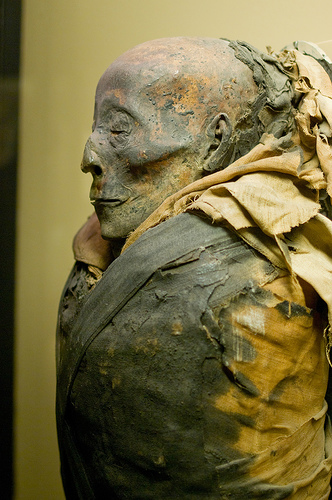
Key Dates 700 BC Thought to date from around 700 BC, 25th Dynasty. Key People Harwa Perhaps one of the most popular mummies in The Field Museum’s collection is that of Harwa, who died around 700 BC (25th Dynasty). His wrappings have been removed so that visitors can gaze upon his ancient face, preserved for almost 3,000 years. During the unwrapping process, dozens of colorful amulets made of gold, semi-precious stones, and glazed pottery were found within Harwa’s burial linens. Many of the amulets are displayed with his mummy in the approximate place in which they were originally found. Each…
-
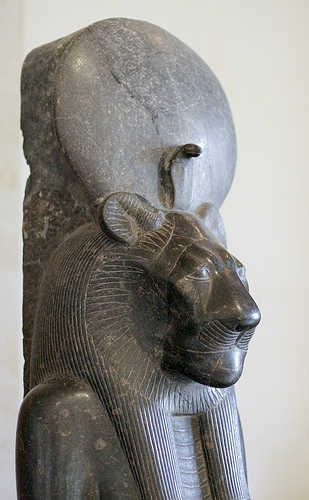
Key Dates This item dates from the 18th Dynasty, circa 1391-1353 BC. Key People An inscription at the bottom of this statue reads, “Amenophis III, beloved of the goddess.” This statue of the Sekhmet is one of many diorite sculptures dedicated to the powerful goddess. Sekhmet is portrayed with a dual personality; she has the body of a woman and a lion’s head. This statue is particularly interesting, however, by virtue of the artist’s great skill in blending the lion’s features with those of a woman; the lions mane morphs into human hair, and Sekhmet wears a dress down to…
-
This magnificent relief plaque in the Scythian Animal Style once formed the centrepiece of a shield. It is in the form of a panther, its tail and paws ringed with small feline beasts of prey. The naturalistic representation of the panther’s mouth with its bared teeth (despite the schematized treatment of eye and nostrils, indicated by mere circles) and the use of the cloisonne technique to decorate the ear suggest that the craftsman was acquainted with the art of the ancient East. From the Krasnodar region of Russia, Kuban area, discovered in the Kelermes burial mound N1.
-
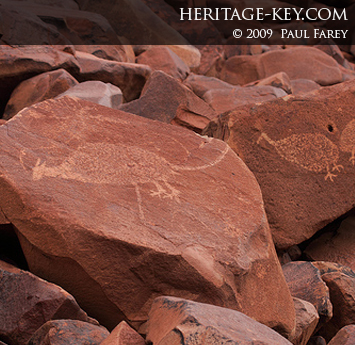
There’s no doubting the natural durability of cave and rock art – in many cases ancient paintings, carvings and sculptures have resisted tens of thousands of years of the withering effects of history and the elements to still be around to reveal their splendor today. Yet, that’s not to say that their continued survival is guaranteed, particularly as many sites become more and more popular as tourist attractions and therefore increasingly subject to human wear and tear. Other examples simply don’t have the protection they need and are at the mercy of vandals and robbers, while some are threatened by…