• sean-williams

    25ft Steel Ancestor Celebrates Solstice at Stonehenge

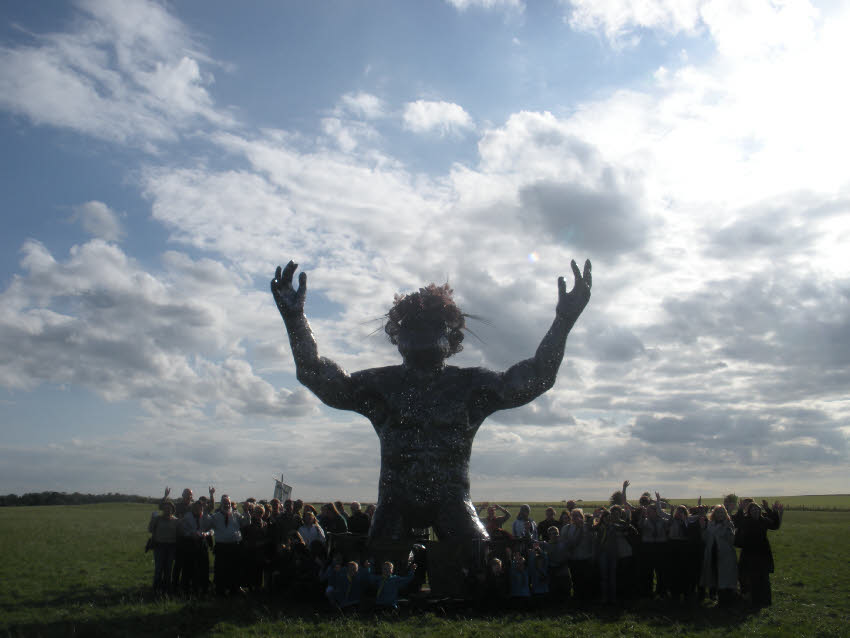
    Stonehenge summer solstice 2010 is to be marked by the debut of a 25ft-high steel statue. ‘The Ancestor’, created by local sculptors Andrew Rowlings and Michelle Topps with help from Druids and the local community, will sit 70m from the stone circle and provide an alternative focus of revelry and worship at sunrise, easing congestion within Stonehenge itself. The Ancestor is as tall as a double-decker bus, and weights a huge seven tons. It has been shrouded in secrecy until today to prevent a further swell of people visiting the already overcrowded event in Wiltshire, which tonight is thought to…
  • site

    Broch Of Clickimin

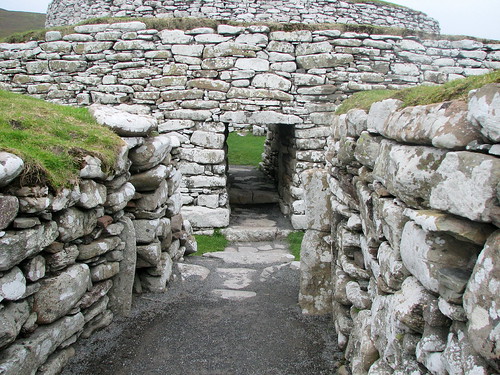
    Attribution: leguan001 Key Dates The farmhouse dates from around 1000BC. About 100 years later (100BC) the stone blockhouse was built. By the time the Norse arrived, around 800AD, the broch was abandoned. Haphazard restoration work was carried out around 1850, before professional excavation by archaeologists in the 1950s. Shetland United Kingdom This 3000 year old structure is a big, readily accissible broch (an iron age dry-stoned walled dwelling) that’s in remarkably good shape. It can be found on a small islet in Clickimin Loch by Lerwick on the isle of Shetland in Scotland. It started out life as a small…

  • Uncategorized

    Stonehenge Summer Solstice 2009

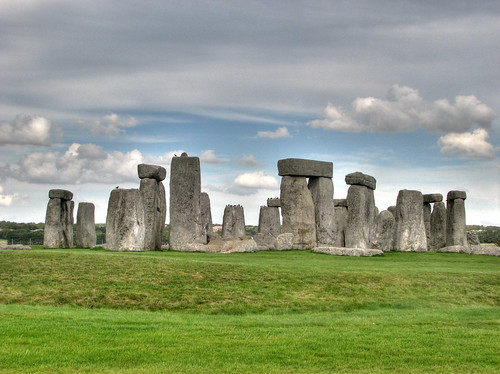
    The Summer Solstice – also known as midsummer – occurs once a year on June 20th or 21th, when the sun is at its highest point in the sky for those on the northern hemisphere. It’s the longest day of the year and the start of the Summer. It’s also one of the few days English Heritage provides ‘Managed Open Access’ to Stonehenge: You get to spend the night in between the ancient stones and no access fee is charged. ( Looking or info on the 2010 Summer Solstice at Stonehenge? go here! – Photos from the 2010 Solstice – or at…

  • site

    Cathedral of Magdeburg

    Attribution: Dirk Michael Boche Key Dates September 21, 937 – First church constructed 1207 – Destruction of the cathedral by fire 1209 – Start of the construction of the current cathedral Magedeburg Germany Key People Otto I, who ordered the construction Queen Eadgyth (‘Edith of England’) who was buried in the Cathedral The ‘Magdeburger Dom’ as it is known in German (full: ‘Dom zu Magdeburg St Mauritus und Katharina’) is located in the city of Magdeburg, Saxony-Anhalt, Germany.  It is home to the grave of Emperor Otto I the Great, Holy Roman Emperor, and the remains of his wife Queen Aedgyth (‘Edith of…

  • sean-williams

    New Stonehenge Visitor Centre Scrapped

    The ‘sustainable and affordable’ new Stonehenge visitor centre has been scrapped, because the government can’t afford it. The 25m ($37m) project, which was given the go-ahead in January by then-Culture Secretary Andy Burnham, has been axed after a review of all government spending decisions made since the beginning of the year. The news will come as a huge shock to English Heritage, owners of Stonehenge, and local and national tourism firms, who have hoped the new centre, 1.5 miles away from the stone circle, could make Stonehenge a more attractive proposal. The timing of the move seems particularly bad with…

  • site

    Portchester Castle

    Attribution: Air Frame Photography Key Dates ca 375 AD – construction 1396 – Richard II transformed part of the castle into a palace Portchester United Kingdom Portchester Castle is the best-preserved of the Roman ‘Saxon Shore’ forts. It coveres an area of nearly ten acres and was originally built in the late 3rd century.  Its walls still stand to their full 6 metre height. Originally constructed as a Roman fort, it saw continued use over the next sixteen centuries:  it housed a Saxon settlement, became a Norman castle, was transformed into a palace by Richard II and housed troops during the Civil war, and…

  • malcolmj

    Tony Robinson Helps Scottish Tourist Board Promote Archaeological Treasures Trail

    Time Team star Tony Robinson has backed a campaign by VisitScotland, Scotlands national tourism board, promoting archaeological tourism in the country of such world-renowned UNESCO Heritage Sites as St Kilda and Skara Brae, and remarkable heritage treasures including The Lewis Chessmen and the Orkney Venus. The message to visitors: forget all those dull clichs about tartan, haggis and caber tossing, and instead get around the country and discover a rich well of history which runs many thousands of years deeper than William Wallace and the narrow vision of Scotlands past popularised by Braveheart. Scotlands history runs through the Viking and…

  • sean-williams

    British Home-made ‘Stonehenge’ is a Load of Rubbish

    There may be many alternatives to Stonehenge this summer solstice, but one British man is proud his stone circle is complete rubbish. Bryan Raines, of Awbridge, Hampshire, has been creating his ‘Millennium Circle’ since 2000 entirely from waste fly-tipped on his land. Bryan’s 24-stone circle surrounds a soil barrow, and he even believes it is located on a ley line – a mystical line linking ancient monuments. Yet the power of the ley line hasn’t saved Bryan’s landmark from some altogether less mystical interlopers. “Some of the stones are between five and six feet high, but unfortunately cows keep knocking…

  • prad

    Wembley’s New £16 Million Hindu Temple Built Using Ancient Methods

    Last week two twin towers were opened in North London. But it wasn’t a revival of the Old Wembley – this was the much awaited opening of the Shri Vallabh Nidhi temple on Ealing Road. Costing a cool £16 million and taking 14 years to build, the temple (or Mandir, in Hindi) did not disappoint – contemporary buildings today simply do not contain the stunning detail that this Indian temple boasts. Stepping outside Alperton tube station and breathing that (unfresh) London air, I distinctly felt I was back in the multicultural environment of my youth. Looking around I saw a…

  • world

    The Palace of Knossos – Discovery and Renovation

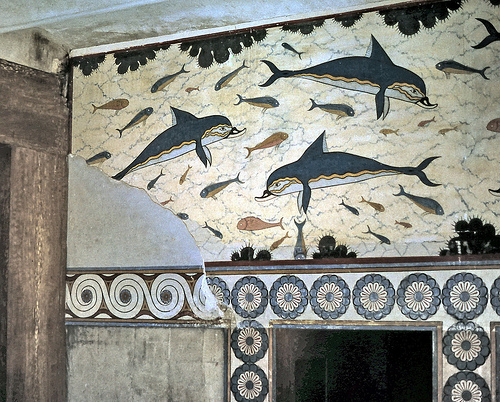
    Excavating physical remains that confirm the existence of a civilization only described in legend: it’s the dream of every archaeologist, and Sir Arthur Evans is one archaeologist for whom the dream came true. The year was 1900; the location was the outskirts of the modern day city of Heraklion, on the Greek island of Crete. The ruins Evans extracted from its baked earth were those of the Palace of Knossos, a spectacular Bronze Age citadel from which the dapper British antiquarian was able to begin uncovering and piecing together the forgotten history of one Europe’s first advanced civilizations. He christened…