
The Persians Ancient, Mediaeval and Modern Iran by Homa Katouzian In recent years, Iran has gained attention mostly for negative reasons – for its authoritarian religious government, disputed nuclear programme, and controversial role in the Middle East – but there is much more to the story of this ancient land than can be gleaned from the news. This authoritative and comprehensive history of Iran covers the entire history of the area from the foundation of the ancient Persian Empire to today’s Iranian state. Writing from an Iranian rather than a European perspective, Katouzian integrates the significant cultural and literary history…
-
-
Located on the coast of north-west Libya, Sabratha was incorporated into the Roman Empire during the second and third century AD as a trading post, when it flourished as an outlet for wares being exported from Africa. The city, nearby to Leptis Magna, was most notable for a fantastic Roman theatre which was built during 175-200AD as part of the reconstruction of the city under Emperor Septimius Severus’s rule. The remains are some of the finest examples of Roman architecture today, as is captured in a beautiful panorama in Rafa Vjajes’ photograph. The three storey structure had over 25 entrances…
-
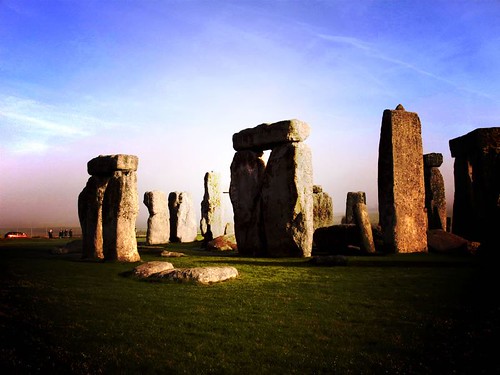
You might expect the youth of today to be more interested in Britain’s modern icons – but what happens when you ask the kids about their favourite sites? A survey of the nation’s youngsters, compiled by budget hotel chain Travelodge, has revealed Stonehenge to be the country’s top tourist spot, closely followed by Hadrian’s Wall. The prehistoric Salisbury stone circle predates contemporary entries on the top ten list, such as the London Eye, by over 5,000 years. The capital’s giant ferris wheel could only muster third place, while Antony Gormley’s Angel of the North made eighth. Edinburgh Castle is the…
-
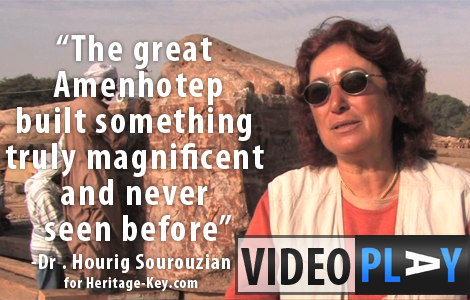
18th dynasty pharaoh Amenhotep III was the king of Egyptian kings. Under his rule, from around 1391 to 1353 BC, Egyptian civilization reached its very apex all powerful, influential beyond compare, rich beyond dreams and basking in opulent artistic splendour. In a list compiled by American business and financial bible Forbes in 2008, Amenhotep was ranked as the 12th richest person in human history. His funerary temple was therefore never going to be a modest affair. As we discover in a new video interview shot by Nico Piazza with the highly-respected German-Armenian archaeologist leading the excavation of the site, Dr…
-
Heritage Key has just returned from a blustery, biting morning trip to legendary writer John Julius Norwich‘s house, beside the pretty canals of London’s Little Venice. It was a great interview, and one which we’ll be following up with articles, videos and photos right here – see below for tips on how to keep up with our content! A brisk wind whips up dervishes of crooked caramel and crimson leaves; whistling cold signals the city’s slide from autumn to winter. Yet a firm handshake and sincere smile minutes later leaves HK as warm as ever, as we enter Lord Norwich’s…
-
Attribution: Informatique Dublin Ireland Key Dates The Museum of Science and Art, Dublin was founded on 14 August 1877. It became The National Museum of Ireland in 1921. The Kildare Street building, which houses the museum’s archaeology collection, was opened in 1890. Key People The current Director of the National Museum is Dr Pat Wallace. The Kildare Street building was designed by Thomas Newenham Deane and his son Thomas Manly Deane. The National Museum of Ireland is Ireland’s state museum. It holds a large collection of artefacts, divided under the areas of archaeology, decorative arts and history, country life and…
-
In a bid to bring more tourists to the town of Tiwanaku – some 64km north of Bolivia’s capital La Paz – the Bolivian Andes town put at risk it’s UNWorld Heritage Site status, and even put their Akapana Pyramid in the danger of collapse. They restored their pyramid with adobe – a clay mixture – instead of stone in what some experts are calling a renovation fiasco. Jose Luis Paz, appointed to assess the damage at the heritage site, told CourierMail the that the state National Archaeology Union erred in choosing to rebuild the pyramid using adobe, when it…
-
Ancient choices made by Egyptians digging burial tombs may have led to today’s problems with damage and curation of these precious archaeological treasures, but photography and detailed geological mapping should help curators protect the sites, according to a Penn State researcher. “Previously, I noticed that some tomb entrances in the Valley of Kings, Luxor, Egypt, were aligned on fracture traces and their zones of fracture concentration,” said Katarin A. Parizek, instructor in digital photography, department of integrative arts. “From my observations, it seems that tomb builders may have intentionally exploited these avenues of less resistant limestone when creating tombs.” Fracture…
-
The Neues Museum will reopen on 17 October after being closed for more than 70 years. It will be a great moment in German history as well as a major milestone for world culture. The collection of ancient world objects is outstanding, and their presentation helps place them in the context of their original era, whilst adding to our understanding of the world in which we now live. The renovation of the 8,000 square meter museum cost about 220 million (about $328 million and a lot more than the brand new build the New Acropolis Museum, which reportedly cost $200…
-
Attribution: tpholland Arles France Key People The theatre was constructed during the rule of Augustus, at the end of the first century BC. Emperor Augustus The Roman Theatre of Arles was constructed in the age of the emperor Augustus, at the end of the first century BC. It measures 102m in diameter, with 33 semi-circular rings of stone seats, most of which are lost today. Its exterior had three layers of arcades. The only remaining part of the stage wall are two tall marble columns. The stage background was originally highly decorated, with one of the statues found there currently…