• owenjarus

    What Happened at Pyla-Kokkinokremos? Dimitri Nakassis Discusses the Cypriot Mystery

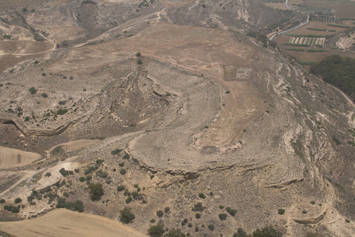
    One remarkable tale from ancient history is that of the site of Pyla-Kokkinokremos on the southeast coast of Cyprus. It existedfor only 50 years, at a time of devastation throughout the ancient world. Trying to make sense of this site is difficult and the story reminds me, in some ways, of the ill-fated 16th century AD English colony of Roanoke in North Carolina. A few weeks back Professor Dimitri Nakassis, of the University of Toronto, presented the latest research on the site at an event at the Royal Ontario Museum. In the following days Heritage Key did an extensive interview…
  • bija-knowles

    Rome’s Ancient Via Tiburtina: From Neolithic Shepherds to Roma Gypsy Camps

    An illegal Roma gypsy camp might be one of the last places you’d expect to find yourself on an expedition in search of an ancient Roman bridge. But this is what happened to Professor Hans Bjur and his colleagues as they were researching their project on the historical and modern context of one of Rome’s oldest roads. As they made their way through a more neglected corner of Rome’s Ponte Mammolo suburb, they followed the directions to where the bridge should have stood, only to find themselves in the midst of a temporary settlement. While the Swedish researchers were the…

  • review

    Picturing the Bible: The Earliest Christian Art

    by Jeffrey Spier, Mary Charles-Murray, Johannes G Deckers, Robin M Jensen, Steven Fine, Herbert L Kessler Yale University Press (2008) It is impossible to imagine European art without the procession of Crucifixions and Madonnas, Baptisms of Christ and Christs in Majesty that have been produced over the centuries; nor to imagine a European city without at least one building that testifies to the overawing power and wealth of the medieval church: a Durham or Cologne cathedral, a Hagia Sophia. Western art and Christianity go hand in hand. So it comes as a shock to discover that there is another Christian…

  • lyn

    Optical Illusions: is That an Exhibition of Trompe l’œil Coming to Florence and Paris?

    Fancy pitting your powers of perception against some of historys masters of deception? Then heres your chance. Art and Illusions: Masterpieces of Trompe l’il from Antiquity to the Present Day, the first major exhibition on visual illusion to be held in Italy, is on at Florences Palazzo Strozzi until January 26. Visual illusion has been used in art for thousands of years to trick and deceive us. This exhibition is designed to chart this fascinating story of trompe lil, or optical deception; the story of the tug-of-war between reality and its simulation. The show places optical illusion not only in…

  • owenjarus

    Egyptomania! Why the World Went Mummy-mental and King Tut-Crazy

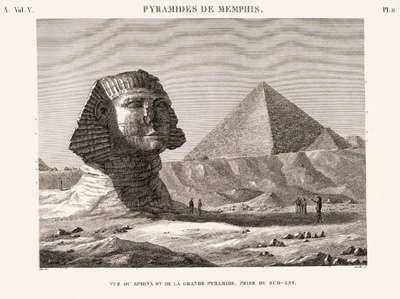
    With the current King Tut exhibition on show in Toronto at the moment (check out our preview here) the city has been gripped by Egyptomania. Everybody’s talking about the Boy King, and the buzz permeates the whole city. But what is Egyptomania, and how did it start? Simply put Egyptomania is a fascination with ancient Egypt – its culture, artefacts, architecture, religion and language. The term tends to refer to activities that took place in the 19th and 20th centuries, but a careful look at history will reveal that the phenomenon dates from earlier times. Mummy Parties The first Egyptomaniacs…

  • prad

    Ten More Great Cities of the Ancient World

    John Julius Norwich’s new book – “The Great Cities in History” – selects a list of major cities that have been hugely influential throughout their eras. The cities that were chosen spanned across the globe, and you can read more about them in my recent article. In addition, you should definitely also watch Heritage Key’s video interview with Lord Norwich himself as he discusses his book, and how he came to choose the cities that made it to the final edition. But what about cities that didn’t make the cut?There are still several cities in the world which I still…

  • sean-williams

    Making Megalithic Music: Malta’s Ancient Temples

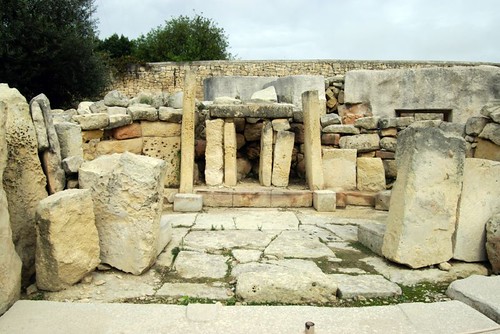
    Remember the story we reported about three months ago, about the Mayan pyramids being giant musical instruments? The idea seems to have struck a chord with experts based in Malta, who – either by design or jealousy – have heralded the acoustic talents of their own megalithic landmarks. The tiny Mediterranean island was once home to a highly developed civilisation, who between the fourth and third millennia BC created some of the world’s most striking ancient architecture. Listed as a UNESCOWorld Heritage Site, the huge temple complex is a majestic wonder which predates Stonehenge by up to a thousand years.…

  • owenjarus

    Cypriot archaeology day hits Toronto this Sunday

    Cyprus that great crossroads of the ancient world is going to be the focus of a special event happening this Sunday at the Royal Ontario Museum in Toronto Canada. Five archaeologists will give talks about their research and how it is changing our understanding of the island. Heritage Key will be at the event and will publish reports. Cyprus was truly a crossroads of the ancient world. Greeks, Phoenicians, Egyptians, Romans and the Sea People all left their mark on the island. They did it by way of trade, migration, settlement and conquest. Just a month ago Heritage Key reported…

  • prad

    Videos from Leptis Magna: Rafa Vjajes visits the Roman Jewel of Libya

    Following on from Herb Schmitz’s visit to the stunning Roman ruins of Leptis Magna (you can watch Heritage Key’s video interview with Herb on his visit to Libya here), one of the most prominent members of Heritage Key’s Flickr group has also recently visited the North African site and shot some videos of the various ruins. Rafa Vjajes is a Spanish photographer who often visits heritage and cultural sites around the world, and you can find many of his photographs in Heritage Key’s Flickr pool and see his stunning shot of the Roman Theatre at Sabratha which I featured as…

  • sean-williams

    Manhattan of the Middle East: Shibam, Yemen

    Think skyscrapers and you’ll no doubt imagine shimmering towers of glass and steel, reaching ever closer to the heavens, whilst slowly turning most cities into a homogenised equaliser of stickle-bricks. But it’s always been this way, hasn’t it? At least, it has been for the residents of Shibam, a Yemeni town of about 7,000 people rising out of the arid Arabian desert. At first glance you’d be forgiven for thinking Shibam was some Brooklyn suburb, but look closer and you’ll find cracks, paintjobs and plasterwork that mark its mud-brick buildings out as the oldest of their type in the world.…