Some 400,000 years ago, Neanderthals diverged from the primate line that led to present-day humans. The Homo neanderthalis died out 30,000 years ago, while we managed to evolve into the handsomely built, technically skilled, and somewhat reasonable animal we are today. Research into Neanderthal DNA now shows that our extinct relatives did leave their mark in the genomes of some modern humans, leading researchers to believe that our species ‘paired up’ with our less evolutionary successful cousins when we were both living in the Middle East, about 100,000 to 50,000 years ago and before we left to populate Europe and…
-
-
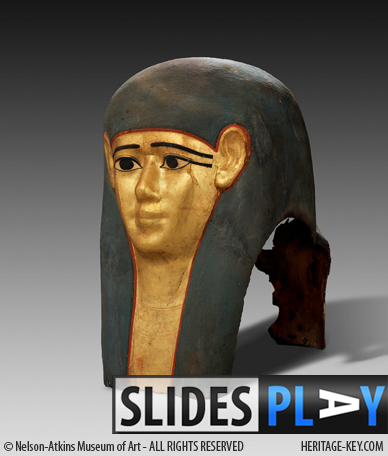
The Nelson-Atkins Museum of Art in Kansas City has just opened a new Egyptian gallery that features the coffin, cartonnage and shabtis of an Egyptian noblewoman who died around 2,300 years ago. Her name was Meretites which means beloved by her father. Her funerary artefacts date to some point between 380-250 BC. This date means that she may well have been contemporaneous with Alexander the Great and witness to a remarkable period of Egyptian history. Alexander the Great advanced into Egypt in 332 BC, taking over power from the Persians. He would go on to conquer an empire that stretched…
-
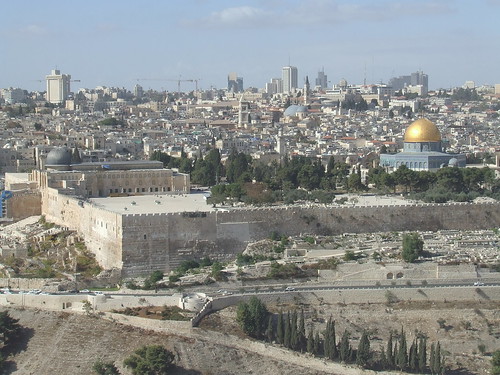
A top Israeli archaeologist claims ‘barbaric’ Muslim digs are stripping Jerusalem’sTemple Mount of its Jewish heritage. Dr Gabriel Barkay, of BarIlan University, has likened Israel and the West’s denial of the site’s Jewish history to that of the Holocaust, and has warned that thousands of years of history could be lost if authorities do not step in soon to prevent more damage at the hands of the controlling Islamic Wafq council, who he says have been dumping vital archaeological material miles away as waste. “(It is) the most important archaeological site in Israel, and despite all this, Israel has abandoned…
-
Financial austerity measures were a grave problem in ancient Greece too it seems quite literally. In the same week that the European Union and the International Monetary Fund have been asked by Greece to unblock the first tranche of a 110-billion (93 billion) bail-out loan package in exchange for severe spending cuts, archaeologists have revealed how 2,300 years ago people in the northern Greek region of Macedonia were forced to scale back on funeral offerings, probably on orders from the king. The AFP reports that senior archaeologist for the Greek Archaeological Service Manthos Besios told Athens daily newspaper Ta Nea…
-
Using NASA laser technology, researchers have discovered thousands of new structures and illustrated the complex urban centres built at the ancient Maya city of Caracol, Belize. The equivalent of 25 years worth of data (if gathered through machete-wielding means) was gathered in only four days using a technique of emitting laser beams from a plane to penetrate the thick canopy that covers the site. LiDAR (Light Detection and Ranging) equipment brought aboard a small Cessna 337 bounced laser beams to sensors on the ground, penetrating the thick tree canopy to see ‘beyond the rainforest’, allowing for the detecting of many…
-
Dr Michel Baud of the Louvre Museum in Paris gave an interesting lecture last week about his excavations of a pyramid at Abu Roash. The monument was badly preserved and its stone had been quarried in Roman times, but the certain details, such as its apparent solar connections, were still discernable. Earlier, Vassil Dobrev stated that the pyramid may actually be a solar temple. However, Baud dismisses these claims…. Nearly 4,500 years ago, in the time of the Old Kingdom, the pharaoh Khufu built one of the greatest monuments on earth – the Great Pyramid. His pyramid was actually a…
-
Archaeologists working at the Avenue of Sphinxes in Luxor, Egypt, have uncovered the remains of a fifth century Coptic church and a Nilometer, a structure used to measure the level of the Nile during floods. According to a statement released by the SCA, the church’s remains were found on the second of five sections of the ancient religious path leading to the Karnak temple. Thechurch was built with limestone blocks originally belonging to the Ptolemaic and Roman temples that once stretched along the Avenue. The blocks are well preserved, with many of them bearing depictions Ptolemaic and Roman kings offering…
-
A water feature excavated in the Maya city of Palenque, in Chiapas, southern Mexico, is the earliest known example of engineered water pressure in the New World, according to a collaboration between an archaeologist and a hydrologist from Penn State University. The spring-fed conduit has a restricted opening that would cause the water to exit forcefully, under pressure, to a height of 6 metres. How the Maya used the pressurized water is, however, still unknown. Such water pressure systems were previously thought to have entered Mexico with the arrival of the Spanish in the 16th century. “Water pressure systems were…
-
An ancient ‘stone goat’ covered in strange rock paintings has been discovered in central China. The ‘incredible’ relic was found by a team of student archaeologists led by Ma Baoguang in Yangce Town, Biyang County, Henan Province. The goat, which is 8m long and 3.7m wide, is covered in around 500 of the paintings, which consist of rounded craters joined by lines to create what experts believe may be an ancient map of the region, famous for the village of Banpo and Yangshao culture. Several larger craters have also been spotted. “It is quite incredible that a large stone goat…
-
What can graffiti tellus about ancient cultures?That’s just one of the questions being explored at a Coptic Studies symposium to be held on May 29 at the University of Toronto. Coptic refers to the branch of Christianity that spread to Egypt as early as the first century AD. It also refers to a writing system that was in use from that time until present day. The symposium is being organized by Dr. Ramez Boutros of the University of Toronto. Dr. Boutroshas been in the news recently as part of the team that recently discovered a third church and tons of…