
An iPhone application that will provide information, ticketing and itineraries for the 40 most visited museums and sites in Italy is to be launched on 1 July. Released by Italy’s Ministry of Cultural Heritage and Activities (known in Italy as MiBAC), ‘i-MiBAC Top 40’ is the first of a series of free apps produced by the Italian ministry dedicated to Italy’s heritage sites and museums. In both English and Italian, it will initially be available for iPhone, iPod Touch and iPad, but will soon be made available for smartphones too. According to MiBAC’s press release, the application will available on…
-
-
Attribution: Dirk Michael Boche Key Dates September 21, 937 – First church constructed 1207 – Destruction of the cathedral by fire 1209 – Start of the construction of the current cathedral Magedeburg Germany Key People Otto I, who ordered the construction Queen Eadgyth (‘Edith of England’) who was buried in the Cathedral The ‘Magdeburger Dom’ as it is known in German (full: ‘Dom zu Magdeburg St Mauritus und Katharina’) is located in the city of Magdeburg, Saxony-Anhalt, Germany. It is home to the grave of Emperor Otto I the Great, Holy Roman Emperor, and the remains of his wife Queen Aedgyth (‘Edith of…
-
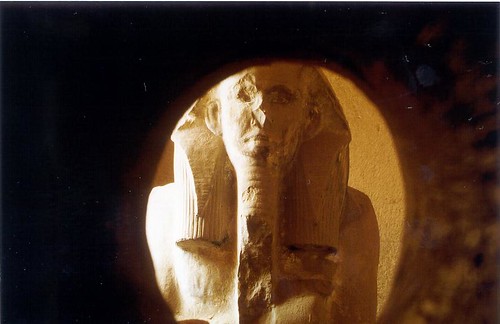
Scholars across the globe have spent more than a century trying to document the reigns of the various rulers of Egypt’s Old, Middle and New Kingdoms. Now, researchers say they nailed down a more accurate chronology for dynastic Egypt. The new chronology, based on a radiocarbon analysis of short-lived plant remains, is a long and accurate chronology of ancient Egyptian dynasties that agrees with most previous estimates but also imposes some historic revisions. Although previous chronologies (based on both historical and archaeological records) have been precise in relative ways (the sequence of rulers), assigning absolute dates to specific events in…
-
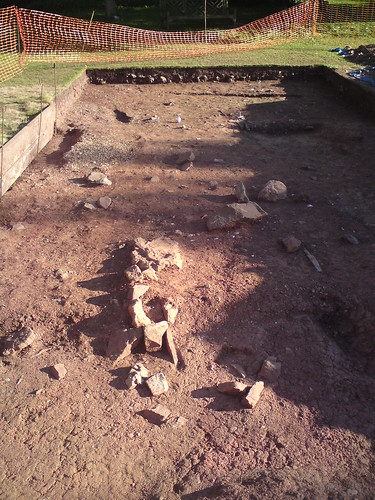
Evidence of an imperial Roman villa has been discovered in Gloucestershire, England – just hours before archaeologists were due to fill its trench back up. The remains, a large quantity of Roman wall plaster, were found last Friday (June 11) as a Bristol University team led by TV archaeologists Dr Stuart Prior and Prof Mark Horton were winding up work at the site, which has already offered proof of Saxon settlement. The remains, in the grounds of Berkeley’s Edward Jenner Museum, also include Roman coins and roof tiles. The villa is likely to date from the 3rd or 4th century…
-
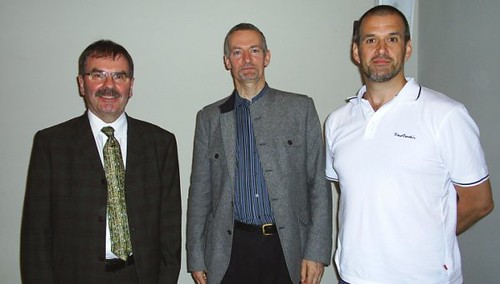
It was a lovely sunny day throughout the UK and everyone at the exquisite Pollok Country Park was making the most of the sunshine. I walked passed the sunbathers to where The Burrell Collection is housed, to attend a Study Day about the work and life of Flinders Petrie, organized by Egyptology Scotland. Magi Sloan, chairperson of Egyptology Scotland, did an excellent job of putting together three specialists on Petrie collections from different parts of the country: Professor Stephen Quirke from the Petrie Museum in London, Simon Eccles, senior curator of Ancient Civilizations at the Burrell Collection and responsible for…
-

This is the most exciting archaeological story of 2010. Once again the University of Bristol is leading the world in research. And I am lucky enough to be going back to my favorite university today to hear this groundbreaking new evidence of Princess Edith’s legend. Scientists will announce that bones excavated in Magdeburg Cathedral in 2008 are those of SaxonQueen Eadgyth (‘Edith of England’) who died in AD 946. Crucial scientific evidence came from teeth preserved in the upper jaw. The bones are the oldest surviving remains of an English royal burial. The original excavations (view the 2006-2009 excavation here)…
-
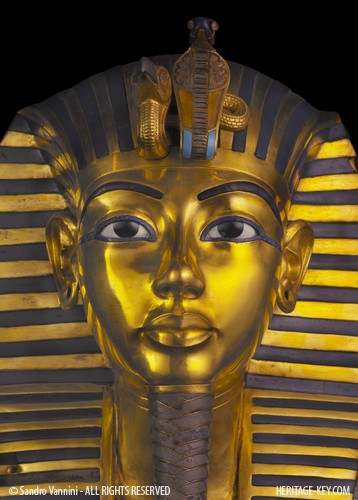
While the golden kings exhibition has left Canada for southern climes, those in Vancouver will have an opportunity to learn more about him and more specifically how his artefacts reinforced his position as pharaoh. Professor Katja Goebs research looks at Egyptian pharaohs and the artefacts that cement their hold on power. Her most recent book Crowns in early Egyptian Funerary Literature: Royalty, Rebirth, and Destruction, examines the white and red crowns ofUpper and Lower Egypt. They possess a wide-ranging symbolism that transcends the terrestrial sphere to encompass the divine and the cosmos, death and rebirth, she wrote in the book…
-
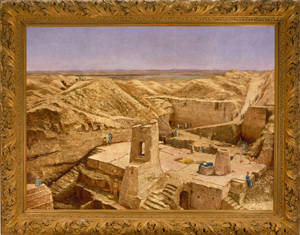
In the 1880s, a time of great opportunities and great adventures, the University of Pennsylvania Museum organized America’s first archaeological expedition to the ancient Near East – to Nippur, a promising but far-flung Mesopotamian site then within the vast Ottoman Empire, now located in Iraq to the south of Baghdad. Nearly 130 years and 400 archaeological and anthropological expeditions later, the museum returns to ‘the Age of Exploration’ and their first Near Eastdig with the exhibition’Archaeologists and Travelers in Ottoman Lands’ (September 2010 to February 2011). ‘Archaeologists and Travelers in Ottoman Lands’ offers a gimps at the accomplishments, struggles, and…
-
Fossils found at the ancient city of Palenque, Chiapas shows Maya people conceived their beliefs of the underworld from them, associating the beliefs with water. To the Palenque, these fossils were convincing proof that the land was covered by the sea a long time ago, and from this they created their ideas on the origin of the world. A three-year study by archaeologist Martha Cuevas and geologist Jesus Alvarado, was aimed at connecting the symbolism made by ancient Mayans to remains from Prehistoric times. The interdisciplinary investigation, by the National Institute of Anthropology and History (INAH) and the National Autonomous…
-
The three phases of Stonehenge? Wrong. In fact you can throw your three phases out the window – it just doesn’t work any more. “We were wrong about Stonehenge,” says anthropologist Mary-Ann Craig during today’s HKTV live lecture. “(Three phases) doesn’t explain it properly: we need phase 3.1; 3.2 and then 3.2b, it doesn’t seem to work.” Mary-Ann’s lecture on the history of Stonehenge and the mystery of stone circles was an instant hit with the HK office, and our many viewers online. Personally I was fascinated by the idea that Bluestonehenge, a stone circle discovered just last year, may…