
Scientists have made a reconstruction of a 10,000 year old ancient woman, based on the skeletal remains found near Mexico’s Caribbean coast. Surprisingly, the reconstruction resembles people from Southeastern Asia,rather than Northern Asia. In 2002, divers discovered the remains of an Ice Age woman at an underwater cave 4.5 km from Tulum, on the Ycutan Peninsula. The well-preserved remains 90% complete are estimated to be between 10,000 and 12,000 years old. Based on the skeleton, experts have now reconstructed what Mujer de las Palmas (The Woman of the Palms) must have looked like with surprising results. The body structure, skin…
-
-
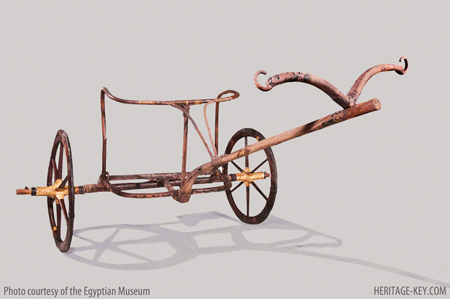
News that King Tut’s chariot will leave Egyptto join the final leg of the ‘Tuankhamun and the Golden Age of the Pharaohs’ exhibition in New York its first trip abroad has been confirmed by an SCA press release. In the same release Dr Hawass and his team say they continue to stand behind the findings published in JAMA earlier;King Tut died of complications from malaria and Kohlers disease. Mr. Farouk Hosni, Minister of Culture, confirmed that one of King Tuts chariotsis travelingto New York City, the first time that a chariot from Tutankhamun’stomb will be allowed out of Egypt. The…
-

ripple flaked arrowhead, An Update on the dig at Marden Henge – Archaeologists have uncovered a 4,500 year old dwelling! According to the BBC, English Heritage volunteer archaeologist Jim Leary was excited by the discovery, saying “It’s exceeded all of our expectations”. The dwelling appears to have been constructed between 2500BC-2400BC and appears to be different to a normal home, with Leary suggesting it may have been a priest’s quarters. The finds echo those discovered a couple of years ago at Durrington Walls where several neolithic dwellings were also discovered. The newly discovered dwelling at Marden Henge, Wiltshire included an…
-
El Zotz Guatemala El Zotz is a Mesoamerican archaeological site of the pre-Columbian Maya civilization, located within the San Miguel la Palotada National Park in the Petén Basin region. The area has caves and swamps and is known for the hundreds of thousands of bats that fly out from under the cliffs at sunset. El Zotz is a medium sized site covering an area of perhaps 0.75 by 0.75km that includes a variety of large and small architectural remains in a style typical of the Early Classic. It has at least two ceremonial centres, one within the site core, the…
-
A second henge has been discovered near Stonehenge, less than one kilometre away from the iconic stone circle. A cutting edge archaeological survey (view images), part of the ‘Stonehenge Hidden Landscapes Project‘ has uncovered the henge-like monument. Because of the circular monument’s shape, the archaeologists believe the henge to be contemporary to Stonehenge. The henge comprises of a segmented ditch, surrounded by a ring of pits up to one metre in diameter. It is possible the pits held a free-standing timber structure and inside the circle is a burial mound, which was added later. With two entrances on the north-east…
-
The Venus of Orkney, a 4,500-year-old Neolithic sandstone figurine hailed as Scotland’s earliest depiction of a human face, has been a darling of British archaeology since it was excavated last year on the remote island of Westray. Now, the Venus, which earned a nomination at the recent British Archaeology Awards, will have to share the limelight archaeologists at the Links of Noltland site on Westray have uncovered a second remarkable Neolithic figurine, less than 100 feet from where the Venus was discovered. Like the Venus, the recently excavated figurine is a tiny, delicate pendant-like figurine. Standing less than two inches…
-
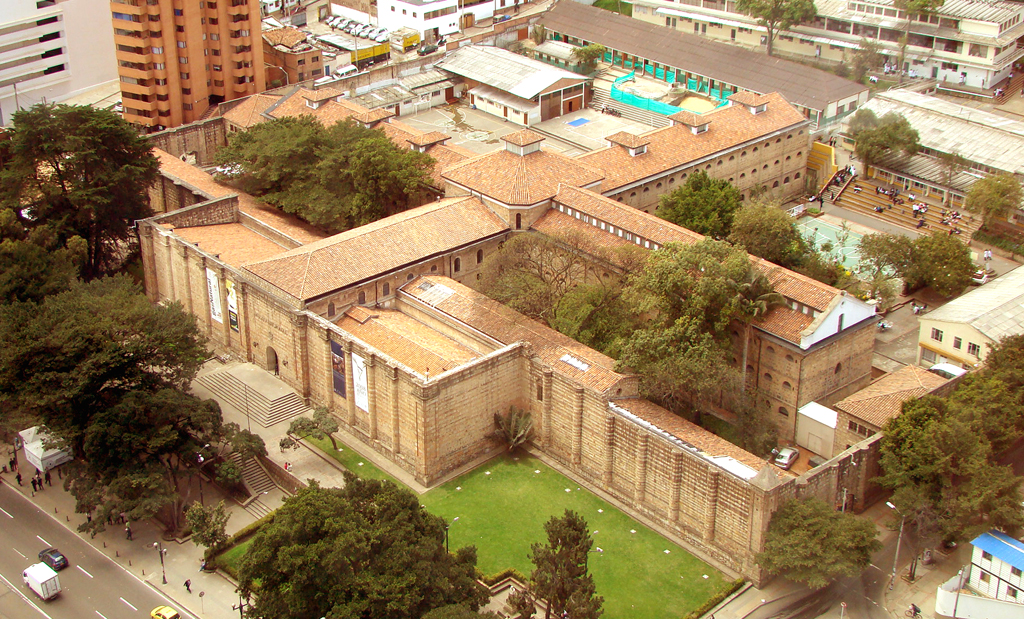
Attribution: Wikimedia Commons Key Dates The museum was founded in 1823. Bogotá Colombia The Colombian National Museum is the largest in Colombia, and is located in a huge building complex in the capital city Bogotá. he building itself was constructed in 1823, and was based on the Panopticon, an Orwellian prison devised by 18th century British social philosopher Jeremy Bentham (whose ‘mummy’ now resides in London’s UCL). The museum’s collections number over 20,000 pieces spanning thousands of years of Colombian and pre-Colombian history, from 10,000 BC to the 20th century. 2,500 items are on display at the museum, whose departments…
-
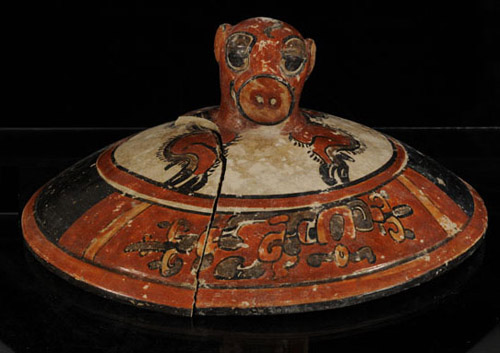
Archaeologists excavating in the Guatamalanjunglehave discovered a royal tomb, filled with colourful 1,600-year-old Mayan artefacts, beneath the El Diablo pyramid. The well preserved tombis packed with carvings, ceramics, textiles, and the bones of six children, possibly the remains of a human sacrifice. The archaeological team, led by Stephen Houston, professor of anthropology at Brown University, uncovered the tomb beneath the El Diablo pyramid in the city of El Zots, Guatamalain May. Last week, the discovery of the tomb, dated to between 350 and 400AD, was made public. Houston said the first pointer to the discovery was something odd in the…
-
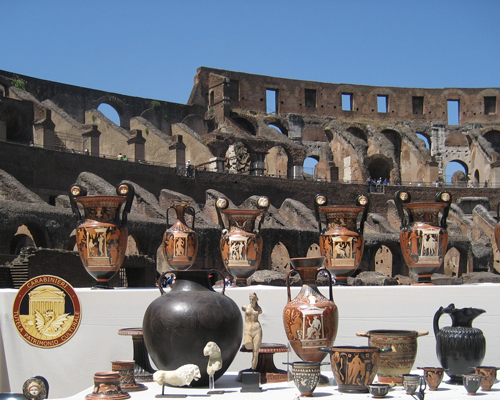
More than 300 looted antiquities, estimated to be worth more than EUR15 million, were displayed to the press this morning in Rome, having been repatriated to Italy after they were discovered in a warehouse in Switzerland. It was a scene slightly reminiscent of a Victorian detective novel, in which the robber and his looted candlesticks is unveiled before an impressed gathering of country house guests. Only today’s unveiling took place inside the Colosseum rather than on the pages of a 19th century novel and while there was no criminal present, there was plenty of loot, which consisted of objects such…
-
A unique piece of 4,500-year-old rock art has been unearthed in the Cambridgeshire village of Over. The prehistoric slab of sandstone is unlike anything previously found in Eastern England. The hand-sized neolithic artefact, which possible dates back as far as 2,500 BC, was found at Needingworth Quarry by Open University student Susie Sinclair. Intothe stone’ssurface, two pair of concentric circles are etched, typical of late Neolithic ‘Grooved Ware’ art. Researchers do not know if the motif represents a type of meaningful art, or if it is nothing more than Neolithic doodling. Examples of similar Grooved Ware art have been discovered…