• Ann

    Marina El-Alamein Archaeological Site Opens for Visits mid-September

    Following years of restoration and development, the Marina el-Alamein archaeological site on Egypt’s Mediterranean coast will open to tourists mid-September. The Marina el-Alamein archaeological site a Hellenistic-Roman town is locatedabout 5km east of el-Alamein. The ancient city was accidentally discovered in 1986, when construction started on the Marina El-Alamein resort. The archaeological area spans a section that is more than 1km long and about 0.5km wide and is the largest archaeological site on Egypt’s north coast. Minister of Culture, Farouk Hosni, announced that the site will be opened to tourists mid-September complete with a high-tech lighting system throughout the entire…

  • Ann

    Enormous Gallo-Roman temple complex unearthed near Le Mans, France

    Archaeologists have discovered a large Gallo-Roman religious complex located only a few kilometres from the ancient city of Le Mans. The ancient sanctuary is thought to have been an important pilgrimage area, visited by thousands to honour the gods. The religious complex unearthed in Neuville-sur-Sarthe about 5km north of Le Mans, France is excavated by archaeologists from the French National Institute of Archaeological Research (INRAP) and dated to the 1st to 3rd century AD. Traces of the complex were first revealed on aerial photographs taken in 2003, when an long period of drought scorched much of the vegetation on the…

  • Ann

    ‘Digging for Britain’ with Alice Roberts – New Archaeology Series on BBC2

    Britain, man your TVs and iPlayers!Great Britain might be a small island but it has a huge history and, every year, hundreds of excavations bring lost treasures up to the surface. Presented by Dr Alice Roberts, ‘Digging For Britain‘ joins these excavations in a new BBC Twohistory series. ‘Digging for Britain’ is produced by 360 Production (a look behind the scenes) and follows ayear of archaeology around the country, revealing and contextualising some of the newest finds, research and social history. Its four episodes focus onfocus on the Roman, Prehistoric, Anglo-Saxon and Tudor eras. Digging the Romans In the first…

  • malcolmj

    Top 10 Events at Scottish Archaeology Month

    After a hugely successful tenth anniversary year in 2009, Scottish Archaeology Month (SAM) is upon us once again. Organised by Archaeology Scotland, the 2010 installment of the annual festival of dirt-digging – which takes place from late August right through until the end of September (okay, so a little longer than a month, but who’s counting?) – comprises a panoply of archaeology-related events, around 150 of them in total, taking place up, down and all over Scotland, from the Borders in the south all the way to Orkney in the north, and from Aberdeen in the east all the way…

  • Ann

    Caerleon Fortress Mapping Reveals Palatial Scale Building

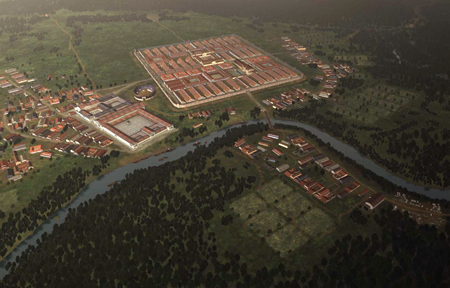
    Archaeology students learning to use mapping equipment have discovered a complex of monument buildings outside the Roman fortress at Caerleon, South Wales. The team says it will lead to a complete rethink about how Britain was conquered and occupied by the Roman forces almost 2,000 years ago. The students from the Cardiff Universitys School of History, Archaeology and Religion were learning how to use geophysical equipment in fields outside the Caerleon fortress. Squeezed into the ground between the amphitheatre and the River Usk, the outlines of a series of huge buildings were revealed. The discovery of the settelement’s monumental suburb…

  • review

    Egyptology Today: An Introduction

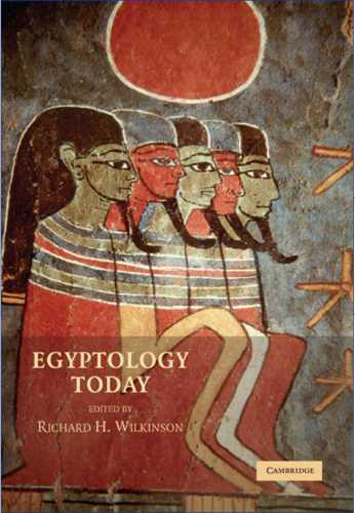
    by Richard Wilkinson Cambridge University Press (2008) 7/10 Egyptology Today is a collection of essays by a team of archaeologists, curators, scholars, and conservators who are all working in the field, present techniques and methods to explain the discipline of Egyptology. Richard Wilkinson has written a short introduction about how Egyptology has changed from a gentleman’s pastime to a multi-disciplinary science. The book is separated into four parts, with three essays covering many aspects of Egyptology. Kent Weeks writes a nice introductory chapter describing Egyptology, its history and key players from the past including Petrie, Mariette, Reisner and Rhind. He…

  • malcolmj

    King Tut Inc – Treasures Worth More Outside of Egypt

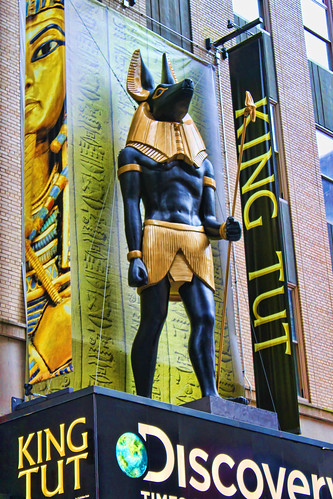
    According to figures quoted at an archaeological conference last week by Dr Zahi Hawass, the Egyptian Supreme Council of Antiquities (SCA) has generated more revenue in recent years from sending treasures of Tutankhamun abroad than it has from collections in the countrys own museums. That includes the Howard Carter collection at the Egyptian Museum in Cairo, which features key pieces from King Tuts tomb such as the Golden Death Mask (some amazing picture of which you can view here) and coffins deemed too fragile or unwieldy to travel outwith the country. The SCA has made over $100 million from its…

  • Ann

    Oldest Evidence for Stone Tools and Eating Meat Discovered in Ethiopia

    Thinking of Lucy strolling around the east African landscape in search of food, we can nowpicture her looking for meat with a stone tool in hand. Bones foundin Ethiopia, push back the earliest known stone tool use and meat consumption by almost one million years and provide the first evidence that these behaviours can be attributed to Lucy’s species. Aninternational team of researchers has discovered evidence our ancestors were using stone tools and ate the nutricious meat and marrow of large mammals 1 million years earlier than previously documented. While working in the Afar region of Ethiopia, the Dikika Research…

  • Ann

    Star Carr Stone Age remains are Britain’s Oldest Home

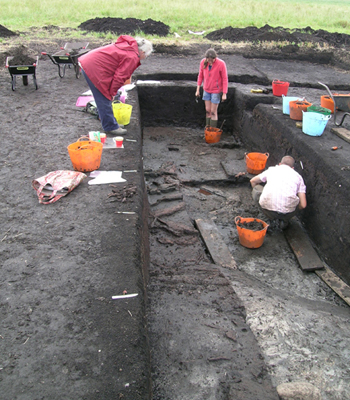
    Archaeologist working on Stone Age remains at a site in North Yorkshire say it contains Britain’s earliest surviving house. It dates to at least 8,500BC when Britain was part of continental Europe. The team from the Universities of Manchester and York unearthed the 3.5 metres circular structure next to an ancient lake at Star Carr, near Scarborough. The 10,500-year-old house, which was first excavated by the team two years ago, was comparable to an Iron Age roundhouse. It had post holes around a central hollow which would have been filled with organic matter such as reeds, and possibly a fireplace.It…

  • Ann

    Teotihuacan Tunnel found under Temple of Quetzalcoatl, the Feathered Serpent

    Archaeologists have discovered a 1,800 year old tunnel that leads to a system of galleries 12 meters below Teotihuacan’s Temple of Quetzalcoatl, the Feathered Serpent, in Mexico. Spanning an area of more than 83 square kilometres, Teotihuacan is one of the largest archaeological sites in Mexico and is a UNESCO World Heritage Site. The city had nearly 250,000 inhabitants when it was at its height in the early 1st millennium AD. It also contains some of the largest pre-Columbian pyramids in the New World. Archaeologists hope that the galleries they detected are actually the tombs of Teotihuacans rulers. “For a…