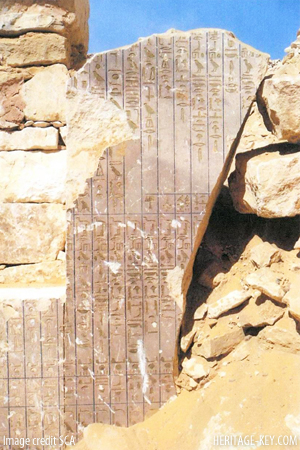
A French archaeological team digging at Saqqara has discovered the burial chamber of 6th Dynasty Queen Behenu, wife of either Pepi I or Pepi II. The burial chamber was revealed while the team was cleaning the sand from Behenu’s pyramid in the area of el-Shawaf in South Saqqara, west of the pyramid of King Pepi I. The burial chamber uncovered by the French mission is badly damaged, apart from two inner walls which contain engraved Pyramid Texts. Those texts were widely used in royal tombs carved on walls as well as sarcophagi – during the 5th and 6th Dynasties (circa…
-
-
Using the latest techniques in forensic archaeology, the University of Reading has revealed a new image of multi-cultural Roman Britain. New research demonstrates that 4th century ADYork had individuals of North African descent moving in the highest social circles. The research conducted by the University of Reading’s Department of Archaeology used modern forensic ancestry assessment and isotope (oxygen and strontium) analysis of Romano-British skeletal remains such as the Ivory Bangle Lady’, in conjunction with evidence from grave goods buried with her. The ancestry assessment suggests a mixture of ‘black’ and ‘white’ ancestral traits, and the isotope signature indicates that she…
-
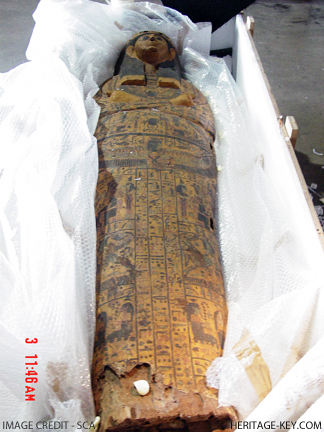
After two years of investigation and negotiation, the 21st Dynasty coffin of Imesy is being returned to Egypt. Minister Farouk Hosni describes the coffin as beautifully plastered and painted with colourful religious scenes. It was intercepted at Miami International Airport in 2008 when the importer failed to show the necessary documents to prove his ownership of the ancient Egyptian sarcophagus, which was part of a shipment from Spain. This raised concern amongst the American authorities that the coffin had left Egypt illegally. An investigation was started by the Immigration and Customs Enforcement Agency (ICE) of the US Department of Homeland…
-
It’s only 24 hours since all Tut broke lose, and additional information is still gradually being released (confirming my theory that the main bulk of the information was leaked too early ahead of the press conference). That, or it took the released information a while to percolate through my brain. The following bits are new or extra info (to me) from the official SCApress release. My grey mass failed to process the fact that this study is part of the ‘Family of Tutankhamun Project’ rather than the ‘Egyptian Mummy Project’. Somehow, limiting the scope does make sense, despite the Onion’s…
-
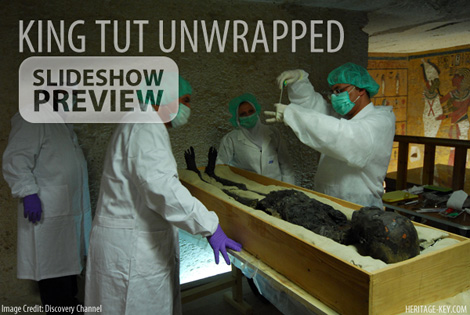
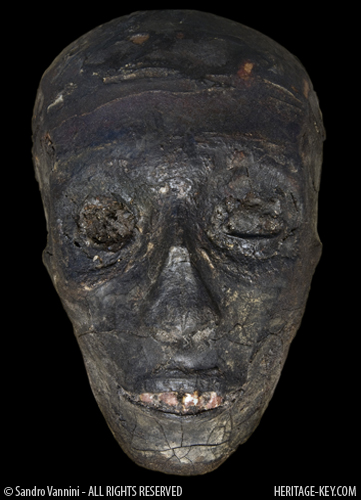
When I wrote that it was most likely we’d see more conlusive information on King Tut’s pedigree on TV first, I obviously was wrong, partly. Spoiler alert:yes, King Tut died at age 19 of (in order) a failing immune system, a leg fracture and malaria, but for the the fine details, and juicy imagery, you’ll need to tune in to Discovery Channel’s ‘King Tut Unwrapped’. The network – which sponsored Egypt’s ‘mummy lab’ – promises us an unprecedented forensic investigation into the life and times of King Tut that reveals the identity of Tut’s parents and grandparents, details on his…
-
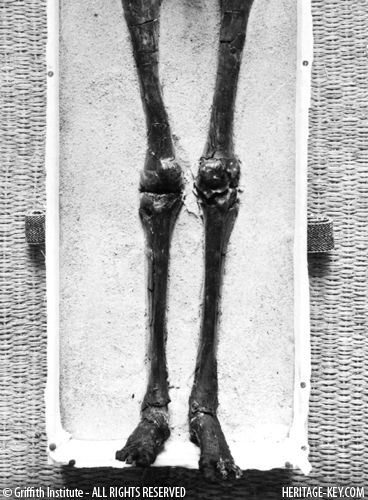
Ahead of tomorrow’s press conference on King Tut’s DNAand relatives, some of the news already escaped. Pharoah Tutankhamun died of complications from a broken leg aggravated by malaria. And his family? ‘Most likely’ (still) Akhenaten is the daddy, with one of Akhenaten’s sisters being Tutankhamun’s mum (and thus also his aunt!). The article – to be published tomorrow in the Journal of the American Medical Association alongside the press conference – contains results of over two years of research in two different dedicated ‘mummy labs’. It was already (though maybe not that widely) known that King Tut was not murdered,…
-
Thanks to the Ancient World in London (and currently the books from Neal Stephenson) I’m quickly catching up on my history of London and neighbouring areas. I’m still far from an expert, or even seriously knowledgeable – hence I’ve decided to judge who the best invaders of London were on looks. Instantly the Silures – quite sexy in King Arthur, 2004 – spring to mind. Quite neglected when talking and writing about history, they would make the perfect entry… were it not that, unlike Boadicea, they never made it to London, and spent their days in Wales making sure the…
-
This Wednesday the long awaited results of the DNAresearch on King Tut’s mummy – and some of his possible family members – will be announced at a press conference with Egyptian Minister of Culture, FaroukHosni and Dr. Zahi Hawass. They will announce new discoveries surrounding the family of Tutankhamun and the cause of the young king’s death. The study on the family of Tutankhamun (keep an eye on all things Tut on our dedicated page) was conducted through the Egyptian Mummy Project (EMP) headed by Dr. Zahi Hawass, and a team composed of Egyptian scientists from the National Research Center,…
-
In need of some last-minute ‘background information’ on the history of Love and Romance, to spice up your Valentine’s Day (or impress a date with your knowledge)? Looking for some ancient Egyptian love poetry to go on the back of a card? After you’ve inceased your ‘Valentine Skills’, it’s time to join our Valentine’s competition:leave the best personal ad or declaration of love here in the comments, and get to choose your favourite book from the Thames &Hudson Spring collecti… errr.. catalogue. Browse our Valentine’s menu below for inspiration, or go win your book. On Heritage Key’s (historical) Valentine’s menu:…
-
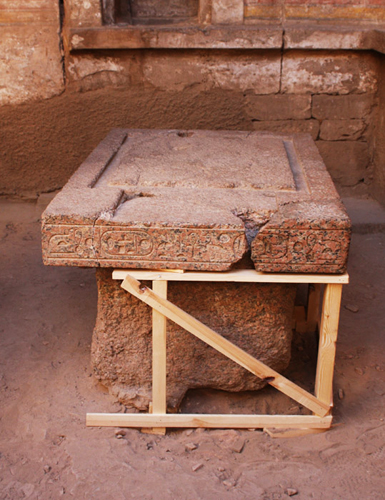
Egypt’s Minister of Culture Farouk Hosni and Dr. Zahi Hawass returned a piece of red granite belonging to an ancient Egyptian temple to its rightful place – the base of Amenemhat I’s naos. Both officials are on an inspection tour along the Avenue of Sphinxes that connects the Temple of Luxor with that of Karnak, home to the Ptah temple where the naos is to be found. The naos pieace was returned to Egypt last October by the Metropolitan Museum of Art in New York, after it was purchased by the Museum from an antiquities collector in New York in…