• Ann

    Statue of ancient Egyptian god Thoth Discovered at Amenhotep III’s Mortuary Temple

    Archaeologists have discovered a colossal statue of the ancient Egyptian god Thoth at the north-western side of King Amenhotep III’s funerary temple at Luxor. The red granite statue depicting Thoth, the ancient Egyptian deity of wisdom, is 3,5 metres tall and 140 cm wide. In a statement, Dr Zahi Hawass said that evidence found at the excavation suggests more colossi could be found here still. The first traces of these large statues were uncovered during works aiming at controlling the subterranean water level on Luxor’s west bank. Only months ago, the head of 2,5 metres high statue depicting Pharaoh Amenhotep…
  • Ann

    MEanderthaler iPhone App – Morphing technology brings out the Caveman in you

    We all know we have a bit of Neanderthal in us, but how would you look if you were to up that amount?A new application for iPhone and Android allows you to create a pretty prehistoric, personalised mug shot, by morphing your face into that of an early human. Using ‘MEanderthal’, within seconds (watch the video here), you get to see what you would have looked like, if you lived thousands of years ago and ended up on the wrong ‘branch’ of evolution. The app, released by the Smithsonian National Museum of Natural History, is a mobile edition of the…

  • Ann

    Neanderthal DNA Sequenced – How Similar are they to Modern Humans?

    Some 400,000 years ago, Neanderthals diverged from the primate line that led to present-day humans. The Homo neanderthalis died out 30,000 years ago, while we managed to evolve into the handsomely built, technically skilled, and somewhat reasonable animal we are today. Research into Neanderthal DNA now shows that our extinct relatives did leave their mark in the genomes of some modern humans, leading researchers to believe that our species ‘paired up’ with our less evolutionary successful cousins when we were both living in the Middle East, about 100,000 to 50,000 years ago and before we left to populate Europe and…

  • Ann

    LiDAR Survey Uncovers Ancient Maya City of Caracol

    Using NASA laser technology, researchers have discovered thousands of new structures and illustrated the complex urban centres built at the ancient Maya city of Caracol, Belize. The equivalent of 25 years worth of data (if gathered through machete-wielding means) was gathered in only four days using a technique of emitting laser beams from a plane to penetrate the thick canopy that covers the site. LiDAR (Light Detection and Ranging) equipment brought aboard a small Cessna 337 bounced laser beams to sensors on the ground, penetrating the thick tree canopy to see ‘beyond the rainforest’, allowing for the detecting of many…

  • Ann

    Church and Nilometer Discovered on the Avenue of Sphinxes

    Archaeologists working at the Avenue of Sphinxes in Luxor, Egypt, have uncovered the remains of a fifth century Coptic church and a Nilometer, a structure used to measure the level of the Nile during floods. According to a statement released by the SCA, the church’s remains were found on the second of five sections of the ancient religious path leading to the Karnak temple. Thechurch was built with limestone blocks originally belonging to the Ptolemaic and Roman temples that once stretched along the Avenue. The blocks are well preserved, with many of them bearing depictions Ptolemaic and Roman kings offering…

  • Ann

    Mayan Plumbers or Hydraulic Engineers at Palenque?

    A water feature excavated in the Maya city of Palenque, in Chiapas, southern Mexico, is the earliest known example of engineered water pressure in the New World, according to a collaboration between an archaeologist and a hydrologist from Penn State University. The spring-fed conduit has a restricted opening that would cause the water to exit forcefully, under pressure, to a height of 6 metres. How the Maya used the pressurized water is, however, still unknown. Such water pressure systems were previously thought to have entered Mexico with the arrival of the Spanish in the 16th century. “Water pressure systems were…

  • Ann

    New Statue Discovered at Taposiris Magna Possibly Ptolemy IV

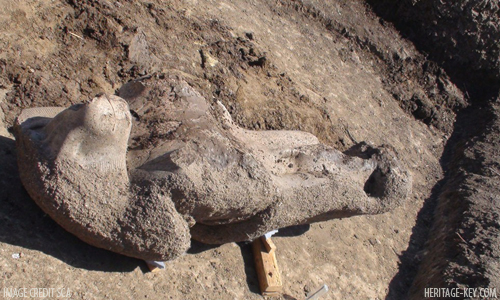
    Archaeologists excavating at Taposiris Magna, 45 km west of Alexandria, have discovered a huge headless granite statue of an as yet unidentified Ptolemaic king, and the original gate to the temple one of fourteen temples said to contain a piece of the god Osiriss body. The monumental sculpture, which is a traditional image of an ancient Egyptian pharaoh wearing collar and kilt, could represent Ptolemy IV, the pharaoh who constructed the Taposiris Magna temple. In a statement issued by the SCA, Dr Zahi Hawass says that the statue is very well preserved and might be one of the most beautiful…

  • Ann

    Lost World of Old Europe to be found at Ashmolean Museum starting May

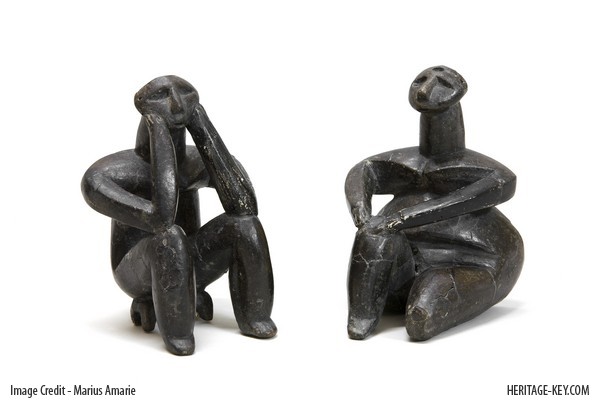
    The discovery of the 7,000-year-old Varna Necropolis in 1972 send a shock through the archaeological world.Dated to the fifth millennium BC, the 264 graves and funerary gifts show that when the ancient Egyptians just started to settle the Nile Delta and long before the invention of the wheel, in modern day Bulgaria, ‘Old Europeans’ were already crafting high-quality gold and bronze objects.Neolithic farmers living in the fertile valleys of the Danube riverhad advanced ideas about the afterlife, widespread trade connections and the oldest known burial evidence of an elite male, yet most people – and even archaeologists -have never heard…

  • Ann

    Hoard of Ptolemaic Bronze Coins, Jewellery and a Whale Discovered at the Fayum Oasis, Egypt

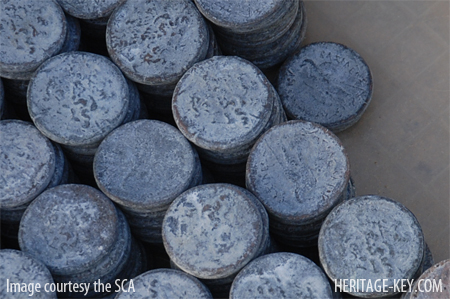
    Egyptian Minister of Culture Farouk Hosni announced today the discovery of 383 coins from the Ptolemaic period near the Fayum Oasis. Prehistoric jewellery made from ostrich eggs, and a skeleton of a 42-million-year-old whale were unearthed as well. According to the statement released by the SCA (Supreme Council of Antiquities) the coinage, very well preserved and dating to the reign of King Ptolemy III (246 to 222BC), was discovered during routine excavations north of Lake Quarun. Dr. Zahi Hawass, Secretary General of the SCA, said that the 383 coins are fashioned out of bronze and have a weight of 32…

  • Ann

    King Tut returns to Seattle with ‘Tutankhamun: The Golden King and the Great Pharaohs’

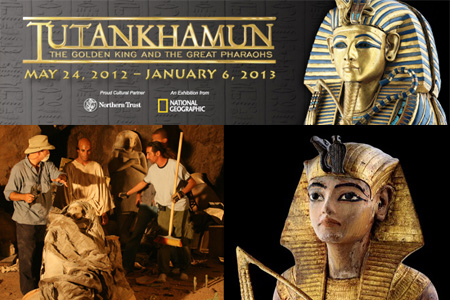
    Thirty years after the wonders of King Tut first toured the world, an even bigger exhibition Tutankhamun: The Golden King and the Great Pharaohs will make its appearance at the Pacific Science Center starting May 24th, 2012. With an almost entirely different selection of treasures and more than twice the number of artefacts than were displayed in the 1978 exhibition, Tutankhamun: The Golden King and the Great Pharaohs features more than 100 remarkable objects from the tomb of King Tut and ancient sites representing some of the most important rulers throughout 2,000 years of ancient Egyptian history. This is really…