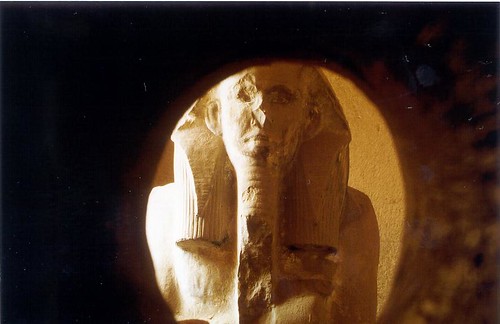
Archaeologists have discovered two ancient Egyptian tombs, belonging to a father and his son, at the Saqqara necropolis in Egypt. The rock-hewn painted tombs were unearthed last week, and with at least one tomb never looted, are considered an important find. The discovery was made during routine excavations at ‘Gisr El-Muder’, west of Djoser’s Step Pyramid, the first pyramid in Egyptian history. Work in the area has been ongoing since 1968. Dr Zahi Hawass, Egypt’s antiquities chief, says the tombs belong to 6th Dynasty government official ‘Shendwa’ and his son, ‘Khonsu’. The older tomb consists of a painted false door…
-
-
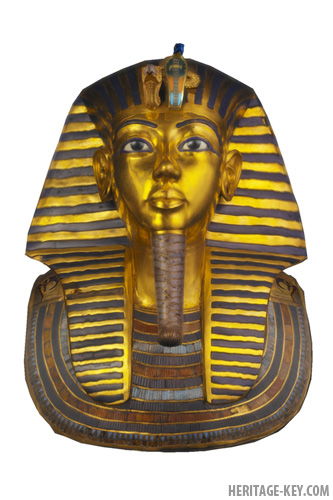
Tutankhamun’s mummy is being safely kept in KV62 in the Valley of the Kings. It’s hard to imagine his body would ever leave Egypt, yet thousands of visitors to the touring King Tut exhibition at New York are being offered the chance to see an exact replica of the boy-king’s mummy based on CT scans of him. The process of creating the replica – the subject of this short video – is highly impressive, and has a nice sci-fi touch to it. Personally I can’t wait to see this done to Motoko Kusanagi* – but in the meantime see how they cloned Tut (and if…
-
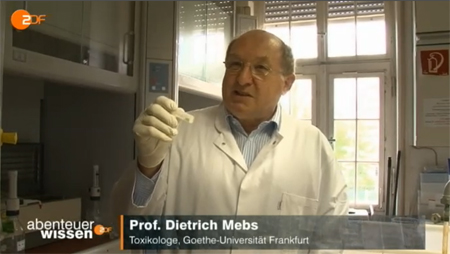
Alexandria, 30BC. When Cleopatra, the last Queen of Egypt, is forced to surrender to Octavian, she decides she’d rather die than fall in enemy hands. She locks herself in the temple, and manages to deceive her Roman captors: by inducing an Egyptian cobra to bite her on the arm, she kills herself. A quiet and painless death. Or so the story goes. 2,000 years after the famous suicide, German historian Christoph Schaefer is challenging this ‘suicide-by-snake’ theory, claiming the Queen used a mixture of hemlock, wolfsbane and opium to poison herself. Ruling out Death by Snake After studying historical texts…
-
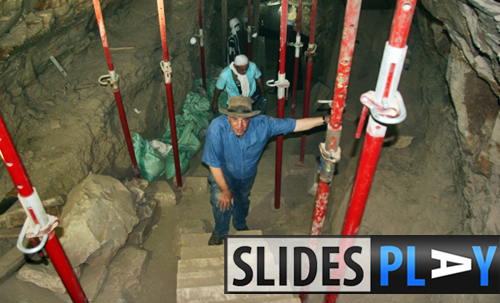
After more than 40 years, archaeologists have finally reached the end of the tunnel discovered in the tomb of Seti I. Hopes the tunnel would lead to the pharaoh’s secret burial site have been crushed, after the seemingly unfinished tunnel suddenly stopped after a back-breaking 174m. Pharaoh Seti I’s tomb, which is located in the Valley of the Kings, was first discovered in 1817 by strongman-turned-archaeologist Giovanni Belzoni (watch a video about Britain’s explorers). But clearing of the tunnel, cut into the bedrock near the end of the beautifully decorated tomb, was not started until the 1960s, under the direction…
-
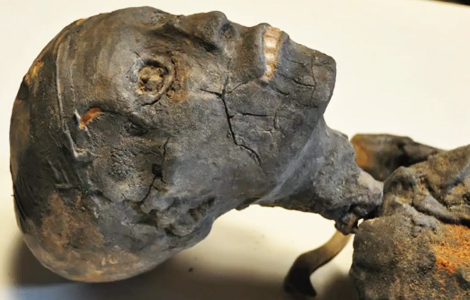
King Tut died from sickle-cell disease, not malaria, say experts. German researchers at Hamburg’s Bernhard Noct Institute for Tropical Medicine (BNI) have rejected a theory put forward by Egyptian antiquities chief Zahi Hawass, claiming sickle-cell disease (SCD) caused King Tut‘s early demise. A team led by Dr Hawass had said a combination of Khler disease and malaria was the primary cause of Tutankhamun’s death. Yet the German team are calling for more tests on the boy-king’s DNA, which they say will easily confirm or deny their claim. The BNI team have cast doubt on Hawass’ conclusions, after studying DNA tests…
-
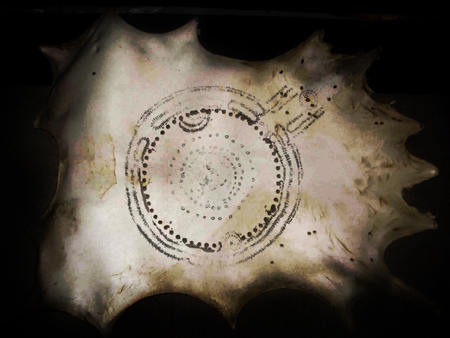
On Midsummers day, while more than 20,000 gathered at Stonehenge to celebrate the Summer Solstice,it was revealed a long-lost prehistoric documentwasdiscovered at Salisbury. The fragile deer hide document will put an end to all speculations asto the Neolithic monument’s purpose, revealing that theworld’s most famous stone circle was never a place of worship or a giant calendar. Rather, it was the centre of commerce for Britain’sBronze Agecivilization, as far as 5,000 years back. According to entertainment website ‘NewsBiscuit’, after extensive study, Oxford University archaeologists concluded that the document is in fact a 5000-year-old failed planning application for a vast covered…
-
Scholars across the globe have spent more than a century trying to document the reigns of the various rulers of Egypt’s Old, Middle and New Kingdoms. Now, researchers say they nailed down a more accurate chronology for dynastic Egypt. The new chronology, based on a radiocarbon analysis of short-lived plant remains, is a long and accurate chronology of ancient Egyptian dynasties that agrees with most previous estimates but also imposes some historic revisions. Although previous chronologies (based on both historical and archaeological records) have been precise in relative ways (the sequence of rulers), assigning absolute dates to specific events in…
-
In the 1880s, a time of great opportunities and great adventures, the University of Pennsylvania Museum organized America’s first archaeological expedition to the ancient Near East – to Nippur, a promising but far-flung Mesopotamian site then within the vast Ottoman Empire, now located in Iraq to the south of Baghdad. Nearly 130 years and 400 archaeological and anthropological expeditions later, the museum returns to ‘the Age of Exploration’ and their first Near Eastdig with the exhibition’Archaeologists and Travelers in Ottoman Lands’ (September 2010 to February 2011). ‘Archaeologists and Travelers in Ottoman Lands’ offers a gimps at the accomplishments, struggles, and…
-
Fossils found at the ancient city of Palenque, Chiapas shows Maya people conceived their beliefs of the underworld from them, associating the beliefs with water. To the Palenque, these fossils were convincing proof that the land was covered by the sea a long time ago, and from this they created their ideas on the origin of the world. A three-year study by archaeologist Martha Cuevas and geologist Jesus Alvarado, was aimed at connecting the symbolism made by ancient Mayans to remains from Prehistoric times. The interdisciplinary investigation, by the National Institute of Anthropology and History (INAH) and the National Autonomous…
-
A new analysis of Early American skeletons concludes that the large anatomical difference seen between ancient and recent Native Americans is best explained by two colonisation events of the New World. The study suggest that the latest common ancestor between Early and Late Native American groups must have been located outside the continent: an other group of individuals arrived in the New World before the primary ancestors of today’s Native Americans. The team studied a series of skeletons from South and Central America between 7,500 and 11,5000 years old, comparing them with those of more than 300 Amerindians, dating to…