The Mortuary Temple of Amenhotep III was once the largest and most spectacular monument at Thebes, and in all of Egypt. Amenhotep was ancient Egypt’s most wealthy and powerful ruler, and Egypt during his reign was at its cultural and artistic apex; his funerary temple reflected this.
It measured 700 metres by 500 metres, covering a floor space of 350,000 square metres, which meant it dwarved even Karnak at the time. It was constructed from rare and precious stones, and filled with beautiful statues of gods and godesses, as well as papyrus columns and huge stela proclaiming the king’s riches and achievements. Unfortuantely, the temple was built in a terrible spot, too close to the edge of the Nile floodplain, and it collapsed into the desert after less than 200 years.
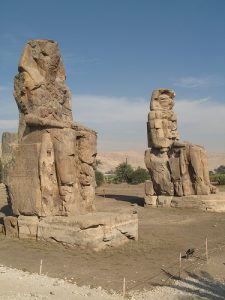
Many of its stones were procured by later pharaohs to build their monuments, and today nothing remains of the temple except the two 18-metre tall Colossi of Memnon – a pair of massive stone statues of Amenhotep that once flanked the entrance to his mortuary temple. The temple has been on the World Monument Fund’s list of the 100 most endangered monuments of the planet since 1998. Work to preserve what is left of the ruins has been ongoing since 2004, under the leadership of highly-respected Egyptologist and art history specialist Dr Hourig Sourouzian.
Plans of the Amenhotep III Conservation Project include returning every part of the temple they can locate to its original location, before creating detailed maps and models of the temple, and – finally – creating an open-air museum at the site. One of the most ambitious projects of its kind in Egypt, it’s expected to take around 20 years.